
Managing behaviour in Out of School Hours (OOSH) care can feel overwhelming when children test boundaries, show disrespect, or escalate into physical conflict. Educators often find themselves stuck between documenting incidents and wondering what real impact those reports have. The truth is, effective behaviour management isn’t about endless paperwork—it’s about creating a consistent, responsive environment where children understand expectations, experience logical consequences, and feel supported to repair harm. This article offers practical strategies and policy anchors that move beyond “reporting only” and into approaches that actually work in the OOSH setting.
1. Shift from “Reporting Only” to “Response + Reflection”
- Problem: Behaviour reports without consequences become meaningless.
- Strategy: Pair every report with a follow-up action (restorative conversation, parent contact, or logical consequence).
- Policy Anchor: “All incidents logged must trigger a response within 48 hours.”
2. Restorative Practices Over Punitive Measures
- Why it works: Children often act out because they feel unheard. Restorative circles let them repair harm instead of just being punished.
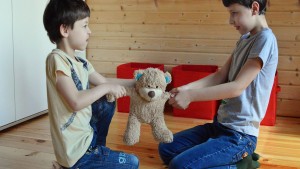
- Example: After a physical altercation, the child meets with the peer and educator to discuss impact, feelings, and ways to make amends.
- Checklist for Educators:
- Ask: What happened?
- Ask: Who was affected?
- Ask: What needs to happen to repair this?
3. Clear, Consistent Boundaries
- Problem: Inconsistency breeds disrespect.
- Strategy: Develop a 3–5 rule framework (e.g., Respect People, Respect Space, Respect Property).
- Implementation: Display rules visually, rehearse them weekly, and apply them consistently across all staff.
4. Logical Consequences Instead of Arbitrary Punishments
- Example: If a child misuses equipment, the consequence is losing access until they demonstrate safe use.
- Policy Anchor: “Consequences must be directly linked to the behaviour and explained to the child.”
5. Positive Reinforcement Systems
- Why it works: Recognition shifts focus from negative behaviour to desired behaviour.
- Ideas:
- “Caught Being Kind” tokens.
- Weekly shout-outs for respectful behaviour.
- Group rewards for collective improvement.
6. Escalation Pathway for Severe Behaviour
- Problem: Children learn there are no repercussions for extreme behaviour.
- Strategy: Create a tiered response system:
- Tier 1: Educator-managed (warnings, restorative chat).
- Tier 2: Coordinator-managed (parent call, behaviour plan).
- Tier 3: Service-managed (suspension, formal review).
- Policy Anchor: “Severe behaviour triggers escalation beyond educator level.”
7. Family Partnership
- Why it matters: Behaviour patterns often extend beyond OOSH.
- Strategy: Share behaviour plans with families, invite them into restorative processes, and align expectations.
8. Staff Reflection & Support
- Problem: Burnout leads to inconsistent enforcement.
- Strategy: Weekly debriefs where staff reflect on what worked and what didn't and share strategies.
- Tool: Use a “What Went Well / What Needs Work” template.
Behaviour management in OOSH isn’t about punishment; it’s about consistency, accountability, and repair. Policies must move beyond reporting to ensure children understand that actions have consequences, and educators feel supported with clear pathways.
Further Reading
Descriptive Words For Children's Behaviour
Talking To Parents About Their Child's Behaviour Issues
Redirecting Children's Behaviour
Supporting Children With Challenging Behaviour
Strategies to Promote Positive Behaviour In OOSH Services
Aggressive Behaviour And Violence In Children: Prevention, Intervention and Support


 Working as a childcare professional can be a challenge especially when dealing with behavioural problems which may arise. The techniques we use when dealing with
 There are different types of behaviour that children can display and sometimes it can be hard to manage, especially if a child is having behavioural
 As Educators, there will be many instances where you will need to write about a child's behaviour. For a behaviour management plan, assessments, half-yearly or
 As a parent, your behavioural expectations of your child can be higher than what is actually developmentally appropriate for your child's age.
 As Educators when communicating with Parents (through verbal or non-verbal communication), there will be times where we need to discuss issues or concerns that may
 Challenging Behaviour is when a child does something that hurts themselves and/or other people.
 It's always difficult to bring up behavioural issues with parents, it can be nerve wrecking to tell a parent that their child misbehaves but that
 As part of your child's development it is normal for your child to have anxiety and fears. A baby commonly shows a fearful sign to
 All children deal with anger on a daily basis. Thinking about it as a child, there is a lot to be angry about. Elder people
 It is important to understand that your child behaviour problems could not just be from attention seeking. There are many factors to take into consideration