



On 26th May 2022 at 12 PM, join Dr Mary Anne Hall as she provides practical strategies for Directors, Group Leaders, NDIS providers and supervisors, who are required to promote employee wellbeing, and children and family engagement.

The Early Years Learning Framework outlines Intentional Teaching as one of the major practice guidelines to promote children’s learning. Intentional teaching involves actively planning and acting with specific goals or outcomes for children’s learning in mind. The following provides information on Intentional Teaching Definition, Intentional Teaching Strategies, Intentional Teaching Examples and Benefits Of Intentional Teaching.

There may be times when despite giving your best, your service might have to face complaints. However, instead of getting demotivated, it is possible to use complaints as opportunities for critical reflection. The following article provides information on Complaints Management, Positive Approaches To Complaints, Effective Complaints Management systems, Identifying Areas Of Improvement, Effective Documentation and more.

For services in the process of developing or reviewing their service philosophy, the following article provides information on the Importance Of A Service Philosophy, Links To The NQS, a Sample Of A Service Philosophy, Reviewing The Service Philosophy and more.

As an Early Childhood Educator, it enables you to acknowledge and embrace conversations around disability and inclusion with children. The following article provides strategies to discuss inclusion and disability with children.

As the words indicate, Open-ended questions have no right or wrong answers and thus cannot be answered with a simple, ‘yes’ or ‘no’. Open-ended questions figure in several of the pedagogical practices outlined in the EYLF, like ‘being responsive to children, ‘learning through play and most of all, ‘intentional teaching’. The following article provides the major benefits of using open-ended questions in the early childhood education context.

Inquiry-based learning is an experiential educational approach in which learners are encouraged to explore, question and arrive at their own conclusions. Asking questions is an important aspect of an inquiry-based approach but toddlers and very young children may not have the language to frame and ask such questions. Here are then a few tips on planning inquiry-based experiences for toddlers.

Motivating well-qualified staff to remain at your service is not only important to cut down training costs but also to provide the best outcomes for children. The following article provides strategies on how to retain staff within your early childhood service.

Mentoring is a hugely beneficial way for early childhood services to build the professional capacities of new educators as well as leadership capacities for their own organization. However, the success of a mentoring programme depends to a large extent on the efficacy of mentors. The following article provides strategies such as the Roles and Responsibilities, Who Can Be A Mentor and Requirements Of An Effective Mentor in an early childhood setting.

Among the important guiding principles of the National Quality Framework is ‘Australia’s Aboriginal and Torres Strait Islander cultures are valued. The following article provides information on recognising and valuing Aboriginal and Torres Strait Islander cultures through early childhood services through the display of the flags.
 Toddlers have a greater understanding of the world around them by this stage. Their cognitive development (also known as intellectual development and thinking skills) continues… Read More
 Infants begin to develop trust when parents begin to fulfil their needs. Such as changing an infant's nappy when needed, feeding on request and holding… Read More
 Beginning at birth the construction of thought processes, such as memory, problem solving, exploration of objects etc, is an important part of an infant’s cognitive… Read More
 Toddlers want to do more on their own and do not like it when you begin to establish limits on their behaviour. Tantrums can become… Read More
 Your preschooler is now able to focus their attention more accurately and is less influenced by distractions. The intensity of questions increase as your child… Read More
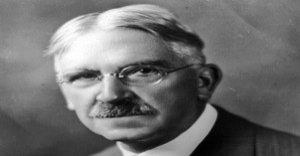 John Dewey is often seen as the proponent of learning by doing – rather than learning by passively receiving. He believed that each child was active,… Read More
 Erik Erikson developed a psychosocial theory to understand how we each develop our identities through eight stages of psychosocial development from infancy to adulthood. The… Read More
 Toddler advance and gains new skills in Gross Motor Development milestones achieved throughout earlier years. Co-ordination and challenges that could not be performed before such… Read More
 At this point preschoolers begin to interact effectively with others. Play becomes more innovative and organized and “boyfriend” or “girlfriend” begins to emerge. Preschoolers have… Read More
 From now, babies begin to identify and respond to their own feelings, understanding other's feelings & needs and interact positively with others. A baby's social and… Read More
Attention deficit hyperactivity disorder (ADHD) is a psychiatric disorder of the neurodevelopmental type in which...
See more...
Swiss psychologist Jean Piaget theorized in the pre-operational stage between two and seven years, children...
See more...
It is not uncommon for educators to confide that transitions tend to be the most...
See more...