




Discover practical strategies, examples, and benefits of working with mixed‑age groups in early childhood settings to support learning and care.

The EYLF explains literacy as the children’s “capacity, confidence and disposition to use language in all its forms”. Thus literary includes not only talking, listening, viewing, reading and writing but a range of modes of communication including music, movement, dance, storytelling, visual arts, media and drama. The following provides information on the Literacy Rich Environment, Characteristics Of A Literacy-rich Environment, Components Of A Literacy-rich Environment, Strategies and more!

A waiver enables a service that is non-compliant with the National Regulations or an element of the National Quality Standard to be taken to be compliant, or not required to comply, during the period that the waiver is in force.

Among all the changes that impact a child’s early life, one of the most significant is the move from early education and care setting to a full-time school. The following article provides Educators with a guide on planning supportive transition practices for preschoolers going to primary school the following year including practical ideas to involve children, partnering with families, collaborating with other professionals, planning transition programs and more.

In practice, it has been found that educational resources like story books, often fall short of representing such gender equity. In respect to this, a study titled ’Gender Equity in Early Childhood Picture Books: A Cross-Cultural Study Of Frequently Read Picture Books In Early Childhood Classrooms in Australia and the United States", investigated the nature of gender representation in children’s literature in eight early learning centres in Australia and the United States. The following article provides information on the Research, Data Analysis, Research Findings, What Services Can Do and more.
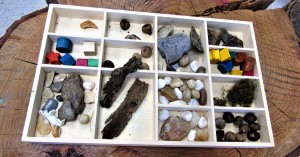
Loose parts is a term used in early childhood learning to include such objects and materials that kids can move, control and change in numerous ways. Loose parts provided an opportunity for children to express creativity through the use of materials that can be manipulated, transformed, and created through self-guided play. The following article provides information of Examples of Loose Parts, The Benefits of Loose Parts, Links To Theorists and The EYLF, Loose Parts Activity Ideas and more.

Writing observations for babies and young children enables us to observe the countless opportunities for growth and development that take place. The following article provides information on Writing Observations For Babies, What To Observe, Sample Observation For A Baby, Methods For Documenting and more.

On 26th May 2022 at 12 PM, join Dr Mary Anne Hall as she provides practical strategies for Directors, Group Leaders, NDIS providers and supervisors, who are required to promote employee wellbeing, and children and family engagement.
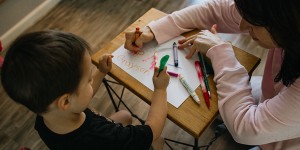
The Early Years Learning Framework outlines Intentional Teaching as one of the major practice guidelines to promote children’s learning. Intentional teaching involves actively planning and acting with specific goals or outcomes for children’s learning in mind. The following provides information on Intentional Teaching Definition, Intentional Teaching Strategies, Intentional Teaching Examples and Benefits Of Intentional Teaching.
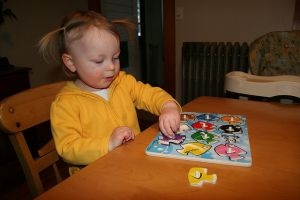 Toddlers have a greater understanding of the world around them by this stage. Their cognitive development (also known as intellectual development and thinking skills) continues… Read More
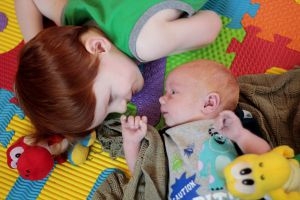 Infants begin to develop trust when parents begin to fulfil their needs. Such as changing an infant's nappy when needed, feeding on request and holding… Read More
 Beginning at birth the construction of thought processes, such as memory, problem solving, exploration of objects etc, is an important part of an infant’s cognitive… Read More
 Toddlers want to do more on their own and do not like it when you begin to establish limits on their behaviour. Tantrums can become… Read More
 Your preschooler is now able to focus their attention more accurately and is less influenced by distractions. The intensity of questions increase as your child… Read More
 John Dewey is often seen as the proponent of learning by doing – rather than learning by passively receiving. He believed that each child was active,… Read More
 Erik Erikson developed a psychosocial theory to understand how we each develop our identities through eight stages of psychosocial development from infancy to adulthood. The… Read More
 Toddler advance and gains new skills in Gross Motor Development milestones achieved throughout earlier years. Co-ordination and challenges that could not be performed before such… Read More
 At this point preschoolers begin to interact effectively with others. Play becomes more innovative and organized and “boyfriend” or “girlfriend” begins to emerge. Preschoolers have… Read More
 From now, babies begin to identify and respond to their own feelings, understanding other's feelings & needs and interact positively with others. A baby's social and… Read More
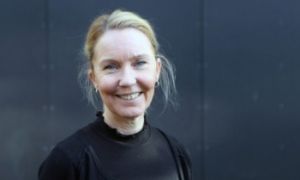
Ellen Beate Hansen Sandseter is a Norwegian researcher and professor at Queen Maud University College...
See more...
From when an infant is born the part of the brain that controls vital functions...
See more...
Attention Deficit Hyperactivity Disorder (ADHD) is a neurodevelopmental condition that affects a child’s ability to...
See more...