


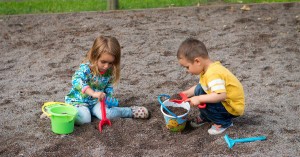
Play is a process that is freely chosen, personally directed and intrinsically motivated. In this sense, children’s play happens when children determine and control the content and intent of their play, following their own instincts, ideas and interests, in their own way for their own reasons. The following article provides an overview of the different roles of educators in play and how each can be best performed in an ECEC setting.

Interactions with children and families lie at the heart of ECEC practices. Early educators as a result may find themselves frequently facing ethical issues which are all too common in professions revolving around human relationships with their spectrum of rights, responsibilities, needs and desires. The following article provides information on Identifying Ethical Issues, Ethical Responsibilities, Case Study and more.

Relationships with carers play a key role in determining a child’s well-being in the earliest years. They have the potential to impact only impact a child’s emotional and social development but also learning in school and later life outcomes. The following article provides information on Why Relationships Matter, Strategies To Implement When Building Relationships, Stages Of Social Development and more. However, for relationships to be meaningful, interactions need to be warm, caring and responsive.

The structure and organisation of a learning environment can have immense impact on all aspects of a child’s development, ranging from physical and cognitive to social and emotional growth. The following article provides information on What Are Interest Areas and Their Benefits, Common Interest Areas, Guidelines For Planning Interest Areas and more.

Creation stories are mythological tales that describe a cultural or religious group’s beliefs about how the universe including its elements and beings was created. The following article provides information on What Are Creation Stories, the Importance Of The Rainbow Serpent and Tiddalik, the Benefits of Creation Stories and How They Can Be Incorporated Into Everyday Learning.

Children need safe and positive environments to learn and grow. To ensure this, services and educators need to ensure effective supervision at all times. The following article provides information on the different aspects of supervision, ranging from regulatory requirements and principles to practice strategies.
Discover how child‑initiated learning empowers agency, creativity, and independence in early childhood education through play, voice, and exploration.

Spontaneous play is exactly what it says – play that happens naturally, without any prior planning or being directed by anyone outside the play. In the early childhood context, spontaneous play is usually child-initiated and directed though it can include adults as well. The following article provides information on spontaneous play benefits and how educators can support it.

Effective communication can be understood as communication between two or more persons wherein the intended message is successfully delivered, received and understood. Since so much of the work in an early childhood education and care setting consists of listening, understanding and exchanging insights, effective communication makes up one of the key tools in the skill set for anyone running and/or leading a centre. The following article provides information on How Effective Communication Help, Basic Steps Of Effective Communication, Modes Of Communication, Difficult Conversations and more.

Emotional or physical distress can add to the challenges of caring for children in a service setting. Toddlers' brains are not yet developed to rationalize situations and regulate the emotions they feel. The following article provides strategies you can use to comfort and soothe a toddler.
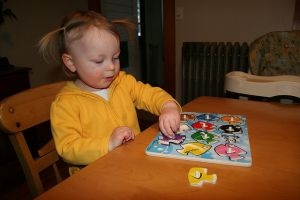 Toddlers have a greater understanding of the world around them by this stage. Their cognitive development (also known as intellectual development and thinking skills) continues… Read More
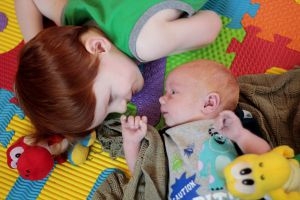 Infants begin to develop trust when parents begin to fulfil their needs. Such as changing an infant's nappy when needed, feeding on request and holding… Read More
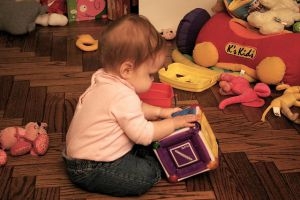 Beginning at birth the construction of thought processes, such as memory, problem solving, exploration of objects etc, is an important part of an infant’s cognitive… Read More
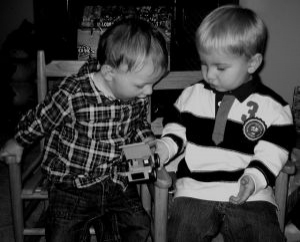 Toddlers want to do more on their own and do not like it when you begin to establish limits on their behaviour. Tantrums can become… Read More
 Your preschooler is now able to focus their attention more accurately and is less influenced by distractions. The intensity of questions increase as your child… Read More
 John Dewey is often seen as the proponent of learning by doing – rather than learning by passively receiving. He believed that each child was active,… Read More
 Erik Erikson developed a psychosocial theory to understand how we each develop our identities through eight stages of psychosocial development from infancy to adulthood. The… Read More
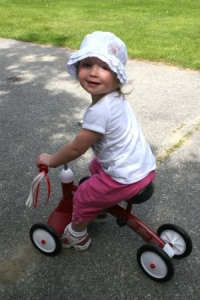 Toddler advance and gains new skills in Gross Motor Development milestones achieved throughout earlier years. Co-ordination and challenges that could not be performed before such… Read More
 At this point preschoolers begin to interact effectively with others. Play becomes more innovative and organized and “boyfriend” or “girlfriend” begins to emerge. Preschoolers have… Read More
 From now, babies begin to identify and respond to their own feelings, understanding other's feelings & needs and interact positively with others. A baby's social and… Read More

Supporting a toddler through moments of heightened emotion requires patience and thoughtful strategies. Here are...
See more...
Stimming refers to repetitive movements, sounds, or actions that people use to regulate emotions, manage...
See more...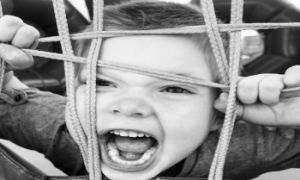
Challenging Behaviour is when a child does something that hurts themselves and/or other people.
See more...