



Among the important guiding principles of the National Quality Framework is ‘Australia’s Aboriginal and Torres Strait Islander cultures are valued. The following article provides information on recognising and valuing Aboriginal and Torres Strait Islander cultures through early childhood services through the display of the flags.

“Agency” this word is very familiar to the parents and in early childhood care. Agency in childhood indicates the organisation is able to have decisions that will affect and influences the child and also the child has the right to take a decision and is also capable of initiating learning of their own choice and for the betterment of them. The following article provides information on the Question and Strategies To Show If Agency Is Promoted Within The Service and more.

Among the two most important resources for services to build partnerships with new families are enrolment and orientation. The following article shows guidelines on using Enrolment and Orientation processes to collaborate with families so that children’s well-being and learning have the best chances of thriving.

Research indicates children have better chances of achieving positive developmental and life outcomes when their families are constructively involved in their learning across settings – ranging from home and early years services to schools. Here are a few strategies for engaging families in early childhood education.

There is enough evidence in the history of the world to show the steep cost that societies pay when racism in its processes and institutions is not addressed and combated. In Australia, all early childhood learning frameworks mandate that all children should feel safe, secure and supported in their learning environment. Additionally, learning frameworks are underlined by the principle of respect for diversity in all forms. The following article provides strategies to ensure zero tolerance for racism in early childhood settings.

Inviting families to give their input on the care and education of their children is not only an NQS requirement – Quality Area 6: Collaborative partnerships with families and communities – but makes sheer practical sense. The more they feel their opinions on service policies are genuinely sought, the greater will be their acceptance of policies and satisfaction with the service. The following article provides strategies on how services and educators can include family input to ensure better outcomes for children.

Unstructured play materials refer to those play materials whose uses are not predetermined by educators. Also known as of heuristic play materials, the scope for play with unstructured materials is thus unlimited, allowing children to develop agency, skills and imagination. The following article provides information on what types of unstructured play materials can be included, how to store play materials and how to facilitate children's play.

Belonging, Being and Becoming: The EYLF lists ‘High Expectations’ as one of five Principles that underpin practice. This is based on the premise that all children come with the potential to learn and unique sets of abilities which can be best realized when educators consistently have high expectations for them. The following article provides strategies on how Educators achieve best practices so that each child can realise their potential.

Even for the most accomplished of new graduates, the transition from educational to professional context can be challenging. Not only is the new educator thrust into the hurly-burly of everyday teaching, but is expected to adjust to an entirely unfamiliar ecosystem of the service. If you are facing a similar prospect, here are a few strategies for a new educator starting in early childhood services, to help you give your professional best.

Early childhood services are among the most demanding professional situations. Being responsible for the care and learning of toddlers and young children often leaves caregivers and educators vulnerable to highly physically and emotionally stressful moments over the day. If you find yourself often struggling to cope, here are some tips on managing stressful moments.
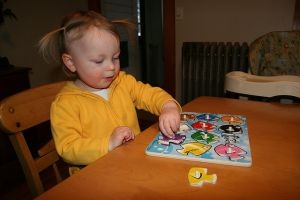 Toddlers have a greater understanding of the world around them by this stage. Their cognitive development (also known as intellectual development and thinking skills) continues… Read More
 Infants begin to develop trust when parents begin to fulfil their needs. Such as changing an infant's nappy when needed, feeding on request and holding… Read More
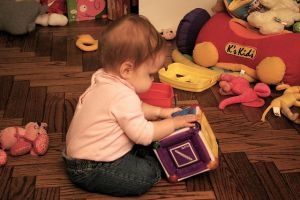 Beginning at birth the construction of thought processes, such as memory, problem solving, exploration of objects etc, is an important part of an infant’s cognitive… Read More
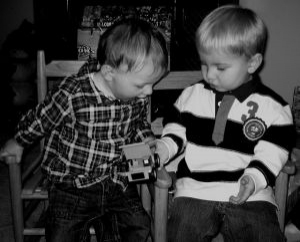 Toddlers want to do more on their own and do not like it when you begin to establish limits on their behaviour. Tantrums can become… Read More
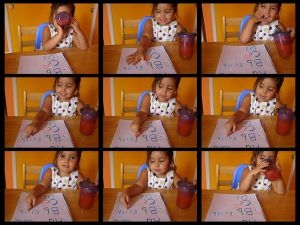 Your preschooler is now able to focus their attention more accurately and is less influenced by distractions. The intensity of questions increase as your child… Read More
 John Dewey is often seen as the proponent of learning by doing – rather than learning by passively receiving. He believed that each child was active,… Read More
 Erik Erikson developed a psychosocial theory to understand how we each develop our identities through eight stages of psychosocial development from infancy to adulthood. The… Read More
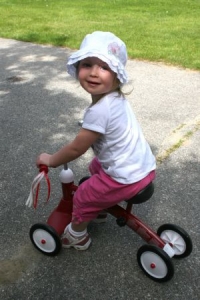 Toddler advance and gains new skills in Gross Motor Development milestones achieved throughout earlier years. Co-ordination and challenges that could not be performed before such… Read More
 At this point preschoolers begin to interact effectively with others. Play becomes more innovative and organized and “boyfriend” or “girlfriend” begins to emerge. Preschoolers have… Read More
 From now, babies begin to identify and respond to their own feelings, understanding other's feelings & needs and interact positively with others. A baby's social and… Read More

Having a solid grasp of developmental stages will help you evaluate children's play and learning...
See more...
Tantrums can be intense, unpredictable, and emotionally draining for both children and adults. But beneath...
See more...
A school age child’s physical development has increased considerably at this point. Gross motor skills...
See more...