



Involving children in documentation in early childhood education can be a powerful way to engage them in their own learning process. The following article provides information on Strategies Involving Children In Documentation and Multimodal Representations.

Improving parental engagement in early childhood education is crucial for enhancing children's learning and development.

Storytelling is a powerful tool in early childhood education, offering numerous benefits for children's development. The following article provides information on the Benefits Of Storytelling, Best Ways To Read To Children, Best Books For Babies, Toddlers, Preschoolers and more.
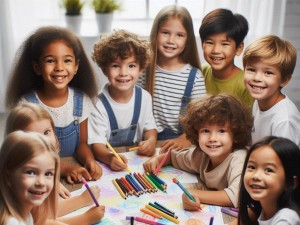
Drawing is a vital activity for children's development. It helps build the foundation for writing by improving fine motor skills and hand-eye coordination and enhances planning, memory, attention span, visual perception, problem-solving, and attention to detail. The following article provides information on the Benefits Of Drawing, Why Children Draw, Encouraging Children To Draw, Linking To The EYLF and more.
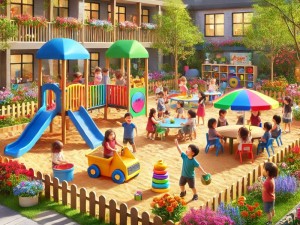
Designing engaging outdoor learning spaces offers stimulating resources and rich play-based learning opportunities that cater to all children’s interests, capabilities, cultures, and communities. The following article provides information on Physical Features Of Outdoor Spaces, Characteristics Of Outdoor Learning Spaces, Consideration For The Design Of Outdoor Spaces, Roles Of Adults In The Outdoor Learning Spaces and more.

Excursions and regular outings are valuable components of early childhood education, offering children opportunities to explore the wider community and enhance their learning experiences. The following article provides information on the Differences Between Excursions and Regular Outings, Benefits Of Excursions and Regular Outings, Planning Excursions, National Regulations On Excursions and Regular Outings and more.

Environmental print refers to the print that children see in their everyday environment, such as signs, logos, labels, and symbols. The following article provides information on Benefits Of Environmental Print, Incorporating Environmental Print in Early Childhood Settings, Examples Of Environmental Print, Activities Related To Environmental Print, Linking To The EYLF and more.

Phonological awareness covers the child’s ability to recognize and use the spoken parts of sentences and words. The following article provides information on the main stages of the development of phonological skills in children.

Boosting team morale is essential for creating a positive and productive work environment. The following article provides Strategies On Boosting Team Morale and Fun Morale Boosters in early childhood settings, Creating A Positive Work Environment and more.

Holistic approaches in early childhood include a spectrum of teaching goals and practices that facilitates all aspects – physical, emotional social as well as academic – of a child’s growth. The following article provides strategies for implementing a holistic approach.
 Toddlers have a greater understanding of the world around them by this stage. Their cognitive development (also known as intellectual development and thinking skills) continues… Read More
 Infants begin to develop trust when parents begin to fulfil their needs. Such as changing an infant's nappy when needed, feeding on request and holding… Read More
 Beginning at birth the construction of thought processes, such as memory, problem solving, exploration of objects etc, is an important part of an infant’s cognitive… Read More
 Toddlers want to do more on their own and do not like it when you begin to establish limits on their behaviour. Tantrums can become… Read More
 Your preschooler is now able to focus their attention more accurately and is less influenced by distractions. The intensity of questions increase as your child… Read More
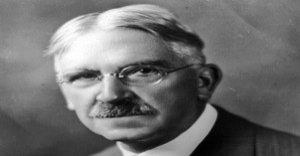 John Dewey is often seen as the proponent of learning by doing – rather than learning by passively receiving. He believed that each child was active,… Read More
 Erik Erikson developed a psychosocial theory to understand how we each develop our identities through eight stages of psychosocial development from infancy to adulthood. The… Read More
 Toddler advance and gains new skills in Gross Motor Development milestones achieved throughout earlier years. Co-ordination and challenges that could not be performed before such… Read More
 At this point preschoolers begin to interact effectively with others. Play becomes more innovative and organized and “boyfriend” or “girlfriend” begins to emerge. Preschoolers have… Read More
 From now, babies begin to identify and respond to their own feelings, understanding other's feelings & needs and interact positively with others. A baby's social and… Read More

As Educators when communicating with Parents (through verbal or non-verbal communication), there will be times...
See more...
Alison Gopnik (born June 16, 1955) is a leading developmental psychologist and philosopher at the...
See more...
A: These are important situations where early intervention and appropriate strategies can make a significant...
See more...