


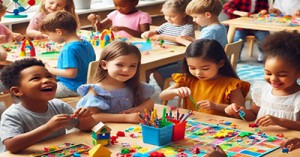
Activities and experiences both play crucial roles in early childhood education, but they have distinct characteristics. The following article provides information on What Are Activities, What Are Experiences, Examples Of Experiences, Examples Of Activities, Integrating Both in Early Childhood Education and more.

Effective communication is key to building positive relationships with children and facilitating their learning. However, if our words are to have the desired impact, they need to be adequately complemented with non-verbal cues. This is even more pertinent in the early childhood contexts when young children are yet to fully acquire language. The following article provides strategies for using non-verbal communication with children.

When children are confident, it means they can recognise the things they are good at and are happy to try out new things. Confidence is so important that it forms part of two learning outcomes in the EYLF Outcome 1.3: “Children develop knowledgeable and confident self-identities” as well as Outcome 4: “Children are confident and involved learners”. The following article provides strategies that Educators can use to build confidence in children so that they can achieve the best life and learning outcomes.

As part of their educational programmes, early education and care services may be situated in or travel to bush environments where it is known that snakes may be active and present. Although they are more common in the spring or summer, snakes can be found throughout the year, especially on sunny days. The following article provides information on What Attracts Snakes Into The Outdoor Area or Early Childhood Service, How Can We Snake-proof Our Service, Strategies to Implement To Minimise The Risk Of Snakes and more.
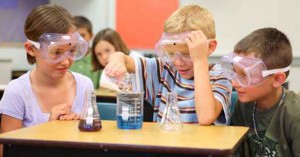
Children are naturally curious about their surroundings; this is most often expressed in the way they tinker with things, explore what happens next and ask questions about the world. Such innate inquisitiveness provides the ideal base to build hands-on exploration activities so that children not only have fun discovering but learn concepts and theories by applying them in real life. The following article provides information on leading children in hands-on exploration.

The Health and safety of children are among the prime concerns of early childhood services when planning the learning environment. The safest way to combat such issues is to opt for organic formulations which replace harmful chemicals with nature-based ones. The following article provides information on using green cleaning products in an early childhood service.
Hosting a fundraising event can be a great way to meet additional or unexpected costs incurred at your service. What’s more, it helps children to learn to be giving and provides a sense of accomplishment at contributing to an event. The following article provides a variety of fundraiser ideas for your early learning service.

Holistic learning gives as much importance to the emotional, social and physical growth of the child as the intellectual. Among the many benefits of holistic learning is that it enhances a child's subjective sense of well-being or simply put, makes them happier. The following article provides information on Nurturing Emotional Learning, Fostering Social Skills, Facilitiatiing Physical Movement and more.

The early years are a time of dizzying changes which affect not just the physical growth of the child but also their emotions, communication, sense of self and relationships with the surrounding world. Research has found music, especially through attributes like rhythm and movement can be a great aid in helping children control their reactions, emotions and behaviour. The following article provides information on What Is Self - Regulation, the Links Between Self Regulation and Executive Function, How Music Helps Children Nurture Self Regulation and more.
 Toddlers have a greater understanding of the world around them by this stage. Their cognitive development (also known as intellectual development and thinking skills) continues… Read More
 Infants begin to develop trust when parents begin to fulfil their needs. Such as changing an infant's nappy when needed, feeding on request and holding… Read More
 Beginning at birth the construction of thought processes, such as memory, problem solving, exploration of objects etc, is an important part of an infant’s cognitive… Read More
 Toddlers want to do more on their own and do not like it when you begin to establish limits on their behaviour. Tantrums can become… Read More
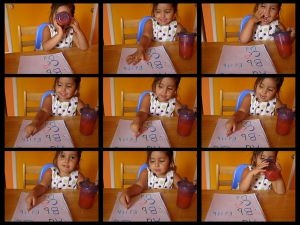 Your preschooler is now able to focus their attention more accurately and is less influenced by distractions. The intensity of questions increase as your child… Read More
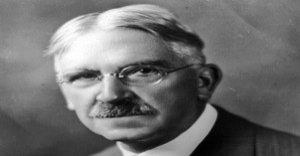 John Dewey is often seen as the proponent of learning by doing – rather than learning by passively receiving. He believed that each child was active,… Read More
 Erik Erikson developed a psychosocial theory to understand how we each develop our identities through eight stages of psychosocial development from infancy to adulthood. The… Read More
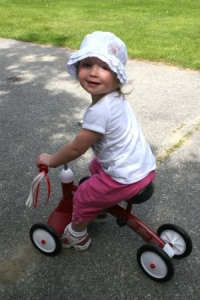 Toddler advance and gains new skills in Gross Motor Development milestones achieved throughout earlier years. Co-ordination and challenges that could not be performed before such… Read More
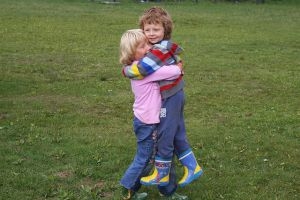 At this point preschoolers begin to interact effectively with others. Play becomes more innovative and organized and “boyfriend” or “girlfriend” begins to emerge. Preschoolers have… Read More
 From now, babies begin to identify and respond to their own feelings, understanding other's feelings & needs and interact positively with others. A baby's social and… Read More
Having a solid grasp of developmental stages will help you evaluate children's play and learning...
See more...
Working as a childcare professional can be a challenge especially when dealing with behavioural problems...
See more...
Social Constructivist Theory in Early Childhood Education is a learning approach grounded in the idea...
See more...