



Metacognition refers to the awareness and understanding of one's own thought processes. The following article provides information on Key Aspects, Benefits Of Metacognition, How To Introduce Metacognition To Preschoolers, Activities For Metacognition and more.

Introverted children have unique qualities and strengths that set them apart from their extroverted peers. The following article provides information on Characteristics of Introverted Children, Nurturing an Introverted Child, Supporting Introverted Children in Social Situations, Benefits of Being Introverted, For Young Intorverted Children, Introverted Children In Social Situations, Building Relationships With An Introverted Child and more.

The Words Grow Minds Professional Learning Course is a free course designed to support and upskill Educators working with very young children and their families. It aims to support Educators across the sector in deepening their knowledge of early childhood development.

Phonological awareness covers the child’s ability to recognize and use the spoken parts of sentences and words. The following article provides information on the main stages of the development of phonological skills in children.

Cognitive development in young children refers to the growth of their ability to think and understand the world around them. This involves various cognitive concepts and skills that emerge and evolve as children grow. The following article provides information on Key Cognitive Concepts and Activities To Support Cognitive Development.

The development of writing skills depends on a variety of physiological and environmental factors. Children have to develop fine motor skills as well as hand-eye coordination to be able to write. Also, their awareness of sounds and prints in the environment influences how ready they are to write. In the following article, it provides the stages children progress through of acquiring writing skills.

Creating a supportive environment where children feel safe to express their emotions is crucial for their emotional and social development. The following article provides information for Strategies To Encourage Children To Express Emotions Activities For Toddlers and Preschoolers, Emotion Vocabulary, Activities to Build Emotion Vocabulary, Activities to Build Emotion Vocabulary, What To Do When A Child Is Angry, What To Do When A Child Is Being Violent/Aggressive, What To Do If A Child Hits You, Alternative Behaviours and more.

Sharing is challenging for children, especially toddlers. This happens frequently during the development process. The first step in teaching children to share is realising and accepting this. The following article provides information on the Benefits Of Learning To Share, Social Development In Babies and Toddlers, How To Encourage Sharing and more.
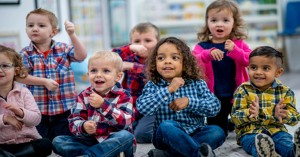
Nursery rhymes provide a lot of learning opportunities to children. Nursery rhymes also play an important role in children's language skills by hearing sounds. It helps them to develop an ear for language Rhythms and rhymes also help to understand words syllables. The following article provides information on the Importance Of Nursery Rhymes, the Key Benefits and Strategies To Implement Nursery Rhymes.

Playing with puzzles has a significant impact on a child's physical skills, developing fine motor skills through the coordination of small muscles. Children who have developed fine motor skills tend to find it easier to write, draw and learn to play instruments. The following article provides information on the benefits of puzzles for children.
 Toddlers have a greater understanding of the world around them by this stage. Their cognitive development (also known as intellectual development and thinking skills) continues… Read More
 Infants begin to develop trust when parents begin to fulfil their needs. Such as changing an infant's nappy when needed, feeding on request and holding… Read More
 Beginning at birth the construction of thought processes, such as memory, problem solving, exploration of objects etc, is an important part of an infant’s cognitive… Read More
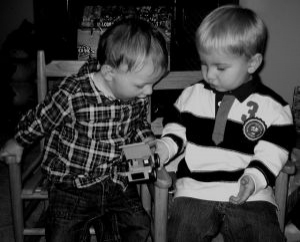 Toddlers want to do more on their own and do not like it when you begin to establish limits on their behaviour. Tantrums can become… Read More
 Your preschooler is now able to focus their attention more accurately and is less influenced by distractions. The intensity of questions increase as your child… Read More
 John Dewey is often seen as the proponent of learning by doing – rather than learning by passively receiving. He believed that each child was active,… Read More
 Erik Erikson developed a psychosocial theory to understand how we each develop our identities through eight stages of psychosocial development from infancy to adulthood. The… Read More
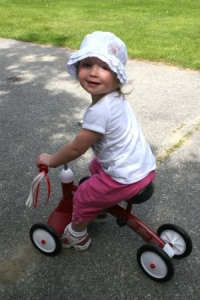 Toddler advance and gains new skills in Gross Motor Development milestones achieved throughout earlier years. Co-ordination and challenges that could not be performed before such… Read More
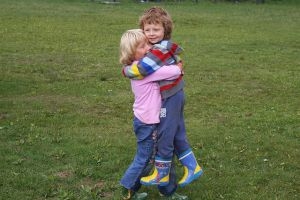 At this point preschoolers begin to interact effectively with others. Play becomes more innovative and organized and “boyfriend” or “girlfriend” begins to emerge. Preschoolers have… Read More
 From now, babies begin to identify and respond to their own feelings, understanding other's feelings & needs and interact positively with others. A baby's social and… Read More

A calm down box has a variety of sensory tools that a child is encouraged...
See more...
Children’s early experiences consist of interactions with parents, other family members, Educators and teachers as...
See more...
Violence from a child in an early childhood setting can be confronting, destabilising, and emotionally...
See more...