The development of writing skills depends on a variety of physiological and environmental factors. Children have to develop fine motor skills as well as hand-eye coordination to be able to write. Also, their awareness of sounds and prints in the environment influences how ready they are to write. In the following article, it provides the stages children progress through of acquiring writing skills.
Pre-literate
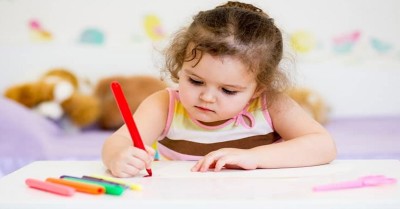
This stage is marked from the time that babies are able to hold crayons or pencils till about two years. They start out by imitating adults in the act of pushing crayons on paper and can start at any point in the page. Eventually, they begin using a particular direction like left to right while scribbling which may begin to look like mock letters. As the child begins to scribble and attract attention from adults, they are catching up with the idea that the lines and squiggles they have marked on paper mean something.
Emergent
Generally between two and four years, a child’s scribbles on paper start taking definite shapes as a precursor to letterforms. They also start grouping letters with spaces in between to resemble words. Easy progression through this stage greatly depends upon the adult caregiver’s response and encouragement. The more adults engage with and model letters for children, the easier it will be for them to understand that the lines and shapes grown-ups use for writing are symbols called letters. At this stage, children are not yet able to match letters to sounds – at least not consistently – but they are starting to get that letters to play an important role in writing. Adults can further support this process by reading a lot and exploring sounds through songs and rhymes in order to build up the phonemic awareness necessary for writing.
Transitional
With growing cognitive skills between the ages of four and seven, children begin to understand that the sounds that makeup spoken words can be represented on paper through letters. As a result of this understanding, they stop using random letters in their writing and instead begin matching the sounds of spoken language to letters they now know. During this stage, children are not yet aware of spelling conventions so they may use k to write cat. Also because they are just beginning to associate sounds and letters, they may reverse letters or mix them up. However, educators and parents should avoid correcting such mistakes at this stage since spellings are largely a matter of language conventions and will happen eventually. Instead, celebrate the child’s growing ability to associate spoken sounds and letters which marks a developmental milestone.
Fluent
From approximately six years onwards, children realize that there are certain conventions to arranging sounds in the form of letters. This marks the practice of using correct spellings and later leads to the awareness that similar sounds but different spellings like an hour and are can have different meanings. As a result children in this stage also start memorizing certain common words like ‘was’, and ‘the’ in which the sounds are not directly reflected in spellings.
Further Reading
Stages Of Writing Posters
Pre-Writing Skills
Pre-Writing Skills Activities For Preschoolers
Drawing And Talking In Early Writing Development
Foundation Skills To Support Children To Write
Pre-Writing Skills Printables
References:
Stages Of Writing Development, Families Academics
Supporting Children Through The Stages Of Writing, Baby Centre




 Toddlers have a greater understanding of the world around them by this stage. Their cognitive development (also known as intellectual development and thinking skills) continues
 Infants begin to develop trust when parents begin to fulfil their needs. Such as changing an infant's nappy when needed, feeding on request and holding
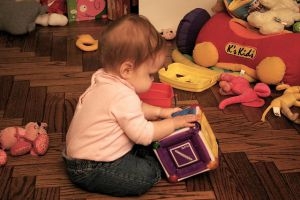 Beginning at birth the construction of thought processes, such as memory, problem solving, exploration of objects etc, is an important part of an infant’s cognitive
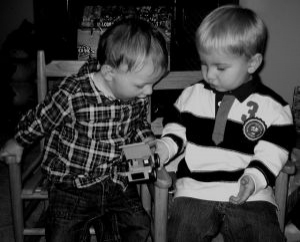 Toddlers want to do more on their own and do not like it when you begin to establish limits on their behaviour. Tantrums can become
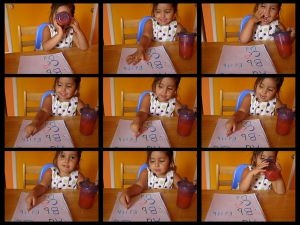 Your preschooler is now able to focus their attention more accurately and is less influenced by distractions. The intensity of questions increase as your child
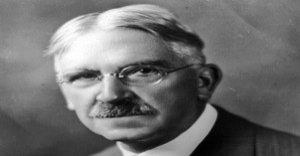 John Dewey is often seen as the proponent of learning by doing – rather than learning by passively receiving. He believed that each child was active,
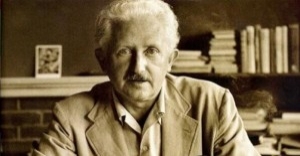 Erik Erikson developed a psychosocial theory to understand how we each develop our identities through eight stages of psychosocial development from infancy to adulthood. The
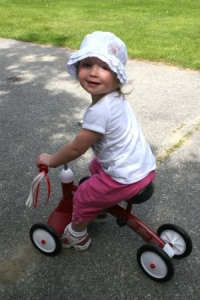 Toddler advance and gains new skills in Gross Motor Development milestones achieved throughout earlier years. Co-ordination and challenges that could not be performed before such
 At this point preschoolers begin to interact effectively with others. Play becomes more innovative and organized and “boyfriend” or “girlfriend” begins to emerge. Preschoolers have
 From now, babies begin to identify and respond to their own feelings, understanding other's feelings & needs and interact positively with others. A baby's social and