Linking to the EYLF is one of the most misunderstood parts of early childhood documentation. Many educators feel pressured to attach outcome numbers to every observation, photo, or program entry even though this is not required by the National Regulations, the EYLF, or ACECQA.
This guide offers a clear, practical approach to linking that centres professional judgment, meaningful learning, and low‑paperwork practice. Instead of coding everything, educators can use linking strategically only when it genuinely supports planning, communication, or assessment.
1. The Truth: Linking Is NOT Required For Every Observation
Neither the National Regulations nor the EYLF require educators to:
- Add outcome numbers to every observation
- Link multiple outcomes
- Use sub‑outcome codes
- Provide long explanations of how an outcome was met
- Colour‑code, chart, or map every experience
Linking is optional, not mandatory. It is a tool, not a compliance requirement.
The EYLF trusts educators’ professional judgment. Linking should support your thinking, not increase your workload.
2. So… When Should You Link?
Use linking only when it adds clarity, supports planning, or helps communicate learning to families or colleagues.
You should link when:
- 1. You want to highlight a specific learning focus
Linking can help draw attention to the purpose of an experience.
Example:
“This supports his confidence as a learner (Outcome 4).”
- 2. You’re planning an intentional next step
Linking can show why you’re choosing a particular follow‑up experience.
Example:
“Extend counting interest → supports numeracy (Outcome 5).”
- 3. You’re writing a summative assessment
This is the most appropriate place for linking because it shows progress over time.
Example:
“Across the year, Mia has shown increasing confidence in group play (Outcome 1).”
- 4. You’re supporting a new educator or student
Linking helps them learn EYLF language and understand curriculum thinking.
- 5. You’re communicating with families who value curriculum language
Some families appreciate seeing how play connects to learning outcomes.
Example:
“This play supports early literacy awareness (Outcome 5).”
3. When You Do NOT Need To Link
You do not need to link EYLF outcomes for:
- Every observation
- Every photo
- Every spontaneous moment
- Every plan
- Every reflection
- Every experience on the weekly program
- Every piece of documentation in a portfolio
And you definitely don’t need:
- Multiple outcomes
- Sub‑outcome numbers
- Colour‑coded charts
- Long paragraphs
These are service‑imposed, not regulatory.
4. Why Linking Can Be Helpful (When Used Sparingly)
When used intentionally, linking can:
- Support intentional teaching
- Help educators articulate learning
- Strengthen team communication
- Provide clarity during assessment and rating
- Help families understand the “why” behind experiences
But linking is only useful when it’s purposeful, not automatic.
5. Why Overlinking Creates Unnecessary Workload
When educators link every observation, it leads to:
- Duplication
- Time‑consuming documentation
- A focus on coding instead of children
- Stress and burnout
- A belief that “more paperwork = better practice”
This is the opposite of what ACECQA recommends. Quality practice is about relationships, responsiveness, and learning, not coding.
6. The Simplest, Most Meaningful Way To Link
If you choose to link, keep it:
- Plain language
- One outcome only
- Short and clear
- Directly connected to the learning
Example:
“This supports her emerging social skills (Outcome 1).”
No codes.
No sub‑outcomes.
No paragraphs.
7. A Quick Decision Guide For Educators
Ask yourself:
- Does linking help me understand the learning or plan next steps?
If yes → link.
If no → skip it.
- Does linking help communicate learning to families or colleagues?
If yes → link.
If no → skip it.
- Am I linking because I think I “have to”?
If yes → skip it.
You don’t.
8. Key Principles To Remember
- Linking is optional, not required.
- Use linking only when it adds value.
- One simple link is enough.
- Avoid duplication.
- Focus on children, not codes.
- Professional judgment is trusted and supported.
Meaningful documentation is about capturing learning, not collecting paperwork.
Further Reading
EYLF Learning Outcomes
EYLF Learning Outcomes Version 2.0
Practical Examples Of EYLF Outcomes
Linking Theories To The EYLF
Version 2.0 EYLF Outcome 1
How Educators Promote EYLF Outcomes 2.0
Creative Ways to Remember the EYLF Five Learning Outcomes



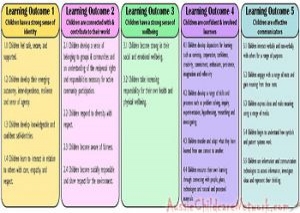 Here is the list of the EYLF Learning Outcomes that you can use as a guide or reference for your documentation and planning. The EYLF
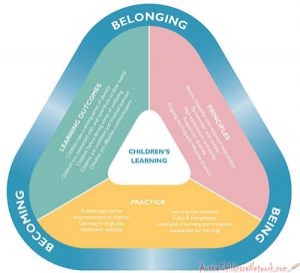 The EYLF is a guide which consists of Principles, Practices and 5 main Learning Outcomes along with each of their sub outcomes, based on identity,
 This is a guide on How to Write a Learning Story. It provides information on What Is A Learning Story, Writing A Learning Story, Sample
 One of the most important types of documentation methods that educators needs to be familiar with are “observations”. Observations are crucial for all early childhood
 To support children achieve learning outcomes from the EYLF Framework, the following list gives educators examples of how to promote children's learning in each individual
 Reflective practice is learning from everyday situations and issues and concerns that arise which form part of our daily routine while working in an early
 When observing children, it's important that we use a range of different observation methods from running records, learning stories to photographs and work samples. Using
 Within Australia, Programming and Planning is reflected and supported by the Early Years Learning Framework. Educators within early childhood settings, use the EYLF to guide
 This is a guide for educators on what to observe under each sub learning outcome from the EYLF Framework, when a child is engaged in
 The Early Years Learning Framework describes the curriculum as “all the interactions, experiences, activities, routines and events, planned and unplanned, that occur in an environment