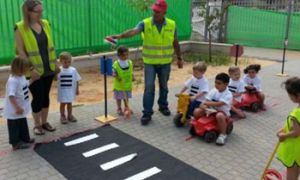
OSHC educators play a vital role in supporting children’s well-being during transitions, play, and rest. With new child safety reforms under the National Quality Framework (NQF) coming into effect from September 2025 and January 2026, services are required to adopt clearer boundaries and transparent practices around physical contact. This article explores how educators can balance emotional support with safeguarding obligations.
Why This Matters
- Children need comfort: Emotional reassurance through touch can help children regulate after separation, conflict, or injury.
- Safeguarding is paramount: The reforms emphasize professional boundaries, risk management, and transparency to protect both children and educators.
- Families expect clarity: Policies must be communicated openly so families understand how educators provide care and comfort.
Acceptable Forms of Physical Contact
Educators are encouraged to use intentional, child-led, and transparent touch:
- Hugging: Permitted when initiated by the child or clearly needed for comfort. Side hugs or brief embraces are preferred.
- Hand-holding: Appropriate for reassurance, guidance, or safety (e.g., crossing a car park).
- Patting or gentle touch: On the shoulder or back to calm or encourage.
- Lap-sitting: Generally discouraged; alternatives include sitting side-by-side, kneeling to the child’s level, or offering a cushion/comfort chair.
Professional Boundaries
- Visible spaces: Comforting touch should occur in open, observable areas, not isolated settings.
- Context matters: Educators ask themselves: Is this necessary? Is it culturally appropriate? Is it safe?
- Documentation: Services must record and report any concerns about inappropriate or excessive contact.
Practical Strategies for OSHC Educators
- Offer alternatives: Provide comfort items (pillows, soft toys) or invite children to sit nearby rather than on laps.
- Model consent: Ask children if they would like a hug or prefer another form of comfort.
- Cultural sensitivity: Respect family preferences and cultural norms around touch.
- Team reflection: Use staff meetings to discuss scenarios and ensure consistent practice.
Physical contact in OSHC is not banned; it is reframed. Educators are empowered to provide warmth and reassurance while maintaining professional boundaries. By embedding intentional, transparent, and child-led practices, services can meet safeguarding requirements and continue to nurture children’s emotional well-being.
Further Reading
Strategies To Build Relationships With Children
Children's Privacy During Toileting, Undressing and Dressing Times
How to Use Non-Verbal Communication In The Workplace



 The Children’s Services Award introduces a streamlined classification system and updated pay rates designed to better recognise the skills, qualifications, and responsibilities of early childhood
 The Children’s Services Award has 8 clear levels. These levels make it easier to understand where you fit, based on your experience, qualifications, and responsibilities.
 When working as a qualified early childhood teacher (with a university degree) within a service, your rate of pay will come from the Educational Services
 Diploma-qualified educators play a vital role in early childhood services, taking on responsibilities that range from supporting children’s learning and development to leading rooms and
 Certificate III qualified educators form the backbone of early childhood services, providing essential care and learning support for children across all settings. Their wages under
 Early Childhood Teachers (ECTs) play a vital role in leading curriculum and pedagogy in early learning settings. Regulation 272 of the Education and Care Services
 Discover how school readiness programs support children’s independence, confidence, and skills for a successful transition into primary school.
 When an Educator is not performing their tasks or responsibilities at best practice, these issues need to be addressed for the Educator to understand where
 Educators can maximise tax deductions by claiming classroom supplies, training, union fees, and home office costs this financial year.
 A staff appraisal is a formal, systematic process of determining and reviewing the performance of early childhood educators over a period of time, usually a