High-quality early childhood education is built on a cycle of self-assessment, critical reflection, and quality improvement planning. These three elements work together to ensure services not only meet the National Quality Standard (NQS) but also continuously evolve to provide meaningful, responsive learning environments.
-
Self-assessment helps educators evaluate their practices against the NQS and identify strengths and areas for growth.
-
Critical reflection deepens this process by asking why practices matter, exploring multiple perspectives, and considering the impact on children, families, and educators.
-
The QIP then transforms these insights into a documented plan with clear goals, strategies, and timelines for improvement.
Together, they create a cycle of continuous improvement that strengthens compliance, promotes professional growth, and ensures children thrive in environments that are thoughtful, inclusive, and engaging.
What is Self-Assessment?
Self-assessment is the process of evaluating and reflecting on one’s own practices, performance, and outcomes to identify strengths, weaknesses, and areas for improvement.
Key Features:
- Reflection on Practices: Educators assess how effectively they meet children’s needs and align with the EYLF.
- Evaluation Against Standards: Services review performance against the 7 Quality Areas of the NQS.
- Identifying Strengths: Recognising what the service does well.
- Pinpointing Areas for Improvement: Highlighting challenges or gaps.
- Continuous Improvement: An ongoing cycle of evaluating, planning, acting, and reflecting.
- Collaboration and Input: Families, staff, and children contribute to a holistic view.
What is a Quality Improvement Plan (QIP)?
The QIP is a formal document that records the outcomes of self-assessment and sets out strategies for improvement. It is a regulatory requirement under the NQS and must be updated regularly.
Key Features:
- Documentation of Self-Assessment: Captures reflections and evaluations in writing.
- Action Planning: Outlines specific goals, strategies, and timelines for improvement.
- Evidence of Compliance: Demonstrates to assessors how the service meets and plans to exceed standards.
- Living Document: Updated continuously as improvements are made and new priorities emerge.
Differences Between Self-Assessment and QIP
| Aspect | Self-Assessment | Quality Improvement Plan (QIP) |
|---|---|---|
| Nature | Reflective process | Formal documented plan |
| Focus | Identifying strengths & areas for improvement | Setting goals & strategies for improvement |
| Format | Informal notes, discussions, reflections | Structured written document |
| Timing | Ongoing, cyclical | Updated regularly, submitted when required |
| Audience | Internal (educators, families, children) | External (regulators, assessors, stakeholders) |
| Purpose | To evaluate practice | To demonstrate and plan improvement |
Practical Examples
-
Self-Assessment Example:
Educators reflect that outdoor play spaces are underutilised. Families mention children prefer indoor activities. Staff note safety concerns with uneven surfaces. -
QIP Example:
The service documents this reflection in the QIP, sets a goal to redesign outdoor spaces, outlines strategies (install shade sails, add sensory play areas, repair surfaces), assigns responsibilities, and sets a timeline for completion.
Why Both Matter
- Self-Assessment ensures educators remain reflective and responsive.
- QIP ensures those reflections translate into actionable, trackable improvements.
Together, they create a cycle of continuous improvement that strengthens compliance, enhances learning environments, and promotes professional growth.
Self-assessment and the QIP are two sides of the same coin. One is about thinking deeply, the other about acting strategically. By embedding both into everyday practice, services can ensure they not only meet but exceed the National Quality Standard, delivering the best outcomes for children, families, and educators alike.
Where Critical Reflection Fits
1. Within Self-Assessment
- Critical reflection is the engine of self-assessment.
- It moves beyond simply noting what happened (“we ran a sensory play activity”) to asking why it happened, how it impacted children, and what could be done differently.
- Example: Instead of just recording that children enjoyed water play, educators critically reflect on whether the activity promoted inquiry skills, how it supported diverse learners, and whether safety or inclusion could be improved.
2. Feeding into the QIP
- The insights from critical reflection become the evidence base for the QIP.
- Self-assessment identifies strengths and areas for improvement, but it’s critical reflection that explains why those areas matter and how they connect to quality outcomes.
- Example: Reflection reveals that transitions between activities are rushed, leading to stress for children. The QIP then documents this as a priority, with strategies like introducing visual cues or calming routines.
3. Ongoing Cycle of Improvement
- Critical reflection isn’t a one-off—it’s embedded in the continuous improvement loop.
- It ensures that changes recorded in the QIP are not just compliance-driven but genuinely responsive to children, families, and educators.
- Example: After implementing new outdoor play equipment, educators critically reflect on whether it fosters collaboration, meets diverse needs, and aligns with EYLF outcomes. Those reflections inform the next cycle of planning.
Key Differences
- Self-Assessment: Broad evaluation against standards.
- Critical Reflection: Deep questioning of practice, values, and outcomes.
- QIP: Documented plan that captures both evaluation and reflection, turning them into actionable strategies.
Why It Matters
Critical reflection ensures that:
- Self-assessment isn’t just a checklist exercise.
- The QIP is meaningful, not mechanical.
- Educators grow professionally by questioning assumptions and exploring multiple perspectives.
- Children benefit from programs that are continually refined with thoughtfulness and intentionality.
Example Scenario: Outdoor Play Spaces
Here’s a clear, practical example that shows how self-assessment, critical reflection, and the Quality Improvement Plan (QIP) connect in an early learning centre:
1. Self-Assessment
Educators review their practice against the National Quality Standard (NQS).
- Observation: Children are spending less time outdoors compared to indoors.
- Compliance check: Quality Area 3 (Physical Environment) requires services to provide safe, engaging outdoor spaces.
- Strengths: The centre has a large outdoor area with natural shade and equipment.
- Areas for improvement: Some equipment is outdated, and the space isn’t being used to its full potential.
2. Critical Reflection
Educators dig deeper into why this is happening and what it means.
- Questioning: Why are children choosing indoor play? Is the outdoor space meeting their developmental needs?
- Perspectives: Families have mentioned children prefer indoor activities; staff note safety concerns with uneven surfaces.
- Analysis: The current outdoor setup may not encourage exploration or collaborative play. It may unintentionally limit children’s engagement with nature.
- Reflection outcome: The team recognises that the outdoor environment needs redesigning to better support inquiry-based learning and inclusion.
3. Quality Improvement Plan (QIP)
The service documents the findings and sets actionable goals.
- Goal: Increase children’s engagement in outdoor play by redesigning the space.
- Strategies:
- Repair uneven surfaces to improve safety.
- Add sensory play areas (sand, water, garden beds).
- Introduce loose parts play (logs, tyres, crates).
- Create quiet zones for children who prefer calm outdoor experiences.
- Responsibility: Educational leader and maintenance team.
- Timeline: Complete redesign within 3 months.
- Evaluation: Monitor children’s usage of outdoor spaces and gather family feedback.
How They Work Together
- Self-assessment identifies the issue (low outdoor play engagement).
- Critical reflection explains why it matters and explores multiple perspectives.
- QIP turns those insights into a structured plan with goals, strategies, and timelines: self-assessment tells you what is happening, critical reflection asks why it matters, and the QIP records how you’ll improve.
Self-assessment tells you what is happening, critical reflection asks why it matters, and the QIP records how you’ll improve.
Further Reading
Self Assessment In Early Childhood Services
Process Of Self Assessment In An Early Childhood Setting
Steps in the Assessment and Rating Process
Understanding The Quality Improvement Plan In Early Childhood
Assessment and Rating Visit Tips, Tricks and Suggestions



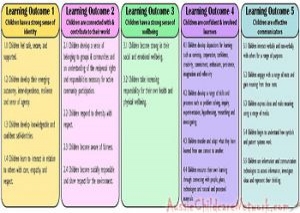 Here is the list of the EYLF Learning Outcomes that you can use as a guide or reference for your documentation and planning. The EYLF
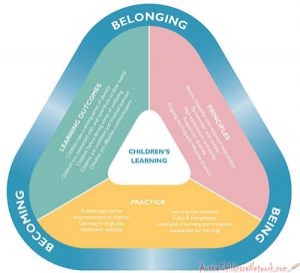 The EYLF is a guide which consists of Principles, Practices and 5 main Learning Outcomes along with each of their sub outcomes, based on identity,
 This is a guide on How to Write a Learning Story. It provides information on What Is A Learning Story, Writing A Learning Story, Sample
 One of the most important types of documentation methods that educators needs to be familiar with are “observations”. Observations are crucial for all early childhood
 To support children achieve learning outcomes from the EYLF Framework, the following list gives educators examples of how to promote children's learning in each individual
 Reflective practice is learning from everyday situations and issues and concerns that arise which form part of our daily routine while working in an early
 When observing children, it's important that we use a range of different observation methods from running records, learning stories to photographs and work samples. Using
 Within Australia, Programming and Planning is reflected and supported by the Early Years Learning Framework. Educators within early childhood settings, use the EYLF to guide
 This is a guide for educators on what to observe under each sub learning outcome from the EYLF Framework, when a child is engaged in
 The Early Years Learning Framework describes the curriculum as “all the interactions, experiences, activities, routines and events, planned and unplanned, that occur in an environment