Critical reflection is more than “thinking back” on what we do each day. It’s a deliberate process of questioning assumptions, evaluating decisions, and considering multiple perspectives. For educators, this practice is central to ensuring that programs are not only meaningful for children but also compliant with sector standards.
When educators critically reflect, they:
- Interrogate practice: Why did we choose this approach? Whose voices are represented?
- Connect theory to action: How does this align with child development research and the EYLF?
- Drive improvement: What changes will strengthen outcomes and compliance?
EYLF Connections
The Early Years Learning Framework (EYLF) embeds critical reflection across its principles and practices:
- Ongoing learning and reflective practice: Educators refine pedagogy through reflection.
- Assessment for learning: Reflection ensures observations link meaningfully to outcomes.
- Learning outcomes: Reflection helps educators track progress toward identity, wellbeing, and learning goals.
By explicitly linking reflections to EYLF outcomes, educators demonstrate intentionality and accountability in their programming.
NQS Requirements
The National Quality Standard (NQS) makes critical reflection a compliance expectation:
- QA1—Educational Program and Practice: Element 1.3.2 requires reflection on children’s learning and development.
- QA7—Governance and Leadership: Element 7.2.1 requires continuous improvement through reflective practice.
- QA4 – Staffing Arrangements: Reflection supports collaboration and mentoring.
Assessors look for documented evidence that reflection informs planning and decision-making. This means reflections must be visible, intentional, and linked to standards.
Compliance in Action
Critical reflection becomes compliance-ready when:
- Documented evidence: Reflections are recorded in journals, program notes, or QA folders.
- Cycle of planning: Reflection is part of the observation → analysis → planning → implementation → review cycle.
- Explicit links: Reflections reference EYLF outcomes or NQS elements directly.
For example:
“Today’s group project supported Outcome 2: Children are connected with and contribute to their world. Reflecting on this, we identified that our sustainability practices also align with NQS Element 3.2.3.”
Practical Strategies for Educators
- Use guiding questions: “Which EYLF outcome does this decision strengthen?” “How does this practice meet NQS Element 1.3.2?”
- Collaborate: Team reflections bring diverse perspectives and strengthen compliance evidence.
- Make it visible: Display reflective notes in program documentation or QA folders.
- Close the loop: Show how reflection leads to action and improvement.
Critical reflection is not just about compliance—it’s about professionalism and integrity. By embedding reflection into daily practice, educators:
- Elevate pedagogy from routine to intentional.
- Strengthen confidence during assessment and rating visits.
- Model continuous improvement for colleagues and students.
Critical reflection is the bridge between everyday practice and sector compliance. When educators explicitly link reflections to EYLF outcomes and NQS standards, they demonstrate both quality and accountability.
Further Reading
Educators' Guide To Critical Reflections
Practical Examples Of Critical Reflections In Early Childhood
Q: How Can I Create My Own Critical Reflections?
Critical Reflection Made Simple: Tools and Prompts



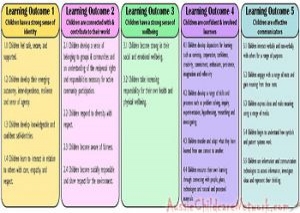 Here is the list of the EYLF Learning Outcomes that you can use as a guide or reference for your documentation and planning. The EYLF
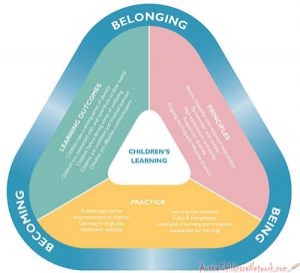 The EYLF is a guide which consists of Principles, Practices and 5 main Learning Outcomes along with each of their sub outcomes, based on identity,
 This is a guide on How to Write a Learning Story. It provides information on What Is A Learning Story, Writing A Learning Story, Sample
 One of the most important types of documentation methods that educators needs to be familiar with are “observations”. Observations are crucial for all early childhood
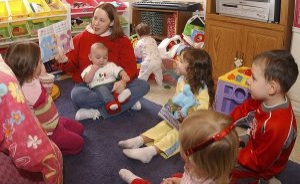 To support children achieve learning outcomes from the EYLF Framework, the following list gives educators examples of how to promote children's learning in each individual
 Reflective practice is learning from everyday situations and issues and concerns that arise which form part of our daily routine while working in an early
 When observing children, it's important that we use a range of different observation methods from running records, learning stories to photographs and work samples. Using
 Within Australia, Programming and Planning is reflected and supported by the Early Years Learning Framework. Educators within early childhood settings, use the EYLF to guide
 This is a guide for educators on what to observe under each sub learning outcome from the EYLF Framework, when a child is engaged in
 The Early Years Learning Framework describes the curriculum as “all the interactions, experiences, activities, routines and events, planned and unplanned, that occur in an environment