
Play in OOSH settings is more than just fun; it is a powerful tool for children’s social, emotional, and cognitive growth. As educators, reflecting on play experiences helps us understand how children are learning, interacting, and developing in these settings.
Critical reflection ensures that play opportunities are inclusive, meaningful, and aligned with both developmental needs and program goals. By asking thoughtful questions, educators can evaluate the quality of play and make informed decisions to enhance children’s experiences.
Key Reflection Dimensions
1. Learning & Development
- How did play extend children’s problem-solving, creativity, or resilience?
- Were children experimenting with new skills or concepts?
- Did play connect to curriculum or program goals?
2. Social Interaction
- How did children negotiate roles, share resources, or resolve conflicts?
- Did play foster cooperation, empathy, or leadership?
- Were quieter voices included and valued?
3. Inclusion & Diversity
- Did play reflect diverse cultures, languages, and family experiences?
- Were materials accessible to children with different abilities?
- Did educator choices challenge stereotypes or biases?
4. Environment & Materials
- Was the environment welcoming, safe, and stimulating?
- Did the physical layout encourage collaboration, movement, and exploration?
- Were indoor and outdoor spaces balanced to support different play styles?
- Did the environment allow for both quiet reflection and energetic play?
- Were materials open-ended enough to spark imagination and sustained engagement?
5. Educator Role
- Did I scaffold learning without dominating play?
- How did my prompts extend children’s ideas?
- Did I allow space for child-led and spontaneous creativity?
Daily Reflection Prompts
- What new skills emerged in play today?
- Which play scenarios revealed problem-solving strategies?
- How did children express imagination or storytelling?
- What challenges arose in group play, and how were they resolved?
- How can tomorrow’s environment better support sustained play?
Watchpoints
- Over-structured play: Risks limiting creativity.
- Dominant voices: May overshadow quieter children.
- Cultural gaps: Play themes may unintentionally exclude diverse perspectives.
- Environment gaps: Spaces that are too crowded, noisy, or poorly resourced can hinder meaningful play.
- Documentation gaps: Without reflection notes, insights into learning may be lost.
Critical reflection is not just a compliance exercise; it is the heartbeat of quality practice in OOSH. By pausing to ask meaningful questions about play, educators gain deeper insights into how children learn, connect, and thrive. Reflection on the environment, alongside learning, social interaction, inclusion, and educator roles, ensures that play is purposeful and empowering.
When educators commit to ongoing reflection, they create spaces where every child feels valued, challenged, and inspired. In doing so, play becomes more than recreation; it becomes a foundation for lifelong curiosity, resilience, and joy.
Further Reading
Benefits Of Sensory Play
Messy Play: Why Dirt Is Proof of Learning
How Pretend Play Supports Children's Learning
Parent Factsheet: The Importance Of Play In A Child's Life
Play Principles




 The Children’s Services Award introduces a streamlined classification system and updated pay rates designed to better recognise the skills, qualifications, and responsibilities of early childhood
 The Children’s Services Award has 8 clear levels. These levels make it easier to understand where you fit, based on your experience, qualifications, and responsibilities.
 When working as a qualified early childhood teacher (with a university degree) within a service, your rate of pay will come from the Educational Services
 Diploma-qualified educators play a vital role in early childhood services, taking on responsibilities that range from supporting children’s learning and development to leading rooms and
 Certificate III qualified educators form the backbone of early childhood services, providing essential care and learning support for children across all settings. Their wages under
 Early Childhood Teachers (ECTs) play a vital role in leading curriculum and pedagogy in early learning settings. Regulation 272 of the Education and Care Services
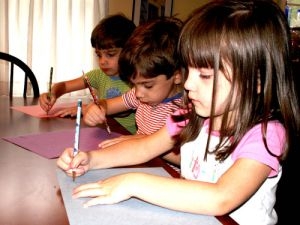 Discover how school readiness programs support children’s independence, confidence, and skills for a successful transition into primary school.
 When an Educator is not performing their tasks or responsibilities at best practice, these issues need to be addressed for the Educator to understand where
 Educators can maximise tax deductions by claiming classroom supplies, training, union fees, and home office costs this financial year.
 A staff appraisal is a formal, systematic process of determining and reviewing the performance of early childhood educators over a period of time, usually a