Many educators feel pressure to capture observations quickly during busy routines. It’s common to feel “blank” in the moment, only to think of better wording later. Using a small notepad or digital prompt list can help you anchor your observations with developmental language.
Strategies for Overcoming “Blank Mind” Moments
- Use shorthand notes: Jot down quick keywords during play, then expand later.
- Keep a prompt list handy: A small card or notebook with developmental terms can jog your memory.
- Focus on verbs: Write what the child did (e.g., “stacked,” “balanced,” “negotiated”) rather than trying to craft full sentences immediately.
- Reflect afterwards: Observations don’t need to be perfect in the moment—add detail later when you have time.
- Collaborate: Share prompt lists with colleagues so everyone builds confidence in observation language.
Keywords for Observation Prompts
Cognitive / Thinking Skills
- Problem-solving
- Cause and effect
- Trial and error
- Sequencing
- Memory recall
- Classification / sorting
- Pattern recognition
- Innovation / creativity
- Concentration / focus
Physical Development
- Hand-eye coordination
- Fine motor skills (grasping, threading, cutting)
- Gross motor skills (running, climbing, balancing)
- Spatial awareness
- Core strength
- Coordination of both sides of the body
- Risk-taking in movement
- Manipulation of tools/materials
Social & Emotional Development
- Peer collaboration
- Turn-taking
- Sharing resources
- Negotiation
- Empathy
- Conflict resolution
- Self-regulation
- Confidence building
- Resilience
- Leadership in play
Language & Communication
- Vocabulary expansion
- Questioning
- Storytelling
- Listening attentively
- Expressive language
- Non-verbal communication (gestures, facial expressions)
- Following instructions
- Conversation skills
- Role play dialogue
Creative & Imaginative Play
- Pretend play
- Role play scenarios
- Artistic expression (drawing, painting, sculpting)
- Music and rhythm exploration
- Dramatic play
- Innovation with materials
- Symbolic representation
Learning Dispositions
- Curiosity
- Independence
- Persistence
- Risk-taking
- Adaptability
- Initiative
- Engagement
- Reflective thinking
Quick Tips for Using Prompts
- Keep a small card or notebook with these words handy during the day.
- Jot down 2–3 keywords while observing, then expand into full sentences later.
- Rotate prompts depending on the focus area (e.g., social skills during group play, fine motor during art).
- Use prompts to connect observations back to EYLF or MTOP outcomes.
Quick Reflection Prompts
- What skill was the child practicing?
- How did they interact with peers or materials?
- What challenge did they face, and how did they respond?
- What learning outcome does this connect to?
Observations don’t need to be polished in the moment. A few well-chosen keywords can capture the essence of learning, and you can expand them later into meaningful documentation. Using prompts like problem solving, peer collaboration, or fine motor skills ensures your records reflect developmental progress without the stress of “perfect wording” under pressure.
Further Reading
Observation Starter Prompts
Prompts for Each Stage of the Observation Cycle
EYLF Keywords & Prompts for Daily Observations & Planning
Writing Prompts For Evaluations, Reflections and Children
Descriptive Words For Documentation, Observations and Reports



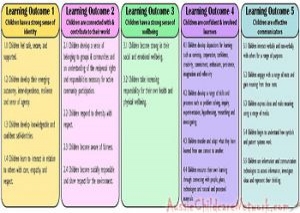 Here is the list of the EYLF Learning Outcomes that you can use as a guide or reference for your documentation and planning. The EYLF
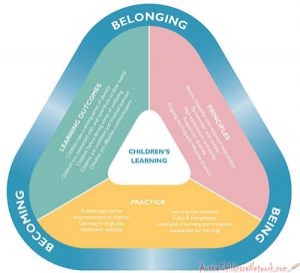 The EYLF is a guide which consists of Principles, Practices and 5 main Learning Outcomes along with each of their sub outcomes, based on identity,
 This is a guide on How to Write a Learning Story. It provides information on What Is A Learning Story, Writing A Learning Story, Sample
 One of the most important types of documentation methods that educators needs to be familiar with are “observations”. Observations are crucial for all early childhood
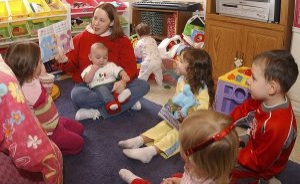 To support children achieve learning outcomes from the EYLF Framework, the following list gives educators examples of how to promote children's learning in each individual
 Reflective practice is learning from everyday situations and issues and concerns that arise which form part of our daily routine while working in an early
 When observing children, it's important that we use a range of different observation methods from running records, learning stories to photographs and work samples. Using
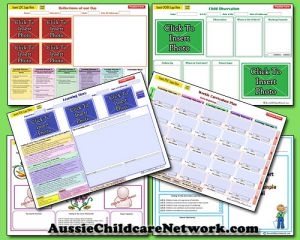 Within Australia, Programming and Planning is reflected and supported by the Early Years Learning Framework. Educators within early childhood settings, use the EYLF to guide
 This is a guide for educators on what to observe under each sub learning outcome from the EYLF Framework, when a child is engaged in
 The Early Years Learning Framework describes the curriculum as “all the interactions, experiences, activities, routines and events, planned and unplanned, that occur in an environment