



When documenting children’s learning, educators often feel pressured to align every observation with codes, sub‑outcomes, or compliance language. Yet, meaningful documentation doesn’t need to be weighed down by technical jargon. Instead, it can highlight dispositions, behaviours, and processes that reveal how children are engaging with their world.
The following keywords provide a practical lens for educators: they are simple, observable, and flexible enough to be woven into analysis, reflections, and planning notes. By focusing on these words, educators can capture the richness of children’s identity, community, well-being, learning, and communication without losing sight of the bigger picture. They act as anchors for professional reflection and as bridges to families, making documentation both accessible and purposeful.

Evaluating children’s goals is more than ticking boxes; it’s about noticing growth, reflecting on what supported it, and planning the next steps with intention. The framework reminds us that outcomes are not abstract; they are lived through everyday routines, play, and relationships. By using a simple cycle of Observation, Reflection, and Next Step, educators can make progress visible, adapt strategies responsively, and document learning in ways that honour each child’s journey.
Prompts for each stage of the observation cycle guide educators to observe, analyse, plan, and reflect—making documentation clear, consistent, and purposeful.

EYLF Outcome 1 Floorbook prompts for identity, belonging, autonomy, emotional well-being, and empathy. Includes child‑voice questions, educator reflections, group prompts, and page starters.
Outcome 1 of the EYLF focuses on identity: a child’s sense of belonging, autonomy, emotional safety, and connection to others. Floorbooks are a powerful way to capture this learning because they centre children’s voices, make thinking visible, and document identity as it unfolds in real time.

A clear, practical EYLF Outcome 1 cheat sheet for educators, with examples, observation wording, and strategies to document children’s identity, belonging, autonomy, emotional well-being, and respectful relationships across daily routines.
Outcome 1 is the foundation of early childhood learning; everything else grows from here. It focuses on children’s identity: how they see themselves, how safe and supported they feel, and how they relate to others. When children experience belonging, security, autonomy, emotional well-being, and respectful relationships, they develop the confidence and resilience needed for all future learning.
This cheat sheet gives educators a practical, easy‑to‑use guide to understanding, observing, and documenting Outcome 1 across everyday routines. With clear indicators, real-world examples, and ready‑to‑use documentation prompts, educators can capture meaningful learning without unnecessary paperwork.

Building secure, trusting relationships is the heart of early childhood education, and EYLF Outcome 1.1 places this at the centre of children’s learning and well-being. Before children can explore, communicate, or engage confidently with others, they must first feel safe, supported, and emotionally held within their environment.
Learn how to understand, support, and document EYLF Outcome 1.1 with clear examples, practical strategies, and observation wording that help educators build secure, trusting relationships in early childhood settings.

Linking to the EYLF is one of the most misunderstood parts of early childhood documentation. Many educators feel pressured to attach outcome numbers to every observation, photo, or program entry even though this is not required by the National Regulations, the EYLF, or ACECQA.
This guide offers a clear, practical approach to linking that centres professional judgment, meaningful learning, and low‑paperwork practice. Instead of coding everything, educators can use linking strategically only when it genuinely supports planning, communication, or assessment.
In early childhood settings across Australia, the Early Years Learning Framework (EYLF) is more than a document; it’s a living, breathing presence in children’s play. When educators truly see the EYLF in action, they witness a tapestry of learning, relationships, and identity unfolding moment by moment. This article explores how the EYLF manifests through play and how educators can deepen their observations, documentation, and advocacy by tuning into its rhythms.

This mapping tool is designed to help educators translate everyday moments into meaningful documentation aligned with the EYLF. By spotlighting real examples of children’s play, interactions, and discoveries, it supports reflective practice and strengthens outcome-based planning.

The EYLF provides a foundation for quality early childhood education in Australia. At its heart are the five learning outcomes, which guide educators in supporting children’s holistic development. These outcomes—Identity, Community, Well-being, Learning, and Communication—are essential, but remembering them in order can sometimes be tricky. To make them easier to recall, educators can use creative strategies such as mnemonics, visual aids, storytelling, and interactive activities. This article explores fun and practical methods to embed the outcomes into everyday practice.
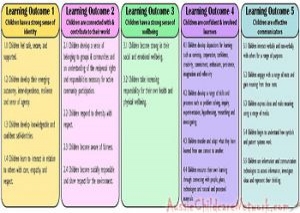 Here is the list of the EYLF Learning Outcomes that you can use as a guide or reference for your documentation and planning. The EYLF… Read More
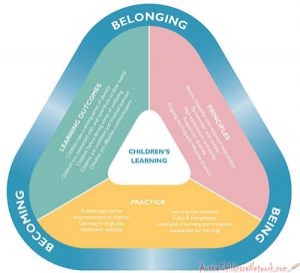 The EYLF is a guide which consists of Principles, Practices and 5 main Learning Outcomes along with each of their sub outcomes, based on identity,… Read More
 This is a guide on How to Write a Learning Story. It provides information on What Is A Learning Story, Writing A Learning Story, Sample… Read More
 One of the most important types of documentation methods that educators needs to be familiar with are “observations”. Observations are crucial for all early childhood… Read More
 To support children achieve learning outcomes from the EYLF Framework, the following list gives educators examples of how to promote children's learning in each individual… Read More
 Reflective practice is learning from everyday situations and issues and concerns that arise which form part of our daily routine while working in an early… Read More
 When observing children, it's important that we use a range of different observation methods from running records, learning stories to photographs and work samples. Using… Read More
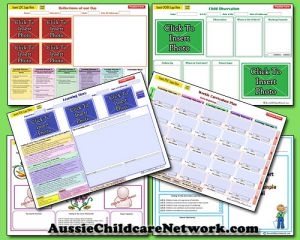 Within Australia, Programming and Planning is reflected and supported by the Early Years Learning Framework. Educators within early childhood settings, use the EYLF to guide… Read More
 This is a guide for educators on what to observe under each sub learning outcome from the EYLF Framework, when a child is engaged in… Read More
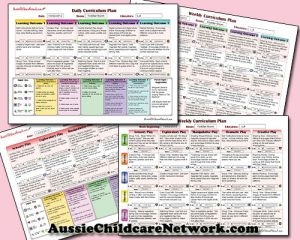 The Early Years Learning Framework describes the curriculum as “all the interactions, experiences, activities, routines and events, planned and unplanned, that occur in an environment… Read More

Developing a sense of belonging is crucial for children to feel secure and loved both...
See more...
Pregnant educators in early childhood: talking to management, knowing CMV risks, workplace rights, safe duties...
See more...
Beyond regulatory checks, recognising and responding to grooming behaviours is pivotal to protecting children’s well-being—something...
See more...