



In a landmark initiative to elevate public understanding of early childhood development, The Princess of Wales and the Centre for Early Childhood have unveiled a compelling new film series that delves into the science of social and emotional growth in the earliest years of life.
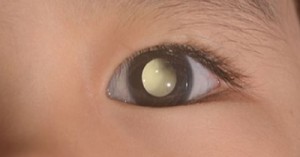
In a powerful reminder of the life-saving potential of educator vigilance, a Queensland early childhood teacher recently spotted a subtle anomaly in a child’s eye—leading to the diagnosis of a rare and aggressive cancer, retinoblastoma. Her instinct and attention to detail didn’t just raise a red flag. It saved a life.

Australia’s most iconic children’s program, Play School, has teamed up with Little Scientists to bring early childhood educators a vibrant suite of STEM experiments designed for children aged 2–8 years. This exciting collaboration aligns with Series 3 and 4 of Play School’s Science Time, offering hands-on learning experiences that explore everything from sound waves and slime to moon craters and solar energy.

South Australia has become the first Australian state to implement a formal ban on mobile phones within early childhood services. The new regulation is designed to address concerns related to child safety, privacy, and professional conduct in early learning environments.

In a significant move toward strengthening child protection across Australia, the federal government has mobilized a specialist unit to assist in the rollout of a nationwide Working with Children Check (WWCC) system. This marks a pivotal step in unifying fragmented state and territory-based checks into a cohesive national register.

A childcare educator has been dismissed from a service in White Rock following an alleged incident involving a four-year-old boy, who was allegedly struck with a mop and sustained minor injuries. While Queensland Police concluded its investigation without laying criminal charges, the educator’s termination remains upheld by the centre.

A 26-year-old man, David William James, has been charged with multiple offences after allegedly producing child abuse material while employed at six out-of-school hours (OOSH) care services in Sydney between April 2021 and May 2024.

Parliament has passed legislation enabling the federal government to suspend or revoke Child Care Subsidy (CCS) funding for early childhood education providers that fail to meet prescribed safety standards.
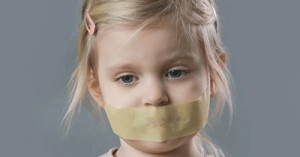
A childcare centre on Sydney’s Upper North Shore has received an official regulatory warning after photographs surfaced showing toddlers with their mouths taped shut. According to the report by 7NEWS Sydney, the incident occurred during what staff described as a “breathing exercise.”
The Australian childcare sector is reaching a critical tipping point, where delayed reforms and missed safety opportunities are placing children at unacceptable risk. As highlighted in recent coverage, Shadow Education Minister Jonathon Duniam has called on the federal government to act without delay, warning that “there is not a day to waste” when it comes to protecting our youngest citizens.
 The Children’s Services Award introduces a streamlined classification system and updated pay rates designed to better recognise the skills, qualifications, and responsibilities of early childhood… Read More
 Children need safe and positive environments to learn and grow. To ensure this, services and educators need to ensure effective supervision at all times. The… Read More
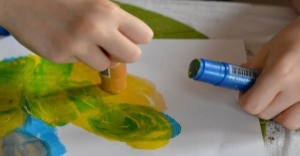 Floorbook is a documentation approach that uses a large book with blank pages for children to record different aspects of their learning in small groups… Read More
 In Norway and most other Scandinavian countries, children nap in the outdoors. According, to research outdoor sleeping not only promotes better daytime sleeping, but it… Read More
 Educational leaders play a crucial role in their early childhood service by ensuring that the educational program aligns with best practices and supports the holistic… Read More
 From 2026, every educator covered by the Children’s Services Award will move into a new, simplified classification structure. Instead of navigating 30 different levels, educators… Read More
 Nature programs in early childhood settings are a fantastic way to connect children with the natural world and promote holistic development. The following article provides… Read More
 Schemas are patterns of repeated behavior that allow children to explore and express developing ideas and thoughts through their play and exploration. The following article… Read More
 The following article lists 30 art and craft descriptions and links to the EYLF. These can be used as a blurb, during observations, used for… Read More
 Positive phrases play a crucial role in children's growth because they help nurture their emotional, social, and cognitive development. The following article lists 30 positive… Read More
Play is a process that is freely chosen, personally directed and intrinsically motivated. In this...
See more...
Summative assessments are more than end-point reflections—they’re storytelling tools that honour each child’s journey. They...
See more...
Music activities are a fantastic way to engage children, enhance their creativity, and support their...
See more...