



With new child safety regulations having just come into effect, here’s a sector-responsive list of Quality Improvement Plan (QIP) priorities that services across Australia should consider updating immediately. These priorities align with the National Quality Standard (NQS), recent regulatory changes, and sector best practice.

In early childhood settings, food safety isn’t just a regulatory checkbox—it’s a daily responsibility tied to children’s wellbeing. Whether you're preparing snacks, managing mealtimes, or supporting nutrition education, having a valid food handling certificate is essential. This guide consolidates the most widely recommended options from sector peers across Australia, saving you time and stress.

In early childhood education across Australia, the question of whether educators can refuse to work alone is no longer hypothetical—it’s urgent. With rising behavioural complexities, mounting workloads, and increasing safety concerns, educators are asking, "Do I have the right to say no?" The answer is layered, but powerful: Yes, you do have a leg to stand on. And it’s time we stood together.

Father’s Day offers a chance to celebrate love, care, and connection—but for children without fathers, it can also be a sensitive time. In early childhood settings, educators have a responsibility to ensure that celebrations are inclusive, emotionally safe, and reflective of diverse family structures.

Across the early childhood education and care sector, educators are sounding the alarm: current staffing ratios are insufficient to deliver safe, meaningful, and developmentally appropriate care. While recent reforms have focused on mobile phone bans and child safety protocols, many in the sector argue that these measures overlook a deeper structural issue—chronic understaffing driven by profit-based ratio models.

As national reforms tighten mobile phone use in early childhood education and care (ECEC) settings across Australia, educators are asking, "Why not apply similar protections in primary and secondary schools?"
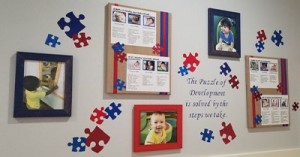
Using blurbs with wall displays in early childhood settings offers a powerful blend of pedagogical value, family engagement, and professional reflection. The following provides blurbs for a variety of activities. Each one is designed to celebrate children's learning, link to EYLF outcomes, and bring warmth and meaning to your wall displays.

A: In early childhood education and care (ECEC) settings across Australia, mobile phone use by educators is now subject to strict national reforms aimed at safeguarding children’s well-being and ensuring professional presence.

Here’s a clear, sector-aligned policy template tailored for early childhood education and care services, ensuring compliance with the upcoming 2026 NQF reforms and reinforcing your commitment to child safety and educator well-being.

Here’s a curated set of critical reflection questions tailored for room displays in early childhood settings—designed to provoke deeper thinking around pedagogy, child voice, aesthetics, and relational intent. These can be used during planning, team reflection, or documentation audits.
 The Children’s Services Award introduces a streamlined classification system and updated pay rates designed to better recognise the skills, qualifications, and responsibilities of early childhood… Read More
 The Children’s Services Award has 8 clear levels. These levels make it easier to understand where you fit, based on your experience, qualifications, and responsibilities.… Read More
 When working as a qualified early childhood teacher (with a university degree) within a service, your rate of pay will come from the Educational Services… Read More
 Diploma-qualified educators play a vital role in early childhood services, taking on responsibilities that range from supporting children’s learning and development to leading rooms and… Read More
 Certificate III qualified educators form the backbone of early childhood services, providing essential care and learning support for children across all settings. Their wages under… Read More
 Early Childhood Teachers (ECTs) play a vital role in leading curriculum and pedagogy in early learning settings. Regulation 272 of the Education and Care Services… Read More
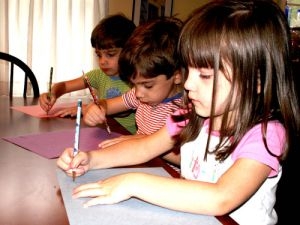 Discover how school readiness programs support children’s independence, confidence, and skills for a successful transition into primary school.
Read More
Discover how school readiness programs support children’s independence, confidence, and skills for a successful transition into primary school.
Read More
 When an Educator is not performing their tasks or responsibilities at best practice, these issues need to be addressed for the Educator to understand where… Read More
 Educators can maximise tax deductions by claiming classroom supplies, training, union fees, and home office costs this financial year.
Read More
Educators can maximise tax deductions by claiming classroom supplies, training, union fees, and home office costs this financial year.
Read More
 A staff appraisal is a formal, systematic process of determining and reviewing the performance of early childhood educators over a period of time, usually a… Read More

“Agency” this word is very familiar to the parents and in early childhood care. Agency...
See more...
Father’s Day offers a chance to celebrate love, care, and connection—but for children without fathers...
See more...
Implementing sustainable practices in a preschool room is a fantastic way to teach children about...
See more...