Engaging colour learning photo ideas for childcare: fun sorting, matching, and sensory activities to build recognition and creativity.
Colour recognition is a foundational skill in early childhood, supporting cognitive development, language, and creativity. Engaging photo‑based activities help children explore colours in playful, hands‑on ways. These ideas align with EYLF Outcome 4 (Children are confident and involved learners) and QA1 (Educational program and practice), encouraging exploration, sorting, and classification.
Colour Detective Bears
Children match colourful bear counters to laminated paint swatches.
Strategies for Educators:
- Encourage sorting by colour groups.
- Extend learning by asking: “How many red bears can you find?”
- Link to numeracy through counting and grouping.

Image Reference: Pitchcraft Studio, Pinterest
Nature Colour Cards
Cards feature everyday objects and animals organised by colour.
Strategies for Educators:
Invite children to describe similarities across items.
Use cards for memory games or scavenger hunts.
Support language by naming shades (e.g., crimson, sky blue).
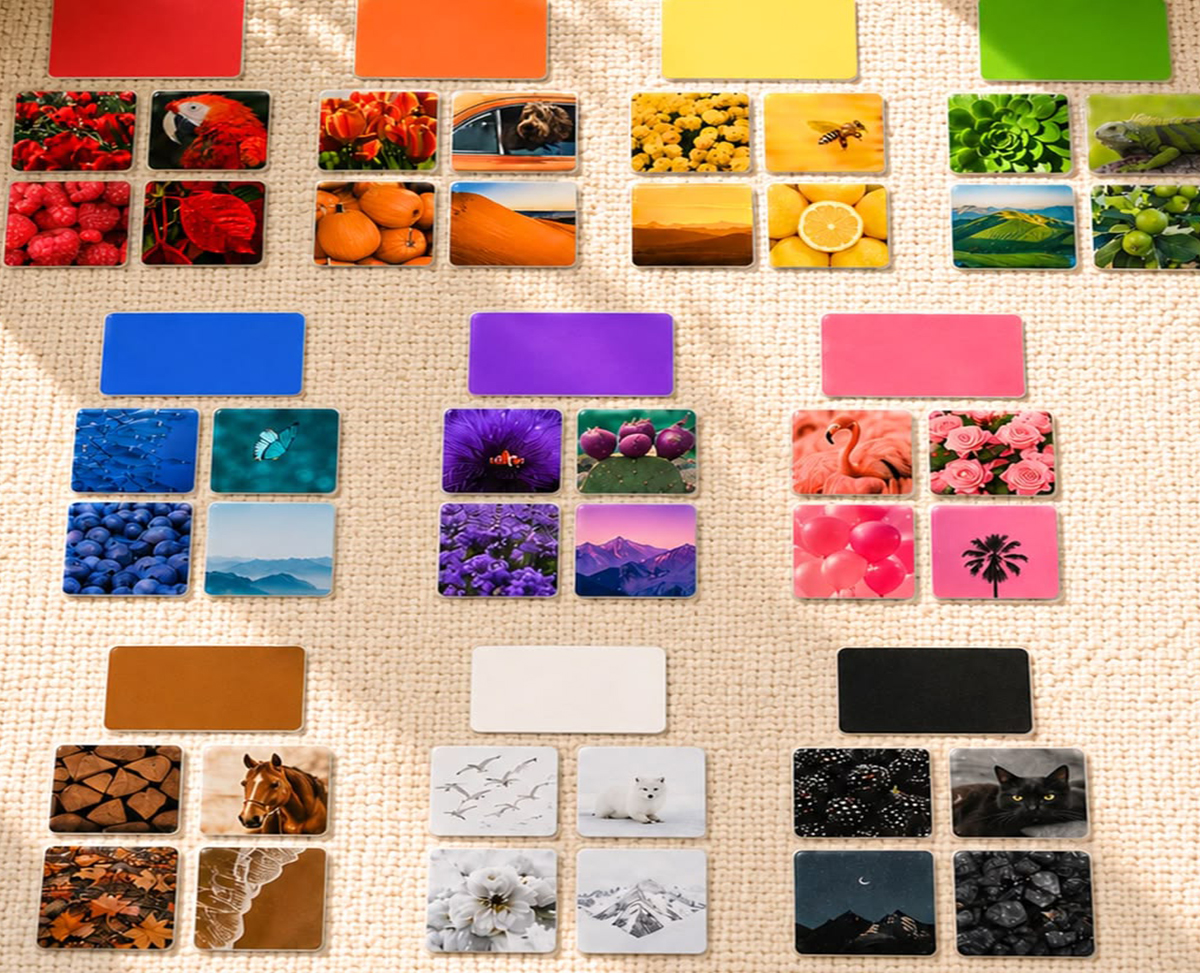
Image Reference: Etsy, Pinterest
Colour Collage Boards
Buttons, yarn, and textured items arranged on colour‑themed boards.
Strategies for Educators:
- Encourage tactile exploration of textures.
- Extend into art by creating new collages.
- Link to sensory learning and fine motor skills.
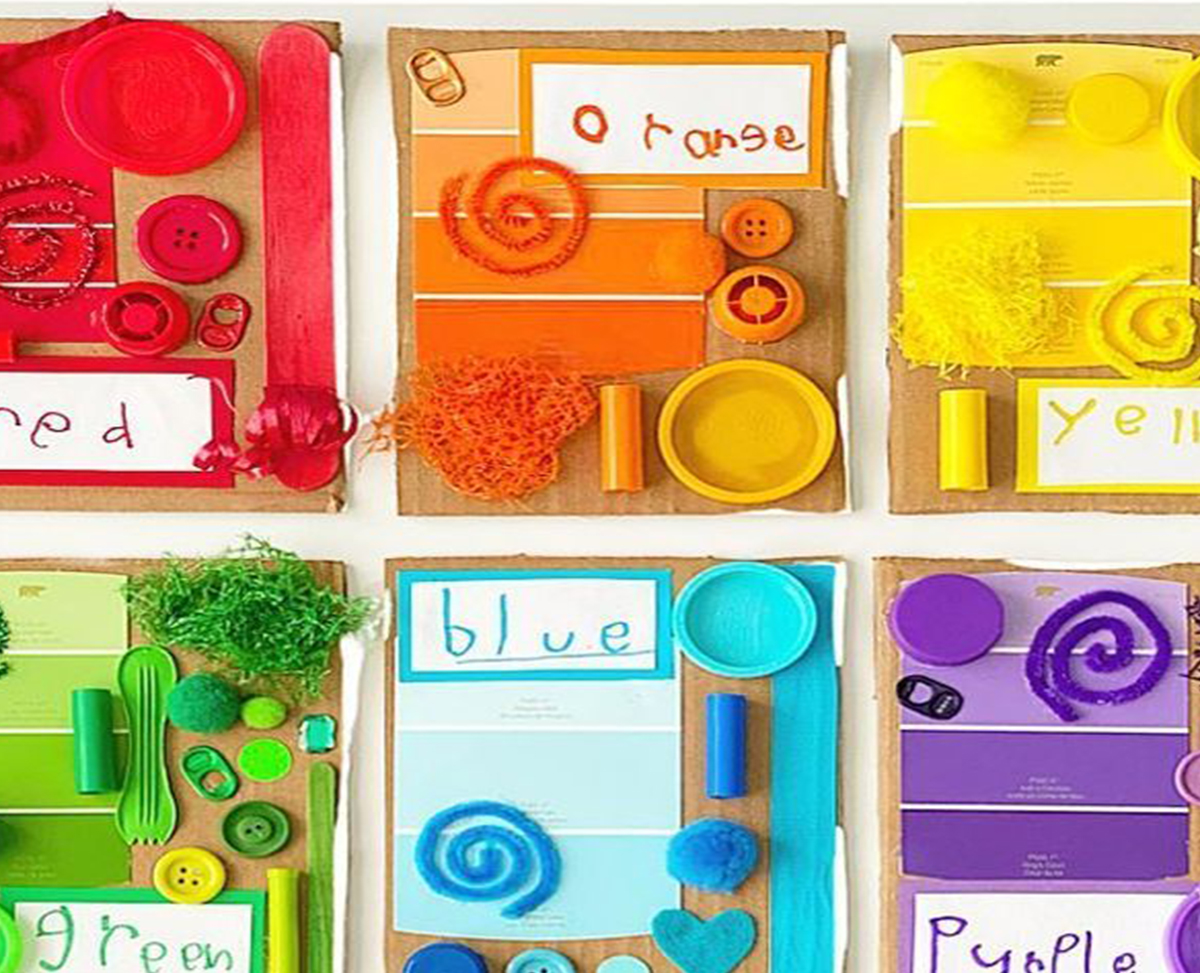
Image Reference: Joanna Dims, Pinterest
Cupcake Liner Sorting
Children place coloured objects into matching silicone liners.
Strategies for Educators:
Prompt sorting by shape as well as colour.
Encourage children to invent their own sorting rules.
Support literacy by pairing with colour word cards.

Image Reference: Portal do Morumbi, Pinterest
Rainbow Pom‑Pom Play
Pom‑poms sorted into bowls using tweezers.
Strategies for Educators:
Strengthen fine motor skills with tweezers.
Extend into pattern creation (red‑blue‑yellow).
Support mindfulness through calm, repetitive sorting.
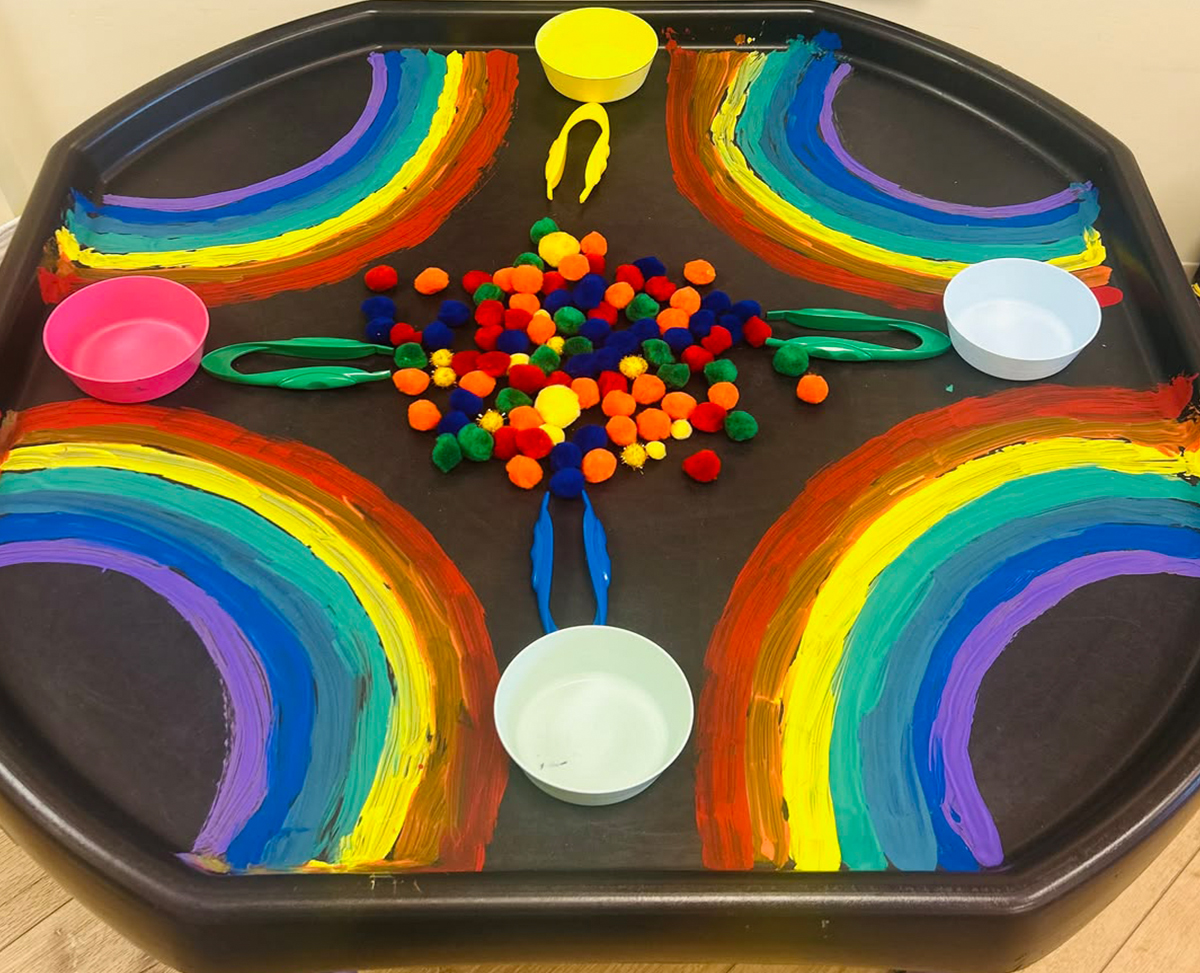
Image Reference: Afsa Kauser, Pinterest
Toy Car Colour Match
Children match cars to coloured mats or paper sheets.
Strategies for Educators:
Encourage classification by size and type.
Extend into imaginative play with “traffic lights” or “parking lots.”
Link to STEM by discussing transport and design.

Image Reference: Megan Hussey, Pinterest
Straw Threading Sort
Children thread colourful straw pieces onto matching pipe cleaners.
Strategies for Educators:
- Encourage sorting by colour and length.
- Extend into fine motor practice through threading.
- Link to STEM by discussing patterns and sequencing.
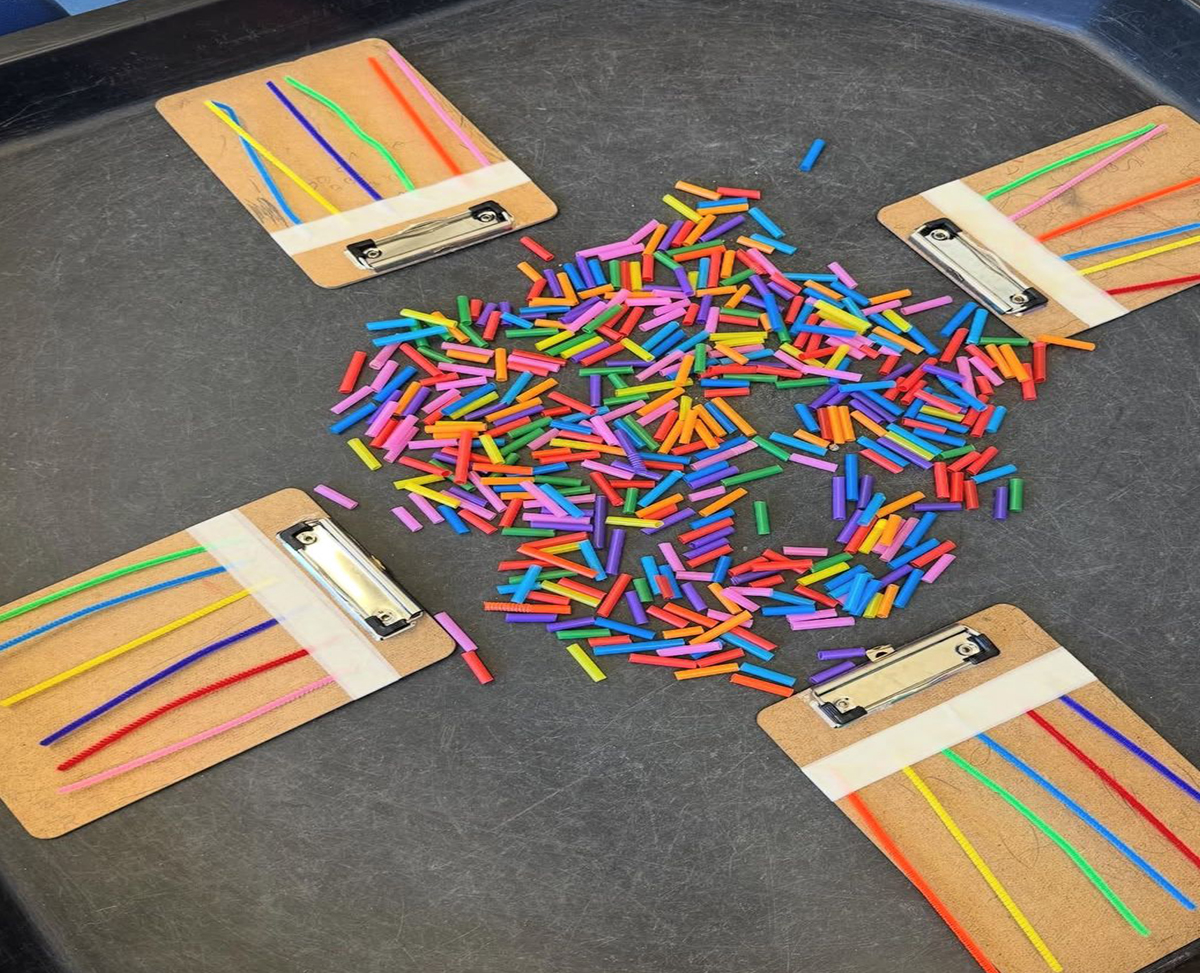
Image Reference: Susan Laslett, Pinterest
Pom‑Pom Car Match
Children use tweezers to place pom‑poms onto matching coloured car cutouts.
Strategies for Educators:
- Strengthen hand‑eye coordination and grip.
- Extend into imaginative play with “car races” or “garage parking".
- Link to literacy by pairing with colour word cards.
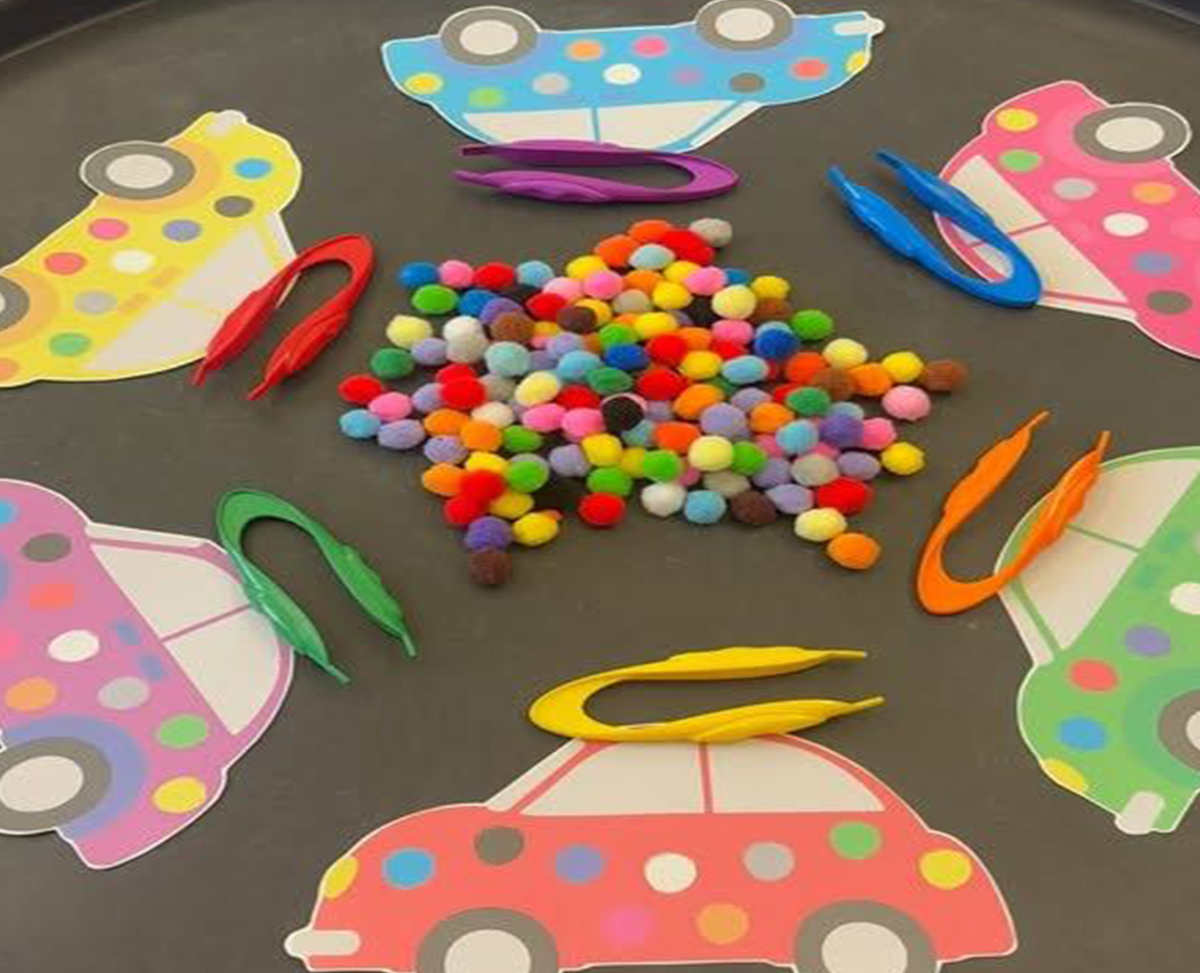
Image Reference: Bhattachanrina, Pinterest
Pom‑Pom Tray Sorting
Children sort pom‑poms into colour‑coded trays using tweezers.
Strategies for Educators:
- Encourage classification by size and shade.
- Extend into pattern creation (e.g., red‑yellow‑blue).
- Link to numeracy by counting sorted items.
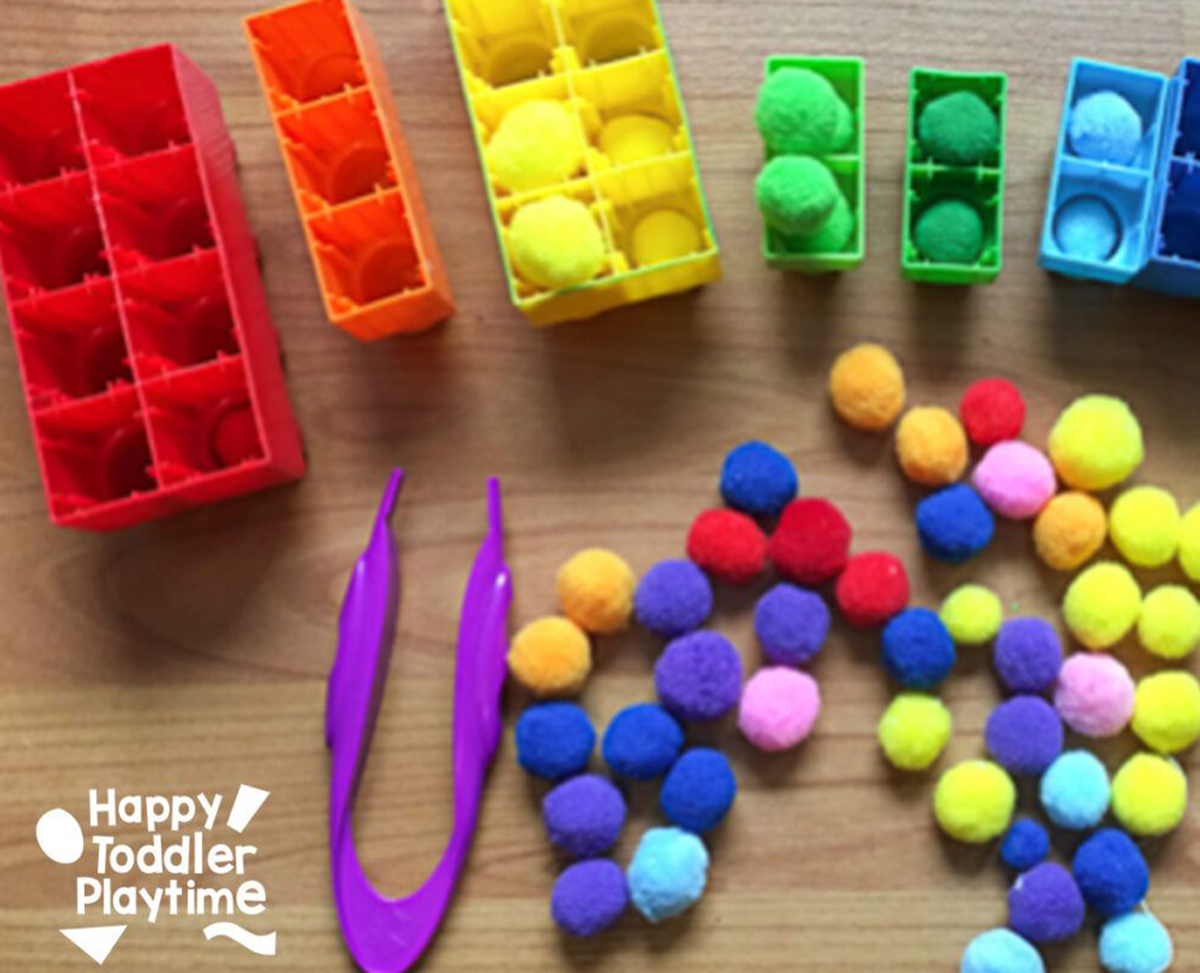
Image Reference: Happy Toddler Playtime, Pinterest
Practical Strategies for Educators
- Offer Everyday Objects: Use familiar items like cars, pom‑poms, or bears.
- Encourage Language Development: Pair colour names with descriptive words.
- Link to EYLF: Highlight connections to identity, communication, and confident learning.
- Document Learning: Capture photos and reflections to share with families.
Colour learning activities empower children to explore, classify, and create in meaningful ways. By embedding these photo ideas into everyday practice, educators foster creativity, language, and confident learning. With thoughtful strategies and awareness of challenges, colour recognition becomes a joyful cornerstone of early childhood education.
Further Reading
Colour Sorter
Colours In Different Languages Posters
Colour Sorting Tubes
Soccer Ball Colour Match
Colours Posters

 Open ended questions cannot be responded to with one word answers such as yes or no. These types of questions enables a child to provide
 During your child’s preschool years, an important milestone begins to emerge. This is the development of pre-writing skills. Pre-writing skills are used to encourage, develop
 An Acknowledgment of the Country is a way of showing respect for the Traditional Owners and can be given by both non-Indigenous people and Aboriginal
 Open ended materials enables children to play freely. They are objects that have no rules to follow, use or function. Raw materials that can be
 Language plays an important role in a child’s development. It enables a child to communicate effectively with their family, learn at school, socialize with friends,
 Like adults, children have to deal with their own stress in life. Moving house, starting a new school, preparing for a new sibling - these are
 Playdough is such a versatile material. It provides numerous benefits to children as they manipulate it, it is safe and soothing and provides children with
 Teaching children about sustainability enables them to appreciate and respect the natural environment. Early childhood services can provide meaningful hand on learning experiences in order
 Recycling is an important concept that teaches children to care for the environment. It encourages children to be responsible and show a growing appreciating for
 Incursions provide children with the opportunity to explore meaningful learning experiences in the comfort of their early childhood service. The following provides a directory of