



A: Dealing with negative behaviors such as passive aggressiveness, negativity, gossiping, cliques, favoritism, and a lack of motivation within an educator team is a challenging yet critical leadership task. These behaviours not only disrupt team cohesion but can also trickle down and impact the learning environment provided for the children. Drawing on experiences shared within the Educational Leaders and EYLF/NQS support groups, here are some strategies and points to consider:

Higher duties in the Children's Services Award refer to situations where an educator temporarily performs tasks or responsibilities that belong to a higher classification or position than their usual role. During this time, appropriate compensation should be awarded.

Rotation schema refers to a pattern of engagement where spinning, twirling, and circular motions tap into a child's innate fascination with movement and rhythm. It’s a developmental window into how children explore and understand the world around them.

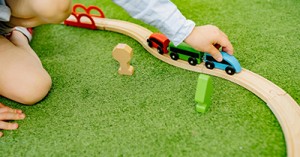
The trajectory schema is one of the key patterns observed in schematic play, where children explore movement—particularly the paths objects take when they are thrown, dropped, or otherwise in motion.
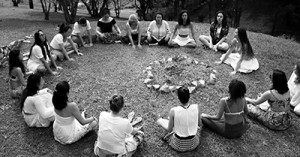
Sharing circles are a powerful tool for fostering collaboration, reflection, and connection among educators in early childhood settings. They create a safe and inclusive space where educators can share experiences, challenges, and successes, promoting professional growth and emotional well-being. Here are some insights and ideas based on the concept of sharing circles.

Empowering educator well-being and belonging is about creating an environment where educators feel seen, supported, and valued—not just as professionals, but as whole people. When educators feel that what they do truly matters, they’re more engaged, resilient, and effective in fostering meaningful connections with children. Here are some ways to bring this into everyday practice.

Shifting toward a more interactive culture requires intentional, supportive practice. Here are some ideas to encourage educators to actively engage with children.

A RAP, or Reconciliation Action Plan, is a formal framework designed to promote reconciliation between Indigenous and non-Indigenous Australians. It outlines practical actions to foster respectful relationships, create opportunities, and celebrate the rich cultures of Aboriginal and Torres Strait Islander peoples. The following article provides information on How To Develop A RAP, Examples of Initiatives To Include In A RAP, Creating A Reconciliation Action Plan, RAP Framework, Examples, and more.

Schematic play refers to repeated patterns of behavior that children exhibit as they explore the world around them. These behaviors, known as schemas, are essential for understanding how things work and for brain development. The following article provides information on Nine Schemas in Young Children's Play, How To Encourage Schematic Play, Activity Ideas For Schema Play and more.
 Toddlers have a greater understanding of the world around them by this stage. Their cognitive development (also known as intellectual development and thinking skills) continues… Read More
 Infants begin to develop trust when parents begin to fulfil their needs. Such as changing an infant's nappy when needed, feeding on request and holding… Read More
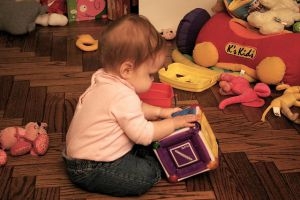 Beginning at birth the construction of thought processes, such as memory, problem solving, exploration of objects etc, is an important part of an infant’s cognitive… Read More
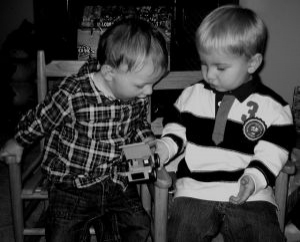 Toddlers want to do more on their own and do not like it when you begin to establish limits on their behaviour. Tantrums can become… Read More
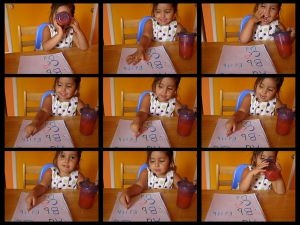 Your preschooler is now able to focus their attention more accurately and is less influenced by distractions. The intensity of questions increase as your child… Read More
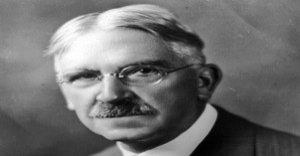 John Dewey is often seen as the proponent of learning by doing – rather than learning by passively receiving. He believed that each child was active,… Read More
 Erik Erikson developed a psychosocial theory to understand how we each develop our identities through eight stages of psychosocial development from infancy to adulthood. The… Read More
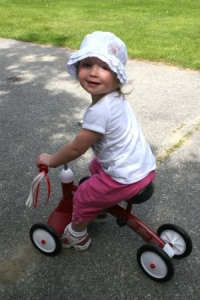 Toddler advance and gains new skills in Gross Motor Development milestones achieved throughout earlier years. Co-ordination and challenges that could not be performed before such… Read More
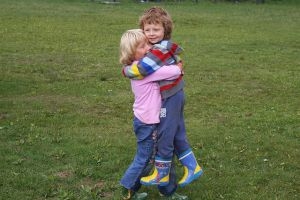 At this point preschoolers begin to interact effectively with others. Play becomes more innovative and organized and “boyfriend” or “girlfriend” begins to emerge. Preschoolers have… Read More
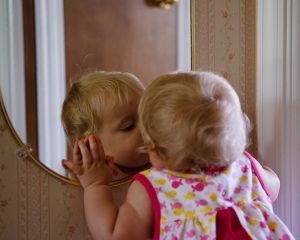 From now, babies begin to identify and respond to their own feelings, understanding other's feelings & needs and interact positively with others. A baby's social and… Read More

Young children who are not able to develop age-appropriate strategies for regulating aggressive behaviour are...
See more...
Fine motor skills have improved during this point, with increased concentration and patience. These improvements...
See more...
Calming down an angry child is important as it helps to enhance awareness about their...
See more...