



In light of ongoing reforms to Working with Children Check legislation across Australia, especially following serious child safety breaches, early childhood education (ECE) centres are called to rethink how safeguarding is embedded into everyday practice.

For babies, the Acknowledgment of Country is often expressed through sensory-rich, rhythmic, and visual experiences that help them connect to the land and its Traditional Custodians in developmentally appropriate ways. The following article provides Acknowledgment Of Country Ideas For The Babies Room.

An educational leader in early childhood plays a pivotal role in shaping not just curriculum, but the entire culture of a service. The following article provides information on standout qualities that define effective leadership in this space and applying these qualities to a service.

The Sea of Fish Challenge is a national initiative that invites children, educators, families, and communities to create and display fish artworks as a symbol of unity, culture, and respect for Aboriginal and Torres Strait Islander people. It’s a creative way to embed First Nations perspectives into early childhood settings. The following article provides information on the Purpose, How To Participate, Display ideas, Educator Tips and more.

Here are some heartfelt and playful ideas for an educator that is leaving the service.

Intentional consideration is such a powerful practice — where every interaction and choice can shape a child’s experience. At its heart, it’s about pausing to purposefully reflect before acting, planning, or responding. It's the difference between doing something because “we’ve always done it that way” and doing it because it's best for the children, families, and community you serve.

With the new national child safety reforms kicking in on 1 September 2025, early childhood services like yours have a real opportunity to lead the way. Here’s a clear, practical roadmap to help you and your team feel confident and prepared:

Children’s agency is all about empowering children to make choices, express their ideas, and influence decisions that affect them. It’s not just a buzzword—it’s a cornerstone of respectful, rights-based early childhood education. The following article provides information on Why Is Children's Agency Important, What Are Effective Strategies For Fostering Children's Agency, What Are Some Practical Way To Promote Agency In Children, ACECQA’s Guidance On Supporting Agency and more.

An Individual Learning Plan (ILP) in early childhood is a tailored document that outlines specific goals, strategies, and supports for a child, particularly one with a disability, developmental delay, or unique learning needs. The following article provides information on What Does An ILP Include, Benefits Of Using An ILP, When To Use An ILP, When Is It Not Appropriate To Use An ILP, Creating An Effective ILP, ILP Sample and more.

Self-talk is a powerful tool for helping children manage their emotions and behaviors. When used intentionally, it can guide children through tricky moments by giving them the language to pause, reflect, and choose a response. The following article provides information on Why It Works, What Are The Psychological Benefits Of Self-Talk, How to Encourage It, Examples of Self-Talk For Young Children, Activities to Support Self-Talk and more.
 Toddlers have a greater understanding of the world around them by this stage. Their cognitive development (also known as intellectual development and thinking skills) continues… Read More
 Infants begin to develop trust when parents begin to fulfil their needs. Such as changing an infant's nappy when needed, feeding on request and holding… Read More
 Beginning at birth the construction of thought processes, such as memory, problem solving, exploration of objects etc, is an important part of an infant’s cognitive… Read More
 Toddlers want to do more on their own and do not like it when you begin to establish limits on their behaviour. Tantrums can become… Read More
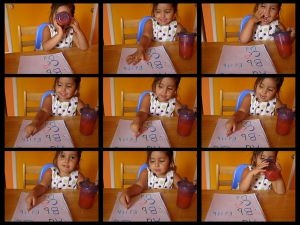 Your preschooler is now able to focus their attention more accurately and is less influenced by distractions. The intensity of questions increase as your child… Read More
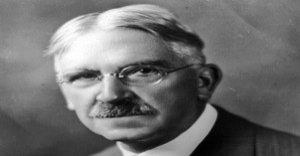 John Dewey is often seen as the proponent of learning by doing – rather than learning by passively receiving. He believed that each child was active,… Read More
 Erik Erikson developed a psychosocial theory to understand how we each develop our identities through eight stages of psychosocial development from infancy to adulthood. The… Read More
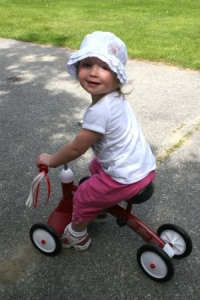 Toddler advance and gains new skills in Gross Motor Development milestones achieved throughout earlier years. Co-ordination and challenges that could not be performed before such… Read More
 At this point preschoolers begin to interact effectively with others. Play becomes more innovative and organized and “boyfriend” or “girlfriend” begins to emerge. Preschoolers have… Read More
 From now, babies begin to identify and respond to their own feelings, understanding other's feelings & needs and interact positively with others. A baby's social and… Read More

It is not uncommon for educators to confide that transitions tend to be the most...
See more...
Children’s early experiences consist of interactions with parents, other family members, Educators and teachers as...
See more...
At this point preschoolers begin to interact effectively with others. Play becomes more innovative and...
See more...