



Carol Dweck (born October 17, 1946) is an American psychologist and professor at Stanford University, best known for her pioneering research on mindsets in learning and achievement. Her work on the growth mindset has transformed education worldwide, showing that children’s beliefs about intelligence and ability profoundly shape their motivation, resilience, and success.

Ellen Beate Hansen Sandseter is a Norwegian researcher and professor at Queen Maud University College of Early Childhood Education. She is internationally recognized for her work on risky play in early childhood, highlighting how safe risk-taking supports children’s confidence, resilience, and wellbeing. Sandseter challenges overprotective practices in schools and families, arguing that shielding children from risk can hinder their development.

Alison Gopnik (born June 16, 1955) is a leading developmental psychologist and philosopher at the University of California, Berkeley. She is best known for her research on how children learn through exploration, play, and causal reasoning. Gopnik’s work emphasizes that children are active learners who construct and test ideas, much like scientists.
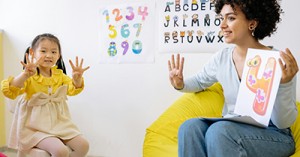
Preparing children for the leap into formal schooling involves more than academic knowledge—it means supporting their holistic development across cognitive, social, emotional, and physical domains. This checklist supports educators and families in identifying foundational skills and strengths, in alignment with the Early Years Learning Framework (EYLF) outcomes and contributing toward Quality Improvement Plan (QIP) goals such as practice refinement, documentation, and improved transition planning.

Here’s a breakdown of developmental milestones for children aged 2 to 3 years, along with examples of how they link to the EYLF.
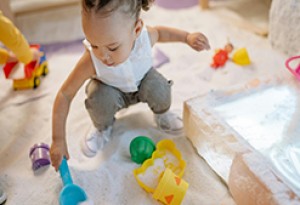
Here’s how Physical Development, Cognitive & Language Development, and Social & Emotional Development for 12 to 24 months align with the Early Years Learning Framework (EYLF).

Here’s how each developmental milestone from birth to 12 months aligns with the EYLF outcomes.


Attachment theory is a key concept in developmental psychology that examines the importance of early relationships between children and their Educators.The following article provides information on What Is Attachment Theory, Key Aspects of Attachment Theory, Significance of Strong, Secure Attachments, Practical Strategies For Attachment Theory, How Lack Of Attachment Can Impact On Development and more.
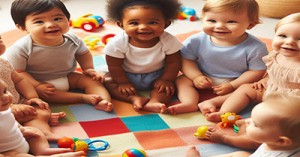
Caring for babies in their gross motor development stage involves encouraging activities that promote strength, coordination, and balance. The following article provides information on Strategies For Supporting Babies In Their Gross Motor Development, How To Encourage Sitting Unsupported, Structured Activities To Encourage Babies Gross Motor Development, and more.
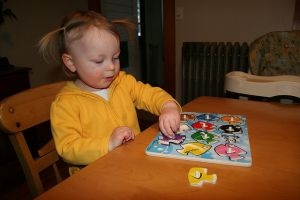 Toddlers have a greater understanding of the world around them by this stage. Their cognitive development (also known as intellectual development and thinking skills) continues… Read More
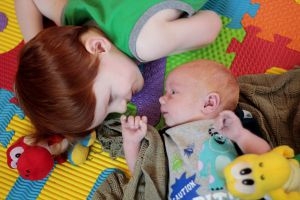 Infants begin to develop trust when parents begin to fulfil their needs. Such as changing an infant's nappy when needed, feeding on request and holding… Read More
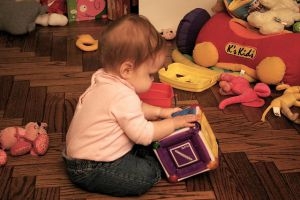 Beginning at birth the construction of thought processes, such as memory, problem solving, exploration of objects etc, is an important part of an infant’s cognitive… Read More
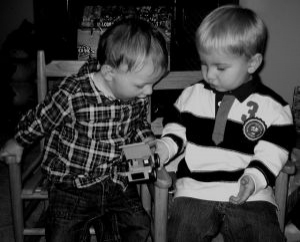 Toddlers want to do more on their own and do not like it when you begin to establish limits on their behaviour. Tantrums can become… Read More
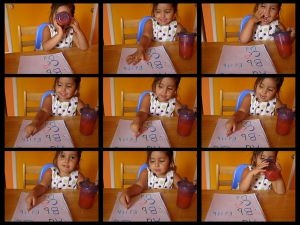 Your preschooler is now able to focus their attention more accurately and is less influenced by distractions. The intensity of questions increase as your child… Read More
 John Dewey is often seen as the proponent of learning by doing – rather than learning by passively receiving. He believed that each child was active,… Read More
 Erik Erikson developed a psychosocial theory to understand how we each develop our identities through eight stages of psychosocial development from infancy to adulthood. The… Read More
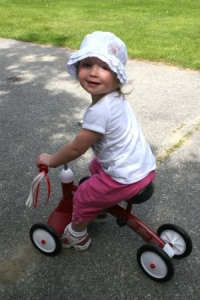 Toddler advance and gains new skills in Gross Motor Development milestones achieved throughout earlier years. Co-ordination and challenges that could not be performed before such… Read More
 At this point preschoolers begin to interact effectively with others. Play becomes more innovative and organized and “boyfriend” or “girlfriend” begins to emerge. Preschoolers have… Read More
 From now, babies begin to identify and respond to their own feelings, understanding other's feelings & needs and interact positively with others. A baby's social and… Read More

Shyness is a feeling and a behaviour towards others. It is a personality trait, an...
See more...
Tremendous advances in brain imaging technology over the last ten years have led to a...
See more...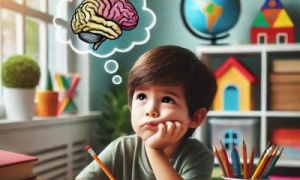
Metacognition refers to the awareness and understanding of one's own thought processes. The following article...
See more...