Risky play in OOSH services is encouraged as a way to build children’s confidence, resilience, and risk-assessment skills, but it must be balanced with structured risk management and compliance practices.
What Risky Play Means in OOSH
- Risky play: Activities that involve manageable risks such as climbing, rough-and-tumble play, or exploring new environments.
- Developmental benefits: Builds independence, problem-solving, resilience, and physical competence.
- OOSH context: Services provide supervised environments before/after school and during holidays, where risky play can be integrated into excursions, outdoor play, and structured activities.
Risk Management in OOSH
- Risk assessment: OOSH educators are trained to evaluate both risks and benefits, ensuring children are not “wrapped in cotton wool.” The aim is to allow challenge while preventing serious harm.
- Excursion planning: Centres like Normanhurst OOSH publish detailed risk assessments for activities such as trampolining, VR, aquatics, and skate parks.
- Compliance: NSW Department of Education guidance stresses collaboration with schools to ensure safe spaces and policies that support children’s wellbeing.
Balancing Safety and Growth
| Risky Play Element | OOSH Application | Safety Strategy |
|---|---|---|
| Play at heights | Climbing frames, tree play | Supervised zones, soft-fall surfaces |
| Play a t speed |
Running games, scooters | Clear boundaries, safe equipment |
| Dangerous tools | Craft with hammers, cooking | Age-appropriate tools, close supervision |
| Near dangerous elements | Water play, fire pits | Strict ratios, risk-benefit assessment |
| Rough-and-tumble | Sports, wrestling games | Rules for respect, educator oversight |
| Exploration | Excursions, nature walks | Pre-visit risk checks, emergency plans |
Challenges for OOSH Services
- Overprotective practices: Excessive supervision or removal of risky elements can hinder children’s growth.
- School collaboration: Principals’ support influences space allocation and the ability to provide diverse play opportunities.
- Community expectations: Parents may worry about safety, requiring clear communication about the benefits of risky play.
Actionable Recommendations for OOSH Providers
- Embed risk-benefit assessments in all play planning.
- Train educators to support—not restrict—children’s exploration.
- Communicate with families about the developmental importance of risk-taking.
- Collaborate with schools to secure appropriate spaces for adventurous play.
- Document excursions with detailed risk assessments to meet compliance standards.
Further Reading
Benefits Of Risk Play For Children
Ellen Beate Hansen Sandseter – Risky Play Theorist




 The Children’s Services Award introduces a streamlined classification system and updated pay rates designed to better recognise the skills, qualifications, and responsibilities of early childhood
 The Children’s Services Award has 8 clear levels. These levels make it easier to understand where you fit, based on your experience, qualifications, and responsibilities.
 When working as a qualified early childhood teacher (with a university degree) within a service, your rate of pay will come from the Educational Services
 Diploma-qualified educators play a vital role in early childhood services, taking on responsibilities that range from supporting children’s learning and development to leading rooms and
 Certificate III qualified educators form the backbone of early childhood services, providing essential care and learning support for children across all settings. Their wages under
 Early Childhood Teachers (ECTs) play a vital role in leading curriculum and pedagogy in early learning settings. Regulation 272 of the Education and Care Services
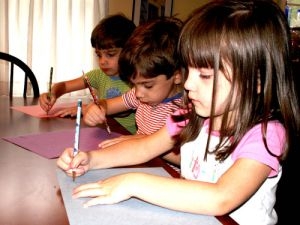 Discover how school readiness programs support children’s independence, confidence, and skills for a successful transition into primary school.
 When an Educator is not performing their tasks or responsibilities at best practice, these issues need to be addressed for the Educator to understand where
 Educators can maximise tax deductions by claiming classroom supplies, training, union fees, and home office costs this financial year.
 A staff appraisal is a formal, systematic process of determining and reviewing the performance of early childhood educators over a period of time, usually a