




A childcare centre was fined after a one‑year‑old went missing during a bush excursion, exposing serious supervision failures. The child was found unharmed, but the centre faced regulatory penalties and reputational damage, underscoring that educator‑to‑child ratios remain dangerously inadequate and government inaction continues to put children at risk.

At present, “under the roof” ratios are not yet formally abolished in law, but Education Ministers announced in February 2026 that they intend to remove this practice. ACECQA has flagged that ratios will soon be required per room, with educators counted only when physically present and supervising children.
Until the National Law and Regulations are officially amended and ACECQA issues binding guidance, services using service‑wide calculations are not breaching current regulations, provided they maintain adequate supervision.

On July 15, educators are once again being called to walk off the job, demanding a 15% wage increase. It’s a familiar rallying cry, one we’ve heard in previous years, with little lasting change. Yet while wages matter, the government has already acted through the gender pay equity evaluation, with increases scheduled over the next five years. The real crisis isn’t pay. It’s ratios.
Every abuse case, every supervision failure, every moment when educators are stretched too thin points to one undeniable truth: without safe ratios, children are at risk and educators are set up to fail. Walking off for wages already promised risks missing the bigger fight. If we want to transform early childhood education, protect children, and restore trust, our collective energy must shift toward demanding ratio reform.

Every time a shocking case of child abuse surfaces, the sector braces for another wave of reactionary policies. Device bans, endless training modules, and compliance paperwork pile up on educators who already uphold professional standards. Yet none of these measures address the core issue: ratios.

Education Minister Jess Walsh has announced today that the government is banning the unsafe business practice of misuse of “under-the-roofline” ratios. For many educators, this statement feels like a long-awaited victory. Yet the choice of wording — misuse — leaves room for interpretation, and that ambiguity deserves closer scrutiny.

At the end of 2026, the early childhood sector is still waiting for ratio reform. Despite years of advocacy, despite mounting evidence, and despite repeated calls from educators, families, and sector leaders, ratios remain unchanged. Everything else seems to be happening—new frameworks, reporting requirements, compliance checks—but the most fundamental safeguard, the number of adults available to protect and nurture children, is still overlooked.

As 2026 winds down, educators across Australia are asking the same question they’ve been asking all year: Why haven’t ratios been addressed?
Despite months of advocacy, countless submissions, and direct feedback from the floor, the issue remains untouched. Ratios, the single most urgent concern raised by educators, have been sidelined in favour of training modules, registers, and compliance tweaks.
Yes, we’ve seen movement in workforce pay, child safety training, and regulation. But the one thing that determines whether educators can actually keep children safe, supported, and emotionally secure—staffing ratios and group sizes is still being tiptoed around.

To Decision-Makers in Education and Care,
I write to you as an educator and advocate for the safety and well-being of children and staff in early childhood education.

Educator ratios must be upheld at all times, including during care tasks unless supervision is compromised, in which case coverage is legally required. Here’s a guide to help educators understand their rights and responsibilities around ratios and supervision, with more examples and direct links to authoritative sources.
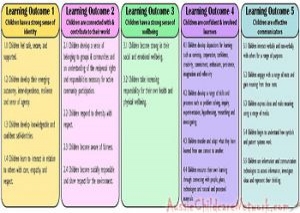 Here is the list of the EYLF Learning Outcomes that you can use as a guide or reference for your documentation and planning. The EYLF… Read More
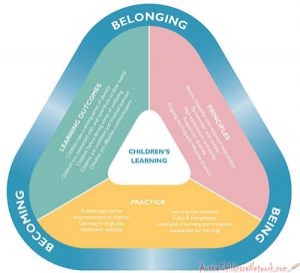 The EYLF is a guide which consists of Principles, Practices and 5 main Learning Outcomes along with each of their sub outcomes, based on identity,… Read More
 This is a guide on How to Write a Learning Story. It provides information on What Is A Learning Story, Writing A Learning Story, Sample… Read More
 One of the most important types of documentation methods that educators needs to be familiar with are “observations”. Observations are crucial for all early childhood… Read More
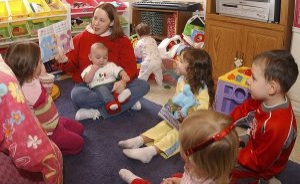 To support children achieve learning outcomes from the EYLF Framework, the following list gives educators examples of how to promote children's learning in each individual… Read More
 Reflective practice is learning from everyday situations and issues and concerns that arise which form part of our daily routine while working in an early… Read More
 When observing children, it's important that we use a range of different observation methods from running records, learning stories to photographs and work samples. Using… Read More
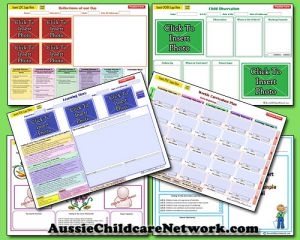 Within Australia, Programming and Planning is reflected and supported by the Early Years Learning Framework. Educators within early childhood settings, use the EYLF to guide… Read More
 This is a guide for educators on what to observe under each sub learning outcome from the EYLF Framework, when a child is engaged in… Read More
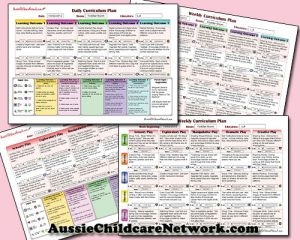 The Early Years Learning Framework describes the curriculum as “all the interactions, experiences, activities, routines and events, planned and unplanned, that occur in an environment… Read More

The EYLF explains literacy as the children’s “capacity, confidence and disposition to use language in...
See more...
Play-based learning is a core principle of the EYLF, emphasizing that children learn best through...
See more...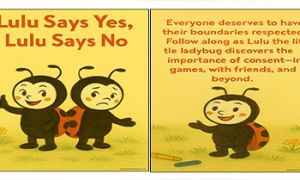
In a world where children are constantly learning how to navigate relationships, boundaries, and emotions...
See more...