



For OOSH (Out of School Hours) children, Reconciliation Week topics should focus on identity, respect, caring for Country, storytelling, friendship, and truth-telling. These themes help children understand Australia’s shared history and celebrate Aboriginal and Torres Strait Islander cultures in age‑appropriate ways.

The Quality Improvement Plan (QIP) is not just a compliance document—it’s the heartbeat of continuous improvement in OOSH services. It shows how your service reflects on practice, identifies strengths, and sets goals for better outcomes. Even if you’ve never written one before, you can contribute meaningfully by following a clear, mapped process.

Yes, observations are required in OOSH, but they look different from early childhood settings. Educators must document children’s engagement, wellbeing, and learning through observations, though the focus is on leisure, social development, and safety rather than formal developmental milestones.

Managing behaviour in Out of School Hours (OOSH) care can feel overwhelming when children test boundaries, show disrespect, or escalate into physical conflict. Educators often find themselves stuck between documenting incidents and wondering what real impact those reports have. The truth is, effective behaviour management isn’t about endless paperwork—it’s about creating a consistent, responsive environment where children understand expectations, experience logical consequences, and feel supported to repair harm. This article offers practical strategies and policy anchors that move beyond “reporting only” and into approaches that actually work in the OOSH setting.

OOSH services often feel the tension between compliance and creativity. The law requires services to meet the outcomes of the approved My Time, Our Place, but it does not prescribe how this must be achieved. The NQS sets benchmarks for quality but avoids rigid rules. This flexibility means educators can focus on meaningful, child-led projects and reflective documentation rather than endless paperwork. A few strong examples each year can be enough to demonstrate compliance.

Supervision in an OSHC setting means more than just “watching” children; it’s about actively ensuring their safety, wellbeing, and engagement while balancing freedom and responsibility. Effective supervision requires constant awareness, positioning, and interaction, guided by the National Quality Standards (NQS) and regulatory requirements.

In OSHC, “child agency” means recognising children as capable decision‑makers who actively shape their experiences, rather than simply following adult‑led routines. It’s about giving them voice, choice, and ownership in the program and showing this through practical, everyday practices.

When you’re running OSHC programs, it’s easy to feel like you’re recycling the same handful of activities. Children thrive on variety, and having a big bank of creative options can help you break out of that slump. Below is a list of 50 diverse art and craft ideas, ranging from quick, low-prep projects to collaborative, cultural, and recycled-material activities. They’re designed to spark imagination, foster belonging, and keep sessions fresh and engaging for all ages.

Exceeding Theme 3: Practice is shaped by meaningful engagement with families and/or the community. It focuses on practice being shaped by meaningful engagement with families and the community. It highlights that high-quality services don’t operate in isolation; educators actively collaborate with families, children, and community partners to co-construct learning, well-being, and service identity.

Minecraft has become a powerful tool for engaging children in OOSH. Its open-ended, creative environment allows children to explore, build, and collaborate in ways that naturally align with the MTOP. When thoughtfully facilitated, Minecraft activities can extend children’s interests, foster teamwork, and embed meaningful learning outcomes.
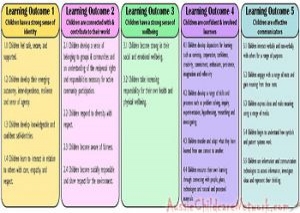 Here is the list of the EYLF Learning Outcomes that you can use as a guide or reference for your documentation and planning. The EYLF… Read More
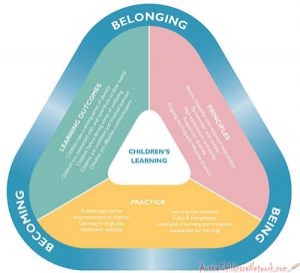 The EYLF is a guide which consists of Principles, Practices and 5 main Learning Outcomes along with each of their sub outcomes, based on identity,… Read More
 This is a guide on How to Write a Learning Story. It provides information on What Is A Learning Story, Writing A Learning Story, Sample… Read More
 One of the most important types of documentation methods that educators needs to be familiar with are “observations”. Observations are crucial for all early childhood… Read More
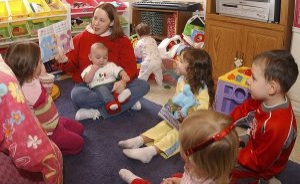 To support children achieve learning outcomes from the EYLF Framework, the following list gives educators examples of how to promote children's learning in each individual… Read More
 Reflective practice is learning from everyday situations and issues and concerns that arise which form part of our daily routine while working in an early… Read More
 When observing children, it's important that we use a range of different observation methods from running records, learning stories to photographs and work samples. Using… Read More
 Within Australia, Programming and Planning is reflected and supported by the Early Years Learning Framework. Educators within early childhood settings, use the EYLF to guide… Read More
 This is a guide for educators on what to observe under each sub learning outcome from the EYLF Framework, when a child is engaged in… Read More
 The Early Years Learning Framework describes the curriculum as “all the interactions, experiences, activities, routines and events, planned and unplanned, that occur in an environment… Read More

Quality Area 6 focuses on supportive, respectful relationships with families which are fundamental to achieving...
See more...
Diwali, India's biggest and most important holiday of the year, is on the 31st of...
See more...
Quality Area 3 of the National Quality Standard (NQS) focuses on the physical environment—its design...
See more...