


OSHC educators play a vital role in supporting children’s well-being during transitions, play, and rest. With new child safety reforms under the National Quality Framework (NQF) coming into effect from September 2025 and January 2026, services are required to adopt clearer boundaries and transparent practices around physical contact. This article explores how educators can balance emotional support with safeguarding obligations.

In OSHC, children often mirror cultural trends. The rise of “Sephora kids," young people fascinated by skincare and makeup, has sparked curiosity about how educators can channel this interest safely. While applying cosmetics directly to children’s skin isn’t appropriate, there are many playful, imaginative strategies that let them explore beauty culture without risk.

Motivation doesn’t have to mean extra effort or complicated systems. In an OSHC setting, the best strategies are the ones that fit seamlessly into everyday routines. These quick ideas take seconds, but they build recognition, connection, and positivity—helping educators feel valued and energized while keeping the focus on the children.

Packing up after play or activities is one of the most consistent challenges in OSHC settings. Educators often find themselves repeating reminders, negotiating with children, or stepping in to finish the task themselves. While rewards such as stickers can provide short-term motivation, they rarely sustain engagement, and not all children are interested in them.

Working in OSHC means being prepared for the unexpected. Children are naturally curious, and sometimes their questions can feel confronting—especially when asked in front of peers. One educator recently shared an experience where a Year 4/5 child interrupted a group discussion to ask, “Are you gay?” This scenario highlights the importance of professional boundaries, inclusivity, and reflective practice.

Exceeding Theme 2: Practice is informed by critical reflection, this means that educators don’t just “do” quality practice—they actively think about it, question it, and refine it. Reflection is ongoing, collaborative, and embedded into the way the service operates.

Children thrive when they can do—exploring, tinkering, and experimenting. Science activities in OSHC settings not only engage curious minds but also build teamwork, problem‑solving, and resilience. Best of all, many experiments can be done with everyday materials, keeping costs low while maximising fun.

In OSHC, language plays a powerful role in shaping the culture of the environment. Inappropriate language and swearing can undermine respect, safety, and inclusivity. Educators often face the challenge of balancing children’s freedom of expression with the need to maintain a positive, professional atmosphere.

This template can be used in OSHC settings.

Exceeding Theme 1 focuses on practice being embedded in service operations and highlights that high-quality approaches are not occasional or dependent on individual staff—they are woven into the fabric of the service. This ensures consistency, sustainability, and a strong service identity that children, families, and educators can rely on. The following provides an overview of how Theme 1 can be demonstrated across Quality Areas 1–7 in OSHC settings.
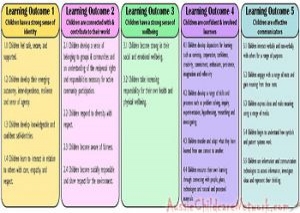 Here is the list of the EYLF Learning Outcomes that you can use as a guide or reference for your documentation and planning. The EYLF… Read More
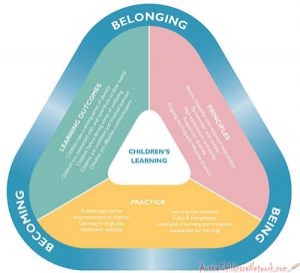 The EYLF is a guide which consists of Principles, Practices and 5 main Learning Outcomes along with each of their sub outcomes, based on identity,… Read More
 This is a guide on How to Write a Learning Story. It provides information on What Is A Learning Story, Writing A Learning Story, Sample… Read More
 One of the most important types of documentation methods that educators needs to be familiar with are “observations”. Observations are crucial for all early childhood… Read More
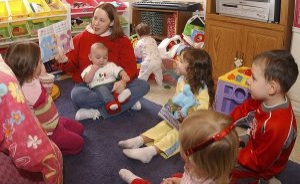 To support children achieve learning outcomes from the EYLF Framework, the following list gives educators examples of how to promote children's learning in each individual… Read More
 Reflective practice is learning from everyday situations and issues and concerns that arise which form part of our daily routine while working in an early… Read More
 When observing children, it's important that we use a range of different observation methods from running records, learning stories to photographs and work samples. Using… Read More
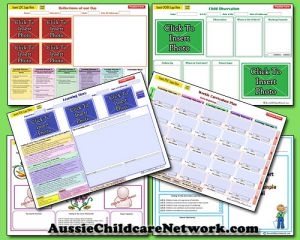 Within Australia, Programming and Planning is reflected and supported by the Early Years Learning Framework. Educators within early childhood settings, use the EYLF to guide… Read More
 This is a guide for educators on what to observe under each sub learning outcome from the EYLF Framework, when a child is engaged in… Read More
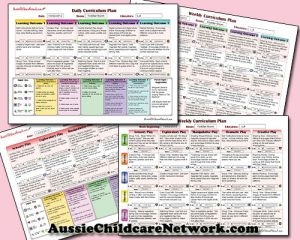 The Early Years Learning Framework describes the curriculum as “all the interactions, experiences, activities, routines and events, planned and unplanned, that occur in an environment… Read More

Positive phrases play a crucial role in children's growth because they help nurture their emotional...
See more...
Learning trajectories in early childhood refer to the developmental pathways that children typically follow as...
See more...
Preschool classrooms thrive when curiosity is celebrated. A Wonder Wall is a dynamic display space...
See more...