



Quality Area 5 of the National Quality Standard focuses on educators developing responsive, warm, trusting and respectful relationships with children that promote their wellbeing, self-esteem, sense of security and belonging. Relationships of this kind encourage children to explore the environment and engage in play and learning.

Quality Area 4 of the National Quality Standard focuses on the provision of qualified and experienced educators who develop warm, respectful relationships with children, create predictable environments and encourage children’s active engagement in the learning program. A collaborative and ethical culture where professional standards guide all aspects of practice is critical to a quality service.
From today 01, Feb 2018 the new National Quality Standards will come into effect and all early childhood services will be assessed and rated against the new NQS.
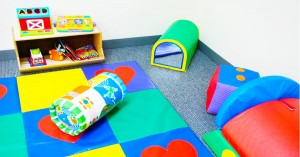
Quality Area 3 of the National Quality Standard focuses on the physical environment.
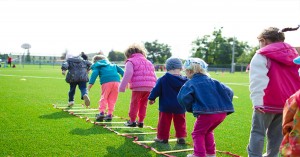
Quality Area 2 of the National Quality Standard reinforces children’s right to experience quality education and care in an environment that provides for their health and safety.

Quality Area 1 of the National Quality Standard focuses on ensuring that the educational program and practice of educators are child-centred, stimulating and maximising opportunities for enhancing and extending each child’s learning and development. The following is a list of outcomes under each element within QA1, that can help services identify if they are achieving Quality Area 1. It also includes documentation to support each element. This list can be used as a guide for Self-Assessment purposes and the development of the Quality Improvement Plan.
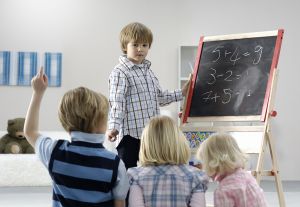
Intentional Teaching examples are provided for each key focus and significant aspect of learning.
Knowledge, Skills and Dispositions describe how children explore during the Kindergarten Year within a holistic learning program.
The Queensland Kindergarten Learning Guidelines support kindergarten teachers’ professional practice across Queensland.
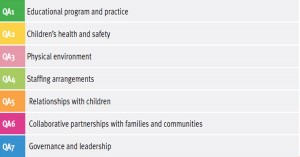
The National Quality Standard (NQS) sets a national benchmark for the quality of education and care services and includes seven quality areas that are important to outcomes for children.
In each quality area, there are two or three standards. These standards are high-level outcome statements. Under each standard are elements that describe the outcomes that contribute to the standard being achieved. Each standard and element is represented by concepts that support education and care services to navigate and reflect on the NQS.
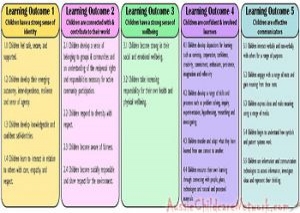 Here is the list of the EYLF Learning Outcomes that you can use as a guide or reference for your documentation and planning. The EYLF… Read More
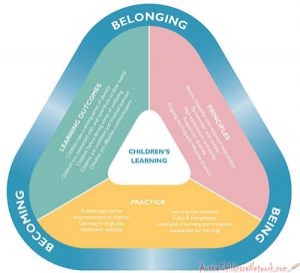 The EYLF is a guide which consists of Principles, Practices and 5 main Learning Outcomes along with each of their sub outcomes, based on identity,… Read More
 This is a guide on How to Write a Learning Story. It provides information on What Is A Learning Story, Writing A Learning Story, Sample… Read More
 One of the most important types of documentation methods that educators needs to be familiar with are “observations”. Observations are crucial for all early childhood… Read More
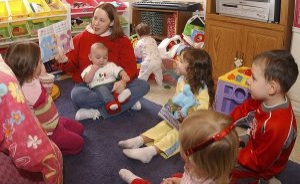 To support children achieve learning outcomes from the EYLF Framework, the following list gives educators examples of how to promote children's learning in each individual… Read More
 Reflective practice is learning from everyday situations and issues and concerns that arise which form part of our daily routine while working in an early… Read More
 When observing children, it's important that we use a range of different observation methods from running records, learning stories to photographs and work samples. Using… Read More
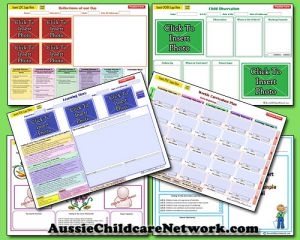 Within Australia, Programming and Planning is reflected and supported by the Early Years Learning Framework. Educators within early childhood settings, use the EYLF to guide… Read More
 This is a guide for educators on what to observe under each sub learning outcome from the EYLF Framework, when a child is engaged in… Read More
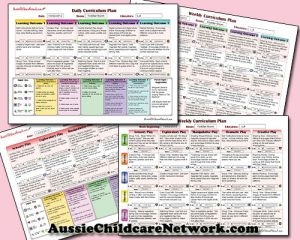 The Early Years Learning Framework describes the curriculum as “all the interactions, experiences, activities, routines and events, planned and unplanned, that occur in an environment… Read More

The start of a new year is more than a reset—it’s a chance to align...
See more...
Playdough is such a versatile material. It provides numerous benefits to children as they manipulate...
See more...
Here are some thoughtfully framed critical reflection questions you can use with your team or...
See more...