


The Queensland Kindgerten Learning Guidelines (QKLG) has been revised for implementation in 2019. Kindergarten teachers in approved and funded services will now implement the updated QKLG.

For Educators and Providers of OSHC Services, the Department of Education has partnered with the Early Childhood Australia to develop free online professional learning customised to meet the needs of NSW OSHC services.
The Guide To The National Quality Framework has recently been updated to reflect minor updates and changes to the National Law and Regulations.
Whether you are reflecting on yourself or reflecting on others, reflective practices provide you with an opportunity to learn and draw open diverse knowledge, views, experiences, views and attitudes within yourself and others.
While reflecting it forces us to analyse different aspects of experiences we offer to make judgements in what should be repeated, extended or changed. This enables us to develop and extend on children’s learning and build upon their knowledge and skills.
Reflecting is not only about what happened and why. It also guides our decision making. It forces us to analyse different aspects of experiences we offer to make judgements in what should be repeated, extended or changed.

Reflections are observing, listening, thinking deeply about the meaning of what you have observed and heard, and using that information to inform your practice and continually respond and reflect.
Reflections are an ongoing occurrence that enables us, educators, to think honestly about our professional practice and ideas. It challenges us to take a step back to analyse our personal experiences to enhance learning and speculate upon the future and act.
Reflective practice is learning from everyday situations and issues and concerns that arise which form part of our daily routine while working in an early childhood setting.

A reflection allows us to analyze our experiences, make changes based on our mistakes, keep doing what is successful, and build upon our knowledge.
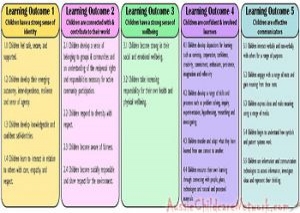 Here is the list of the EYLF Learning Outcomes that you can use as a guide or reference for your documentation and planning. The EYLF… Read More
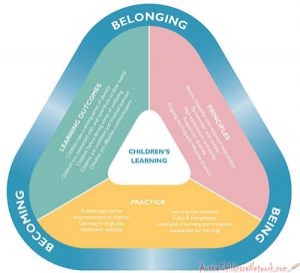 The EYLF is a guide which consists of Principles, Practices and 5 main Learning Outcomes along with each of their sub outcomes, based on identity,… Read More
 This is a guide on How to Write a Learning Story. It provides information on What Is A Learning Story, Writing A Learning Story, Sample… Read More
 One of the most important types of documentation methods that educators needs to be familiar with are “observations”. Observations are crucial for all early childhood… Read More
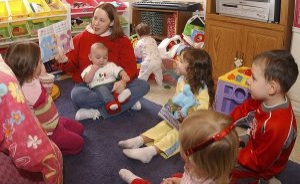 To support children achieve learning outcomes from the EYLF Framework, the following list gives educators examples of how to promote children's learning in each individual… Read More
 Reflective practice is learning from everyday situations and issues and concerns that arise which form part of our daily routine while working in an early… Read More
 When observing children, it's important that we use a range of different observation methods from running records, learning stories to photographs and work samples. Using… Read More
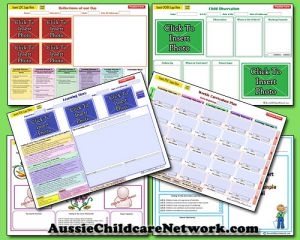 Within Australia, Programming and Planning is reflected and supported by the Early Years Learning Framework. Educators within early childhood settings, use the EYLF to guide… Read More
 This is a guide for educators on what to observe under each sub learning outcome from the EYLF Framework, when a child is engaged in… Read More
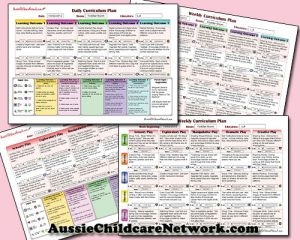 The Early Years Learning Framework describes the curriculum as “all the interactions, experiences, activities, routines and events, planned and unplanned, that occur in an environment… Read More
Weekly Menu Display Boards in early childhood settings are more than just compliance tools, they’re...
See more...
In OSHC, “child agency” means recognising children as capable decision‑makers who actively shape their experiences...
See more...
The following article lists 20 Cultural Games, Instructions For Each Game, Benefits Of Teaching Children These Games...
See more...