


Children are naturally drawn to bright, vivid colours, which makes rainbow-themed science experiments instantly engaging and relatable. Because colours are part of their everyday world—seen in toys, clothes, art, and nature, rainbow experiments provide a familiar entry point into scientific exploration.
These activities spark curiosity and wonder by showing how ordinary materials can transform into extraordinary displays of color. Whether it’s watching water “walk” across paper towels, seeing milk swirl into rainbow patterns, or layering liquids into a colorful tower, children experience science as something magical yet understandable.
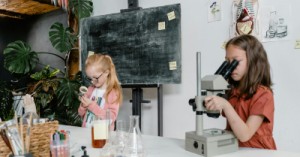
Children are natural scientists. They observe, question, and experiment every day—whether it’s watching ants march across the playground or noticing how shadows change with the sun. A thoughtfully designed science and nature area in an early childhood environment nurtures this curiosity, offering a space where exploration becomes intentional and learning is scaffolded. Such an area not only supports STEM skills but also fosters respect for the environment, cultural knowledge, and sustainable practices.

Here’s a themed EYLF-aligned guide to 30 preschool science experiments, complete with materials, instructions, science concepts, and EYLF learning outcomes. This is designed for educators who want to embed intentionality, inquiry, and curriculum links into hands-on science.

Here’s a roundup of 20 super simple science experiments for toddlers in early learning settings. These activities are sensory-rich, safe, and designed to spark curiosity while introducing foundational science concepts.

With National Science Week on from 9th to 17th August 2025, this is a great opportunity to introduce science to babies. For babies it’s less about formal experiments and more about sensory exploration, pattern recognition, and curiosity-driven play—all foundational to scientific thinking and nurturing their natural curiosity and helping them explore the world through sensory-rich, playful experiences.

Exploring science in early childhood is a fantastic way to nurture curiosity and a love for learning in young children. The following article provides information on Benefits Of Exploring Science In Early Childhood, How To Get Started, How To Create A Science Rich Environment, Incorporating Science into Daily Activities, How To Integrate Science With Other Subjects, Examples Of Themes To Explore Science, Linking To The EYLF and more.
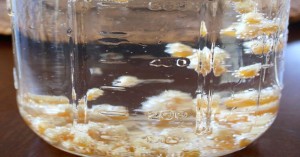
Dancing corn is a fun sceince experiment to do with toddlers and preschoolers. Watch corn dance with a little kitchen chemistry.

Elephant toothpaste erupts a foam that children can create in this experiment that resembles toothpaste being squeezed from a tube.

Make a hard egg bounce by adding it to a cup of vinegar. This is a great STEAM experiment to try with children - make different colour "egg balls" and watch how vinegar dissolves the hard shell to create a bouncy egg.
National Science Week is Australia’s annual celebration of science and technology, and it is held from 12 to 20 August 2023.
 The Children’s Services Award introduces a streamlined classification system and updated pay rates designed to better recognise the skills, qualifications, and responsibilities of early childhood… Read More
 The Children’s Services Award has 8 clear levels. These levels make it easier to understand where you fit, based on your experience, qualifications, and responsibilities.… Read More
 When working as a qualified early childhood teacher (with a university degree) within a service, your rate of pay will come from the Educational Services… Read More
 Diploma-qualified educators play a vital role in early childhood services, taking on responsibilities that range from supporting children’s learning and development to leading rooms and… Read More
 Certificate III qualified educators form the backbone of early childhood services, providing essential care and learning support for children across all settings. Their wages under… Read More
 Early Childhood Teachers (ECTs) play a vital role in leading curriculum and pedagogy in early learning settings. Regulation 272 of the Education and Care Services… Read More
 Children need safe and positive environments to learn and grow. To ensure this, services and educators need to ensure effective supervision at all times. The… Read More
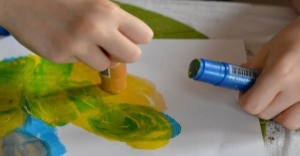 Floorbook is a documentation approach that uses a large book with blank pages for children to record different aspects of their learning in small groups… Read More
 When an Educator is not performing their tasks or responsibilities at best practice, these issues need to be addressed for the Educator to understand where… Read More
 Educators can maximise tax deductions by claiming classroom supplies, training, union fees, and home office costs this financial year.
Read More
Educators can maximise tax deductions by claiming classroom supplies, training, union fees, and home office costs this financial year.
Read More

Lunar New Year is celebrated on the 29th of January 2025. The Lunar New Year in...
See more...
Music in varied forms offers a plethora of benefits to children, whether they are listening...
See more...
Interactions with children and families lie at the heart of ECEC practices. Early educators as...
See more...