



The Child Safe Standards provide a nationally consistent framework to ensure that organisations working with children create environments that are safe, inclusive, and empowering. In OSHC settings, these standards are not just about compliance; they are about embedding a culture where children’s rights, voices, and well-being are central to everyday practice.
Reflection is a powerful tool for educators: it helps identify strengths, highlight gaps, and ensure that child safety is lived in daily routines rather than just written in policy. The following reflection questions are designed to guide OSHC teams in critically examining how each of the 10 Child Safe Standards is enacted in practice. They encourage staff to move beyond “tick‑box” compliance and towards genuine, child‑centered engagement.

Reflection and critical reflection are both essential practices in education. While they sound similar, they serve different purposes. Understanding the distinction helps educators know when to use each and how they contribute to professional growth and improved outcomes for children.

The start of a new year is a powerful moment for educators to pause and reflect. Beyond compliance requirements, it’s an opportunity to reconnect with the values that guide our practice. By intentionally setting a vision rooted in values, educators can ensure that compliance becomes a scaffold for authentic engagement rather than a burden.

The start of a new year is more than a reset—it’s a chance to align compliance responsibilities with authentic engagement. Reflective practice ensures educators move beyond “checking boxes” to create joyful, culturally rich, and sustainable learning environments.

Early childhood education is a dynamic and deeply relational field. Educators are constantly navigating children’s diverse needs, family expectations, and systemic requirements. To sustain quality practice, reflection is essential. Reflection allows educators to pause, analyze experiences, and adapt their approaches to better support children’s learning and well-being.
One powerful framework for reflection is Gibbs Reflective Cycle (1988). Widely used in education, healthcare, and professional development, it provides a structured way to think critically about experiences and plan for improvement. In early childhood, Gibbs Cycle helps educators move beyond surface-level observations to deeper insights about pedagogy, relationships, and environments.

Reflections are powerful tools for growth, learning, and connection. Whether used in education, professional practice, or personal journaling, a strong reflection goes beyond recounting events—it captures authentic experiences, explores emotions, and identifies lessons that shape future actions. This checklist is designed to help writers and evaluators ensure that reflections are meaningful, structured, and impactful. It can be used by students, educators, colleagues, or anyone seeking to deepen their reflective practice.
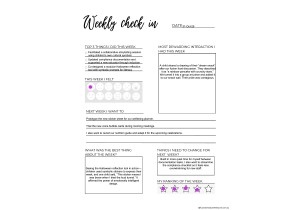
This template is for educators to use as a weekly reflection tool.
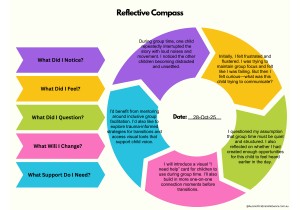
This template is used as a reflection for educators.
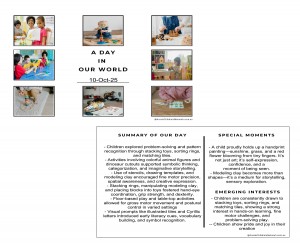
This template can be used to reflect on the day's experiences.
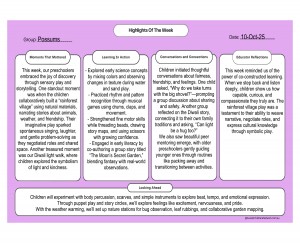
This template is designed to help educators meaningfully capture and communicate the richness of children’s learning.
 The Children’s Services Award introduces a streamlined classification system and updated pay rates designed to better recognise the skills, qualifications, and responsibilities of early childhood… Read More
 The Children’s Services Award has 8 clear levels. These levels make it easier to understand where you fit, based on your experience, qualifications, and responsibilities.… Read More
 When working as a qualified early childhood teacher (with a university degree) within a service, your rate of pay will come from the Educational Services… Read More
 Diploma-qualified educators play a vital role in early childhood services, taking on responsibilities that range from supporting children’s learning and development to leading rooms and… Read More
 Certificate III qualified educators form the backbone of early childhood services, providing essential care and learning support for children across all settings. Their wages under… Read More
 Early Childhood Teachers (ECTs) play a vital role in leading curriculum and pedagogy in early learning settings. Regulation 272 of the Education and Care Services… Read More
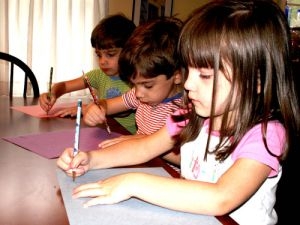 Discover how school readiness programs support children’s independence, confidence, and skills for a successful transition into primary school.
Read More
Discover how school readiness programs support children’s independence, confidence, and skills for a successful transition into primary school.
Read More
 When an Educator is not performing their tasks or responsibilities at best practice, these issues need to be addressed for the Educator to understand where… Read More
 Educators can maximise tax deductions by claiming classroom supplies, training, union fees, and home office costs this financial year.
Read More
Educators can maximise tax deductions by claiming classroom supplies, training, union fees, and home office costs this financial year.
Read More
 A staff appraisal is a formal, systematic process of determining and reviewing the performance of early childhood educators over a period of time, usually a… Read More

When a service operates without external cleaning staff, it’s reasonable to expect educators to maintain...
See more...
From the moment babies begin to drop spoons from their highchair to the elaborate delivery...
See more...
Here's a quick cheat sheet for Quality Area 4: Staffing Arrangements under the National Quality...
See more...