



Educators in early childhood services often carry immense responsibility, balancing compliance, pedagogy, and family engagement. While many appear resilient during peak stress periods, the effects often surface later. This phenomenon, known as a delayed stress response, can have significant consequences for well-being, service quality, and career longevity.

Pregnancy is often described as a season of joy and anticipation. For early childhood educators in New South Wales, however, it can also be a season of exhaustion, negotiation, and resilience. The demands of the sector, long hours, physical labour, and compliance pressures, don’t pause when an educator’s body and life are changing.

Quality Area 4 (QA4) focuses on staffing arrangements, including educator-to-child ratios, qualifications, continuity of care, and collaborative practices. Building QA4 evidence folders helps services demonstrate how staffing supports children’s learning, safety, and well-being, while also showcasing professional collaboration and compliance with the NQS.

The QIP is more than a compliance document; it’s a living reflection of our service’s journey toward excellence. For it to truly represent practice, educators must be actively involved in shaping, reviewing, and updating it.
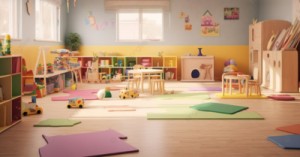
Quality Area 3 (QA3) focuses on the physical environment, its design, safety, inclusivity, and how it supports children’s learning and well-being. Just like QA1 evidence folders, educators can build QA3 evidence folders to showcase how their service maintains and improves environments for children.

Quality Area 2 (Children's Health and Safety) of the NQS focuses on ensuring children’s health, safety, and well-being. While assessors often rely on observation and discussion, many services find it helpful to collate supporting documentation in a dedicated evidence folder. This provides clarity, consistency, and confidence when demonstrating compliance.

Quality Area 1 (Educational Program and Practice) of the NQS focuses on how services design, implement, and reflect on programs that support children’s learning and development. While assessors often emphasize critical reflection and the QIP, many services find it helpful to collate evidence in a dedicated folder for clarity and consistency.
National child safety training is now mandatory for everybody working or volunteering in an ECEC service regulated under the NQF. Foundation training is the first stage of national child safety training and is available now. Foundation training is mandatory for any person who works or volunteers in an ECEC service regulated under the NQF.

As of today, February 27th, 2026, all ECE services are required to provide workforce information to the Register. Approved providers must now enter who is working in their services and keep it up to date.

In early childhood education, consistency is more than a comfort; it’s a cornerstone of safety and learning. A recent sector discussion highlighted the risks of high staff turnover, describing it as a “revolving door” that undermines trust, attachment, and quality outcomes for children.
 The Children’s Services Award introduces a streamlined classification system and updated pay rates designed to better recognise the skills, qualifications, and responsibilities of early childhood… Read More
 Children need safe and positive environments to learn and grow. To ensure this, services and educators need to ensure effective supervision at all times. The… Read More
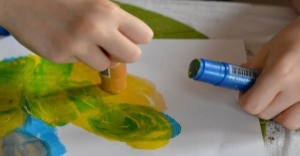 Floorbook is a documentation approach that uses a large book with blank pages for children to record different aspects of their learning in small groups… Read More
 In Norway and most other Scandinavian countries, children nap in the outdoors. According, to research outdoor sleeping not only promotes better daytime sleeping, but it… Read More
 Nature programs in early childhood settings are a fantastic way to connect children with the natural world and promote holistic development. The following article provides… Read More
 From 2026, every educator covered by the Children’s Services Award will move into a new, simplified classification structure. Instead of navigating 30 different levels, educators… Read More
 Schemas are patterns of repeated behavior that allow children to explore and express developing ideas and thoughts through their play and exploration. The following article… Read More
 The following article lists 30 art and craft descriptions and links to the EYLF. These can be used as a blurb, during observations, used for… Read More
 Positive phrases play a crucial role in children's growth because they help nurture their emotional, social, and cognitive development. The following article lists 30 positive… Read More
 From the earliest months of life, babies thrive when given opportunities to experience the outdoors. Nature is not just a backdrop for play—it is a… Read More

The following outlines your workplace entitlements and obligations if you're affected by the outbreak of...
See more...
Daily reflections are a valuable practice that helps educators assess and enhance their program while...
See more...
Painting with toddlers and preschoolers can be a wonderful and enriching activity. It not only...
See more...