



While working with children, early childhood educators have an increased risk of contracting a range of vaccine-preventable diseases through their daily interactions with children.

After, making the switch to the new child care subsidy systems, FDC Educators have raised frustration over software issues that have led to delay in pays or incorrect remuneration.

It is now mandatory for Educators in Victoria to report suspicions of sexual abuse as part of Victoria's government's response to the child sex abuse royal commision.

The spread of certain infectious diseases can be reduced by excluding the child or Educator, known to be infectious, from contact with others who are at risk of catching the infection. The following information details the recommended exclusion periods for infectious diseases. These are based on how long a child/educator with a specific disease is likely to be infectious and to be excluded from the service until they have passed the exclusion period and well enough to return.

Whether you are reflecting on yourself or reflecting on others, reflective practices provide you with an opportunity to learn and draw open diverse knowledge, views, experiences, views and attitudes within yourself and others.

While reflecting it forces us to analyse different aspects of experiences we offer to make judgements in what should be repeated, extended or changed. This enables us to develop and extend on children’s learning and build upon their knowledge and skills.

Reflecting is not only about what happened and why. It also guides our decision making. It forces us to analyse different aspects of experiences we offer to make judgements in what should be repeated, extended or changed.

Reflections are observing, listening, thinking deeply about the meaning of what you have observed and heard, and using that information to inform your practice and continually respond and reflect.

Reflections are an ongoing occurrence that enables us, educators, to think honestly about our professional practice and ideas. It challenges us to take a step back to analyse our personal experiences to enhance learning and speculate upon the future and act.
Reflective practice is learning from everyday situations and issues and concerns that arise which form part of our daily routine while working in an early childhood setting.
 The Children’s Services Award introduces a streamlined classification system and updated pay rates designed to better recognise the skills, qualifications, and responsibilities of early childhood… Read More
 The Children’s Services Award has 8 clear levels. These levels make it easier to understand where you fit, based on your experience, qualifications, and responsibilities.… Read More
 When working as a qualified early childhood teacher (with a university degree) within a service, your rate of pay will come from the Educational Services… Read More
 Diploma-qualified educators play a vital role in early childhood services, taking on responsibilities that range from supporting children’s learning and development to leading rooms and… Read More
 Certificate III qualified educators form the backbone of early childhood services, providing essential care and learning support for children across all settings. Their wages under… Read More
 Early Childhood Teachers (ECTs) play a vital role in leading curriculum and pedagogy in early learning settings. Regulation 272 of the Education and Care Services… Read More
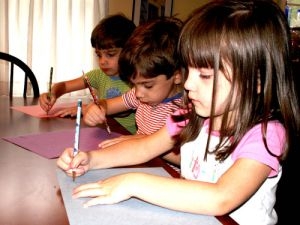 Discover how school readiness programs support children’s independence, confidence, and skills for a successful transition into primary school.
Read More
Discover how school readiness programs support children’s independence, confidence, and skills for a successful transition into primary school.
Read More
 When an Educator is not performing their tasks or responsibilities at best practice, these issues need to be addressed for the Educator to understand where… Read More
 Educators can maximise tax deductions by claiming classroom supplies, training, union fees, and home office costs this financial year.
Read More
Educators can maximise tax deductions by claiming classroom supplies, training, union fees, and home office costs this financial year.
Read More
 A staff appraisal is a formal, systematic process of determining and reviewing the performance of early childhood educators over a period of time, usually a… Read More

Discover free virtual excursions worldwide—explore museums, zoos, landmarks, and space tours to enrich children’s learning...
See more...
In the rhythm of early childhood education, weekly programs often become the heartbeat of practice—a...
See more...
Is programming time included in your ordinary hours? Should you be paid overtime if a...
See more...