



Working in a team to offer children with high quality early childhood education development, learning, and care is a requirement for a Cert 3 Qualified Educator. The following article lists some Common Interview Questions and Tips On How To Answer Them, How To Answer Interview Questions On The NQS And EYLF, How To Answer Interview Question About Your Weaknesses And Strengths, What To Say When You Don't Know The Answer, After An Interview What Is The Best Way To Respond and more.

Educational leaders play a crucial role in their early childhood service by ensuring that the educational program aligns with best practices and supports the holistic development of children. As per the Children's Services Award, educational leaders are given a yearly allowance based on how many days they are an educational leader for and non-contact time.

Inquiry-based learning sparks curiosity, critical thinking, and collaboration in early childhood through hands-on exploration and reflection.

Encouraging children to follow instructions can be a rewarding process when approached with patience and positivity. The following article provides information on Strategies To Encourage Children To Follow Instructions, What To Do When A Child Doesn't Follow Instructions, Activity Ideas To Encourage Children To Follow Instructions and more.

Multimodal representations in early childhood education involve using multiple modes of communication, such as writing, sound, and images, to represent and convey information. The following article provides information on How To Get Started, Multimodal Learning, Benefits Of Multimodal Learning, Examples and Activities, and more.

When working in an early childhood setting, one of the age groups that you will come across is 0–12 months, the nursery room. Looking after these youngesters takes a special skill set of patience and calmness. The following article provides information Minimum Requirements For Working In The Nursery, Ratios and Supervision In The Nursery Room, The Routine Of Working In The Nursery, Programming and Planning In The Nursery Room and more.

Workers' compensation in early childhood settings in Australia is crucial for ensuring the safety and well-being of educators and staff. The following article provides information on What Is Workers Compensation, What Qualifies As Workers Compensation, How Does Workers Compensation Help and more.

Pre-writing skills are crucial for young children as they lay the foundation for future writing success. The following article provides information on What Are Pre-writing Skills, Importance Of Pre-Writing Skill Activities To Promote Pre-Writing Skills and more.

The Working with Children Check (WWCC) is indeed a crucial requirement for anyone involved in child-related work in New South Wales (NSW). It includes a National Police Check and a review of reportable workplace misconduct. The following article provides information on applying for a WWCC in NSW.

Educators should never use a personal electronic device to photograph children, or record audio or visual images of children for any purpose, including to document children’s learning. The following article provides information on The National Model Code which addresses the use of service-issued electronic devices and personal electronic devices while providing children’s education and care, including taking images or videos of children.
 The Children’s Services Award introduces a streamlined classification system and updated pay rates designed to better recognise the skills, qualifications, and responsibilities of early childhood… Read More
 The Children’s Services Award has 8 clear levels. These levels make it easier to understand where you fit, based on your experience, qualifications, and responsibilities.… Read More
 When working as a qualified early childhood teacher (with a university degree) within a service, your rate of pay will come from the Educational Services… Read More
 Diploma-qualified educators play a vital role in early childhood services, taking on responsibilities that range from supporting children’s learning and development to leading rooms and… Read More
 Certificate III qualified educators form the backbone of early childhood services, providing essential care and learning support for children across all settings. Their wages under… Read More
 Early Childhood Teachers (ECTs) play a vital role in leading curriculum and pedagogy in early learning settings. Regulation 272 of the Education and Care Services… Read More
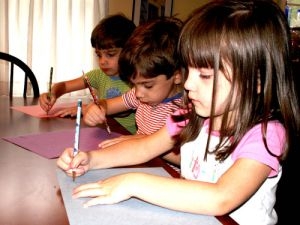 Discover how school readiness programs support children’s independence, confidence, and skills for a successful transition into primary school.
Read More
Discover how school readiness programs support children’s independence, confidence, and skills for a successful transition into primary school.
Read More
 When an Educator is not performing their tasks or responsibilities at best practice, these issues need to be addressed for the Educator to understand where… Read More
 Educators can maximise tax deductions by claiming classroom supplies, training, union fees, and home office costs this financial year.
Read More
Educators can maximise tax deductions by claiming classroom supplies, training, union fees, and home office costs this financial year.
Read More
 A staff appraisal is a formal, systematic process of determining and reviewing the performance of early childhood educators over a period of time, usually a… Read More

Age-appropriate cooking is one of the most effective ways to instil healthy eating in children...
See more...
You have a new child starting in your room, their excited, their parents are happy...
See more...
When completing either a half-yearly or yearly reports, its main purpose is to inform parents...
See more...