



For babies, the Acknowledgment of Country is often expressed through sensory-rich, rhythmic, and visual experiences that help them connect to the land and its Traditional Custodians in developmentally appropriate ways. The following article provides Acknowledgment Of Country Ideas For The Babies Room.

An educational leader in early childhood plays a pivotal role in shaping not just curriculum, but the entire culture of a service. The following article provides information on standout qualities that define effective leadership in this space and applying these qualities to a service.

The Sea of Fish Challenge, by Connecting The Dots Through Culture, is a national initiative that invites children, educators, families, and communities to create and display fish artworks as a symbol of unity, culture, and respect for Aboriginal and Torres Strait Islander people. It’s a creative way to embed First Nations perspectives into early childhood settings. The following article provides information on the Purpose, How To Participate, Display ideas, Educator Tips and more.

Here are some heartfelt and playful ideas for an educator that is leaving the service.

Intentional consideration is such a powerful practice — where every interaction and choice can shape a child’s experience. At its heart, it’s about pausing to purposefully reflect before acting, planning, or responding. It's the difference between doing something because “we’ve always done it that way” and doing it because it's best for the children, families, and community you serve.

With the new national child safety reforms kicking in on 1 September 2025, early childhood services like yours have a real opportunity to lead the way. Here’s a clear, practical roadmap to help you and your team feel confident and prepared:

Children’s agency is all about empowering children to make choices, express their ideas, and influence decisions that affect them. It’s not just a buzzword—it’s a cornerstone of respectful, rights-based early childhood education. The following article provides information on Why Is Children's Agency Important, What Are Effective Strategies For Fostering Children's Agency, What Are Some Practical Way To Promote Agency In Children, ACECQA’s Guidance On Supporting Agency and more.

An Individual Learning Plan (ILP) in early childhood is a tailored document that outlines specific goals, strategies, and supports for a child, particularly one with a disability, developmental delay, or unique learning needs. The following article provides information on What Does An ILP Include, Benefits Of Using An ILP, When To Use An ILP, When Is It Not Appropriate To Use An ILP, Creating An Effective ILP, ILP Sample and more.

Self-talk is a powerful tool for helping children manage their emotions and behaviors. When used intentionally, it can guide children through tricky moments by giving them the language to pause, reflect, and choose a response. The following article provides information on Why It Works, What Are The Psychological Benefits Of Self-Talk, How to Encourage It, Examples of Self-Talk For Young Children, Activities to Support Self-Talk and more.

Based on the AEDC 2024 findings, here are 5 targeted strategies services can implement to respond thoughtfully and effectively to rising developmental vulnerabilities.
 The Children’s Services Award introduces a streamlined classification system and updated pay rates designed to better recognise the skills, qualifications, and responsibilities of early childhood… Read More
 The Children’s Services Award has 8 clear levels. These levels make it easier to understand where you fit, based on your experience, qualifications, and responsibilities.… Read More
 When working as a qualified early childhood teacher (with a university degree) within a service, your rate of pay will come from the Educational Services… Read More
 Diploma-qualified educators play a vital role in early childhood services, taking on responsibilities that range from supporting children’s learning and development to leading rooms and… Read More
 Certificate III qualified educators form the backbone of early childhood services, providing essential care and learning support for children across all settings. Their wages under… Read More
 Early Childhood Teachers (ECTs) play a vital role in leading curriculum and pedagogy in early learning settings. Regulation 272 of the Education and Care Services… Read More
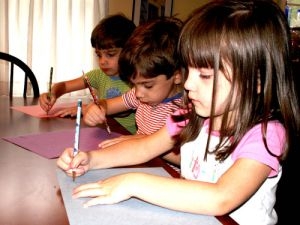 Discover how school readiness programs support children’s independence, confidence, and skills for a successful transition into primary school.
Read More
Discover how school readiness programs support children’s independence, confidence, and skills for a successful transition into primary school.
Read More
 When an Educator is not performing their tasks or responsibilities at best practice, these issues need to be addressed for the Educator to understand where… Read More
 Educators can maximise tax deductions by claiming classroom supplies, training, union fees, and home office costs this financial year.
Read More
Educators can maximise tax deductions by claiming classroom supplies, training, union fees, and home office costs this financial year.
Read More
 A staff appraisal is a formal, systematic process of determining and reviewing the performance of early childhood educators over a period of time, usually a… Read More

EYLF Learning Outcome 3 focuses on "Children Have A Strong Sense Of Wellbeing." The following...
See more...
Early childhood education is a dynamic and deeply relational field. Educators are constantly navigating children’s...
See more...
Pretend play is very important for children's development and learning. In the house corner, children...
See more...