



Achieving EYLF Outcome 5—Children Are Effective Communicators—in the Babies Room focuses on fostering foundational communication skills in the youngest learners. In an environment where babies largely communicate non-verbally, educators play a crucial role in creating opportunities for both expressive and receptive language development. Here’s how you can integrate practices that support this outcome in the Babies Room.
EYLF Outcome 4 centers on empowering children to become self-assured, engaged participants in their own learning. It’s all about nurturing a mindset where children perceive learning as an active, enjoyable, and continual journey. The following article provides information on the Definition Of Sub Outcomes, Practical Examples Of Sub Outcomes, Applying Sub Outcomes Into Practice and more.
Incorporating follow-ups into the EYLF program means creating an ongoing, responsive cycle that both monitors and builds on children’s learning. Here are some detailed strategies to help you weave follow-ups seamlessly into your EYLF planning cycle.
EYLF Outcome 3: Children Have a Strong Sense of Wellbeing focuses on fostering children's physical, emotional, and social wellbeing. It emphasizes resilience, self-regulation, and healthy lifestyle habits, which are essential for children's development and learning. The following article provides information on the Definition Of Sub Outcomes, Practical Examples Of Sub Outcomes, Applying Sub Outcomes Into Practice and more.

To make the Early Years Learning Framework (EYLF) planning cycle more impactful and engaging, you can explore strategies that emphasize collaboration, creativity, and responsiveness. The folowing article provides Strategies For An Impactful and Meaningful EYLF Planning Cycle, What Is Child Centered Focus, What is Continuous Documentation, What Is Dynamic Programming, How To Include Follow Ups Into The EYLF Program, How Often Children Should Be Observed and more.
EYLF Outcome 2 focuses on children being connected with and contributing to their world. It emphasizes fostering a sense of belonging, respect for diversity, and social responsibility. The following article provides information on the Definition Of Sub Outcomes, Practical Examples Of Sub Outcomes, Applying Sub Outcomes InTo Practice and more.
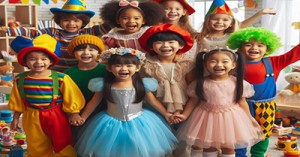
EYLF Outcome 1 focuses on children developing a strong sense of identity. It emphasizes the importance of children feeling safe, secure, and supported, which helps them grow in confidence to explore and learn. The following article provides information on the Definition Of Sub Outcomes, Practical Examples Of Sub Outcomes, Applying Sub Outcomes InTo Practice and more.

Here’s a step-by-step guide to programming and planning using EYLF. This guide also includes: How Do You Gather Information About Children's Interests, Strengths, and Learning Styles?, How Do You Analyze Observations To Identify Learning Outcomes?, How Do You Analyze Observations To Plan And Implement Further Learning Opportunities?, What Other Evidence Can Be Gathered To Intergrate Learning Opportunities Onto The EYLF Program and more.
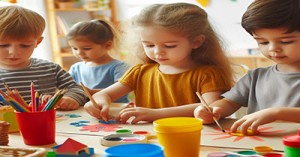
The following article lists 30 art and craft descriptions and links to the EYLF. These can be used as a blurb, during observations, used for portfolios, or when displaying children's art and craft work.

Creating an Early Years Learning Framework (EYLF) curriculum plan involves several key steps to ensure it aligns with the framework’s principles and supports children’s learning and development. The following article provides a step by step guide on writing the EYLF curriculum plan.
 The Children’s Services Award introduces a streamlined classification system and updated pay rates designed to better recognise the skills, qualifications, and responsibilities of early childhood… Read More
 Children need safe and positive environments to learn and grow. To ensure this, services and educators need to ensure effective supervision at all times. The… Read More
 Floorbook is a documentation approach that uses a large book with blank pages for children to record different aspects of their learning in small groups… Read More
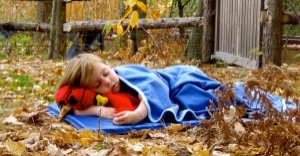 In Norway and most other Scandinavian countries, children nap in the outdoors. According, to research outdoor sleeping not only promotes better daytime sleeping, but it… Read More
 Educational leaders play a crucial role in their early childhood service by ensuring that the educational program aligns with best practices and supports the holistic… Read More
 From 2026, every educator covered by the Children’s Services Award will move into a new, simplified classification structure. Instead of navigating 30 different levels, educators… Read More
 Nature programs in early childhood settings are a fantastic way to connect children with the natural world and promote holistic development. The following article provides… Read More
 Schemas are patterns of repeated behavior that allow children to explore and express developing ideas and thoughts through their play and exploration. The following article… Read More
 The following article lists 30 art and craft descriptions and links to the EYLF. These can be used as a blurb, during observations, used for… Read More
 Positive phrases play a crucial role in children's growth because they help nurture their emotional, social, and cognitive development. The following article lists 30 positive… Read More
STEM (Science, Technology, Engineering, and Mathematics) education for toddlers is all about fostering curiosity, problem-solving...
See more...
Rainy days can stir up big energy in little bodies. When outdoor play isn’t an...
See more...
A Montessori method is an educational approach characterised by learner choice, an enriching environment and...
See more...