



Children are more likely to be confident and involved learners when their family and community experiences and understandings are recognised and included in the early childhood setting. The following article provides activities to promote each of the sub-outcomes of EYLF Outcome 4 - Children Are Confident And Involved Learners.
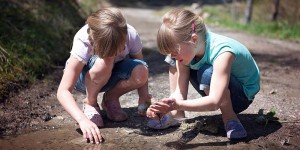
A strong sense of well-being provides children with confidence and optimism which maximises their learning potential. It encourages the development of children’s innate exploratory drive, a sense of agency and a desire to interact with others. Well-being includes good physical health, feelings of happiness, satisfaction and successful social functioning. It influences the way children interact in their environments. The following article provides activities to promote each of the sub outcomes of EYLF Outcome 3 - Children Have A Strong Sense of Wellbeing.
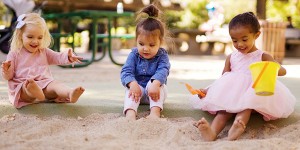
When children move into early childhood settings they broaden their experiences as participants in different relationships and communities. When educators create environments in which children experience mutually enjoyable, caring and respectful relationships with people and the environment, children respond accordingly. The following article provides activities to promote each of the sub outcomes of EYLF Outcome 2: Children Are Connected With And Contribute To Their World.

When children feel safe, secure and supported they grow in confidence to explore and learn. In early childhood settings children develop a sense of belonging when they feel accepted, develop attachments and trust those that care for them. As children are developing their sense of identity, they explore different aspects of it (physical, social, emotional, spiritual, and cognitive), through their play and their relationships. The following article provides activities to promote each of the sub outcomes of EYLF Outcome 1: Children Have A Strong Sense Of Identity.

The Early Years Learning Framework outlines a set of eight pedagogical practices for educators to draw upon to promote children’s learning. These practices range from macro aspects like building relationships and curriculum decision-making to daily interventions like teaching and learning. The following article provides information on each of the 8 Practices and examples of how to implement the eylf practices into your service.
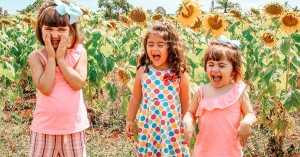
The Early Years Learning Framework outlines five principles that reflect contemporary theories and research evidence concerning children’s learning and early childhood pedagogy. These principles are meant to underpin practice so that all children are supported to make progress in relation to the Learning Outcomes. The following article provides information on each of the 5 Principles and examples of strategies of how to implement the eylf principles into your service.
From January to March 2022, potential updates to the Early Years Learning Framework for Australia (EYLF) and My Time Our Place: Framework for School Age Care in Australia (MTOP) were piloted in 16 early childhood education and care services across Australia.
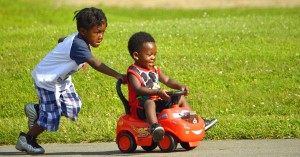
Physical development includes not just the increase in length, height and weight of the child but also the size of organs as well as the development of various reflexes, motor skills, sensations and perceptions. Here is a brief overview of ways in which physical development in the first five years can be linked to EYLF.

According to the Educators’ Guide to the Early Years Learning Framework, documentation is the practice of recording and creating evidence of learning and the learning progress, helping make it visible. Though documentation is mandated to meet regulatory and pedagogical purposes, there are no prescriptive rules about how it may be done. The following article provides strategies for documenting in an early childhood setting.

Respect for Diversity is one of the main principles that underpin the Belonging, Becoming and Being: Early Years Learning Framework for Australia. Thus it is mandatory for services and educators to use practice that incorporates diverse cultures, especially in monocultural classrooms where opportunities for practice diversity can appear limited. Here are some examples of ways diverse cultures can be embedded in everyday practice.
 The Children’s Services Award introduces a streamlined classification system and updated pay rates designed to better recognise the skills, qualifications, and responsibilities of early childhood… Read More
 The Children’s Services Award has 8 clear levels. These levels make it easier to understand where you fit, based on your experience, qualifications, and responsibilities.… Read More
 When working as a qualified early childhood teacher (with a university degree) within a service, your rate of pay will come from the Educational Services… Read More
 Diploma-qualified educators play a vital role in early childhood services, taking on responsibilities that range from supporting children’s learning and development to leading rooms and… Read More
 Certificate III qualified educators form the backbone of early childhood services, providing essential care and learning support for children across all settings. Their wages under… Read More
 Early Childhood Teachers (ECTs) play a vital role in leading curriculum and pedagogy in early learning settings. Regulation 272 of the Education and Care Services… Read More
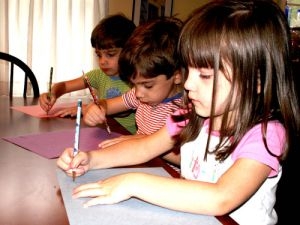 Discover how school readiness programs support children’s independence, confidence, and skills for a successful transition into primary school.
Read More
Discover how school readiness programs support children’s independence, confidence, and skills for a successful transition into primary school.
Read More
 When an Educator is not performing their tasks or responsibilities at best practice, these issues need to be addressed for the Educator to understand where… Read More
 Educators can maximise tax deductions by claiming classroom supplies, training, union fees, and home office costs this financial year.
Read More
Educators can maximise tax deductions by claiming classroom supplies, training, union fees, and home office costs this financial year.
Read More
 A staff appraisal is a formal, systematic process of determining and reviewing the performance of early childhood educators over a period of time, usually a… Read More

The start of a new year is more than a reset—it’s a chance to align...
See more...
Father’s Day is on the 6th of September 2026; it's time to start thinking of...
See more...
Running records are written in present tense and recorded as the action is happening. It...
See more...