
When educators aren’t OK, respond with empathy, provide practical relief, and connect them to clear wellbeing supports and leadership care.
If an educator is not okay, the most important step is to respond with empathy, create psychological safety, and connect them to both peer and organisational supports. It’s not enough to ask, “Are you okay?" "ECEC services need clear pathways for immediate care, ongoing wellbeing strategies, and leadership accountability.
Immediate Response When an Educator Is Not OK
When a colleague shows signs of distress – withdrawal, irritability, fatigue, or openly saying they’re struggling – the priority is to listen without judgement and ensure they feel safe.
- Pause and Listen: Offer a quiet space and let them talk without rushing to solutions.
- Validate Feelings: Acknowledge their experience (“That sounds really tough”) rather than minimising.
- Offer Practical Relief: Swap duties, adjust ratios, or give a short break if possible.
- Encourage Peer Connection: Suggest talking with a trusted colleague or wellbeing champion.
- Know Referral Pathways: Be clear about available supports — Employee Assistance Programs (EAP), counselling, or external helplines.
Organisational Supports
Research shows educator wellbeing is shaped more by workplace systems than individual resilience. Leaders must embed structures that prevent burnout and respond effectively when staff are struggling.
- Reflective Supervision: Regular check-ins focused on feelings and problem-solving, not blame.
- Psychological Safety: Create a culture where staff can admit struggles without fear of judgment.
- Workload Adjustments: Streamline documentation, protect non-contact time, and ensure breaks are honoured.
- Access to Professional Help: Offer counselling, mentoring, or wellbeing workshops.
- Leadership Listening Hours: Dedicated time for staff to raise concerns directly with management.
Practical Everyday Supports
Small, consistent practices can help educators recover from stress and prevent escalation.
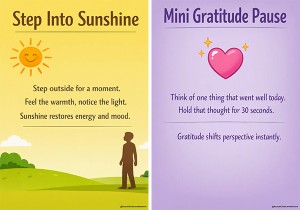
- Micro-Recovery Rituals: Two-minute breathing, stepping outside for sunlight, or sipping water slowly.
- Mood Check Tools: Simple 1–5 rating scales to track wellbeing across shifts.
- Healthy Break Spaces: Quiet corners with calming sensory tools and healthy snacks.
- Peer Buddy System: Pair educators to check in on each other daily.
- Boundary Protocols: Encourage staff to leave work at work — no after-hours emails or calls unless urgent.
National Supports
Be You
- National mental health and wellbeing initiative led by Beyond Blue, Early Childhood Australia, and Headspace.
- Free online modules, educator wellbeing tools, and consultant support.
- Focuses on building mentally healthy learning communities.
Beyond Blue Support Service
- 24/7 free counselling and wellbeing support.
- Available to all Australians, including educators.
- Provides phone, webchat, and online forums.
Headspace
- Youth mental health service, but also offers workplace wellbeing resources.
- Centres across Australia provide counselling and resilience programs.
Risks & Challenges
- Tokenism: Asking “Are you okay?” without follow-up action erodes trust.
- Confidentiality: Staff must feel safe that disclosures won’t be shared inappropriately.
- Leadership Buy-In: Without genuine commitment from management, wellbeing initiatives fail.
- Systemic Pressures: Burnout is not just personal — staffing shortages, compliance loads, and financial stress must be addressed at organisational and policy levels.
Bottom line: If an educator is not okay, the response must go beyond empathy; it requires practical relief, structured supports, and leadership accountability. Embedding these practices ensures educators feel safe, valued, and able to continue the vital work of shaping children’s futures.
Further Reading
Mental Health and Well Being of Educators
Why Educator Health Sets the Tone for the Year
Wellbeing Isn’t a Theme Day — It’s the Job Design
The Shift From Burnout to Boundaries
When the Bitching Gets Loud: How Educators Can Protect Their Energy
Wellbeing Wednesday Ideas That Actually Work
Anonymous Feedback Box Template



 The Children’s Services Award introduces a streamlined classification system and updated pay rates designed to better recognise the skills, qualifications, and responsibilities of early childhood
 The Children’s Services Award has 8 clear levels. These levels make it easier to understand where you fit, based on your experience, qualifications, and responsibilities.
 When working as a qualified early childhood teacher (with a university degree) within a service, your rate of pay will come from the Educational Services
 Diploma-qualified educators play a vital role in early childhood services, taking on responsibilities that range from supporting children’s learning and development to leading rooms and
 Certificate III qualified educators form the backbone of early childhood services, providing essential care and learning support for children across all settings. Their wages under
 Early Childhood Teachers (ECTs) play a vital role in leading curriculum and pedagogy in early learning settings. Regulation 272 of the Education and Care Services
 Discover how school readiness programs support children’s independence, confidence, and skills for a successful transition into primary school.
 When an Educator is not performing their tasks or responsibilities at best practice, these issues need to be addressed for the Educator to understand where
 Educators can maximise tax deductions by claiming classroom supplies, training, union fees, and home office costs this financial year.
 A staff appraisal is a formal, systematic process of determining and reviewing the performance of early childhood educators over a period of time, usually a