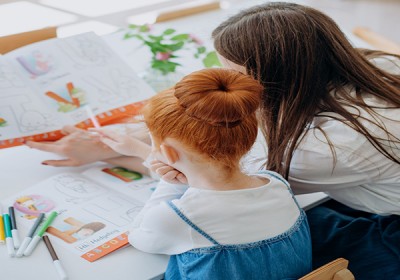
Preschool readiness goes beyond reciting letters or numbers; educators focus on curiosity, resilience, and real learning for school success.
Preschoolers often impress adults by reciting letters, numbers, colours, or shapes. These skills are visible, easy to measure, and reassuring to families. But they are not reliable indicators of school readiness, nor do they necessarily show genuine understanding.
A child may chant the alphabet without grasping that letters represent sounds. They may count to twenty without recognising that numbers represent quantities. They may name a triangle but fail to identify one when rotated or embedded in a pattern. These performances reflect exposure and memory, not deeper comprehension.
Policy Context
The Early Years Learning Framework (EYLF) reminds us that readiness is not about rehearsed outcomes but about dispositions — curiosity, resilience, cooperation, and adaptability. Quality Area 1 (Educational Program and Practice) emphasises that educators must design experiences that build transferrable skills, not just rehearsed answers.
School readiness is revealed when children can apply knowledge in new contexts, connect ideas, ask questions, and solve problems.
Educator Voice
Preschool educators often face pressure to produce visible outcomes: alphabet charts, counting drills, or “school‑like” tasks. These are persuasive because they look advanced and are easy to display. Yet the most consequential development in preschool is far less performative and harder to capture.
- You cannot photograph cognitive flexibility.
- You cannot hang self‑regulation on the wall.
- You cannot ask a child to recite curiosity.
- You cannot reduce imagination, reasoning, or resilience to a flashcard.
Practical Strategies
True school readiness is strengthened through experiences that build deeper abilities:
- Cause and effect: Mixing colours, experimenting with ramps, observing natural changes.
- Comparing quantities: Sharing snacks, building towers, sorting collections.
- Problem‑solving: Negotiating turn‑taking, redesigning block structures, and resolving conflicts.
- Pretend play: Exploring roles, rules, and relationships through imagination.
- Collaboration: Working with peers to plan, build, and reflect.
These experiences nurture working memory, impulse control, planning, language, spatial reasoning, creativity, emotional regulation, and problem‑solving — the true foundations of readiness.
Signs of Real School Readiness
Skills to Support
School readiness is not about rote recitation of letters or numbers. It is about children demonstrating independence and practical skills that help them thrive in a classroom environment.
- Independence skills — Toileting, managing belongings, opening lunchboxes.
- Routine skills — Following instructions, sitting in group time, transitioning smoothly.
- Communication skills — Expressing needs, listening, engaging with peers.
Dispositions to Nurture
Readiness is revealed through dispositions — the attitudes and approaches children bring to learning.
- Confidence — Willingness to try new tasks, self‑belief.
- Curiosity — Asking questions, exploring new ideas.
- Resilience — Coping with challenges, bouncing back after setbacks.
- Relationships — Building friendships, trusting educators.
Embedding Readiness
Educators can embed readiness into everyday practice by focusing on meaningful experiences rather than rehearsed performance.
- Role‑play routines — Practice lining up, carrying bags, or classroom expectations through play.
- Storytime focus — Use group stories to build listening and cooperation.
- Family partnerships — Share realistic expectations with parents to reduce pressure.
- Flexible programming — Balance structured skill‑building with spontaneous exploration.
- Celebrate small wins — Document progress in confidence and independence, not just academic skills.
Tips & Hints
- Avoid comparing children — readiness looks different for each child.
- Pair readiness activities with play‑based experiences.
- Document both skills and dispositions in observations.
- Use checklists as a guide, not a rigid standard.
The goal is not to create children who can produce impressive answers on command. It is to protect the conditions that help them become thoughtful, capable, curious human beings, ready not just to enter school but to thrive when the answer has not already been given to them.
Further Reading
School Readiness Program
School Readiness Guide For Educators
Deferring School Entry: A Strengths-Based Approach to Readiness
School Readiness and Name Writing: What ACECQA and the EYLF Really Say
Critical Reflection Questions For School Readiness

 The Children’s Services Award introduces a streamlined classification system and updated pay rates designed to better recognise the skills, qualifications, and responsibilities of early childhood
 The Children’s Services Award has 8 clear levels. These levels make it easier to understand where you fit, based on your experience, qualifications, and responsibilities.
 When working as a qualified early childhood teacher (with a university degree) within a service, your rate of pay will come from the Educational Services
 Diploma-qualified educators play a vital role in early childhood services, taking on responsibilities that range from supporting children’s learning and development to leading rooms and
 Certificate III qualified educators form the backbone of early childhood services, providing essential care and learning support for children across all settings. Their wages under
 Early Childhood Teachers (ECTs) play a vital role in leading curriculum and pedagogy in early learning settings. Regulation 272 of the Education and Care Services
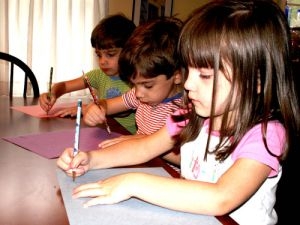 Discover how school readiness programs support children’s independence, confidence, and skills for a successful transition into primary school.
 When an Educator is not performing their tasks or responsibilities at best practice, these issues need to be addressed for the Educator to understand where
 Educators can maximise tax deductions by claiming classroom supplies, training, union fees, and home office costs this financial year.
 A staff appraisal is a formal, systematic process of determining and reviewing the performance of early childhood educators over a period of time, usually a