
Messy play boosts child development through sensory exploration, creativity, motor skills, and confidence in fun, hands-on learning.
Educators can use the following in newsletters or as a handout to parents. It explains the importance of messy play, reassures families about its value, and highlights how “mess” is actually a sign of rich learning and development.
Letter To Families
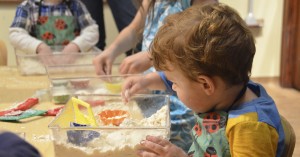
We know it can be surprising to see your child come home with paint on their sleeves, mud on their shoes, or sand in their hair. While it may look like “mess,” it is actually evidence of deep, meaningful learning.
Messy play is not just fun—it is essential. When children engage in activities like painting, digging, water play, or exploring natural materials, they are:
-
Developing motor skills: Strengthening fine skills (gripping brushes, pouring water) and gross skills (digging, climbing).
-
Experimenting with cause and effect: Discovering what happens when they mix colors, pour sand, or splash water.
-
Building creativity: Using imagination to turn mud into “cakes” or paint into “stories.”
-
Strengthening social skills: Collaborating, sharing tools, and negotiating roles in group play.
-
Exploring sensory experiences: Touching, smelling, and seeing different textures supports brain development.
Practical Examples of Messy Play
-
Painting: Finger painting, sponge painting, or mixing colors.
-
Outdoor play: Mud kitchens, sand pits, puddle jumping.
-
Water play: Pouring, splashing, floating objects.
-
Natural materials: Collecting leaves, sticks, shells, or stones for sorting and building.
-
Cooking play: Pretend baking with flour, dough, or clay.
Extra Benefits of Messy Play
-
Language development: Children describe textures, actions, and outcomes.
-
Emotional regulation: Messy play is calming and helps children manage feelings.
-
Scientific thinking: Predicting, testing, and observing outcomes.
-
Confidence building: Children take safe risks and feel proud of their creations.
-
Resilience: Learning persistence when things don’t go as planned.
We carefully plan these experiences to align with the Early Years Learning Framework. The “mess” is a visible sign that your child has been actively involved in beneficial activities that nurture growth and wellbeing.
We encourage you to celebrate these signs of exploration. A smudge of paint or a patch of dirt is proof that your child has been curious, creative, and joyfully learning.
Thank you for supporting us in providing opportunities for children to explore, discover, and thrive—even if it means a little extra laundry at home!


 The Children’s Services Award introduces a streamlined classification system and updated pay rates designed to better recognise the skills, qualifications, and responsibilities of early childhood
 The Children’s Services Award has 8 clear levels. These levels make it easier to understand where you fit, based on your experience, qualifications, and responsibilities.
 When working as a qualified early childhood teacher (with a university degree) within a service, your rate of pay will come from the Educational Services
 Diploma-qualified educators play a vital role in early childhood services, taking on responsibilities that range from supporting children’s learning and development to leading rooms and
 Certificate III qualified educators form the backbone of early childhood services, providing essential care and learning support for children across all settings. Their wages under
 Early Childhood Teachers (ECTs) play a vital role in leading curriculum and pedagogy in early learning settings. Regulation 272 of the Education and Care Services
 Discover how school readiness programs support children’s independence, confidence, and skills for a successful transition into primary school.
 When an Educator is not performing their tasks or responsibilities at best practice, these issues need to be addressed for the Educator to understand where
 Educators can maximise tax deductions by claiming classroom supplies, training, union fees, and home office costs this financial year.
 A staff appraisal is a formal, systematic process of determining and reviewing the performance of early childhood educators over a period of time, usually a