



Here’s a roundup of 20 super simple science experiments for toddlers in early learning settings. These activities are sensory-rich, safe, and designed to spark curiosity while introducing foundational science concepts.

Babies explore science through play, discovering cause, effect, patterns, and curiosity with sensory‑rich, everyday experiences.

Young children often explore their world through touch and close contact, but rough play can lead to upset or hurt feelings. Introducing personal space and consent concepts early helps preschoolers learn boundaries, empathy, and respectful interactions.
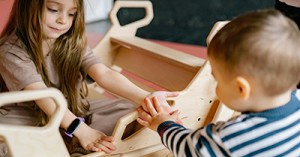
Teaching young children how to use their hands for kindness rather than harm is foundational to building a caring classroom culture. At ages four and five, children are still developing self-regulation and may act out physically when emotions feel overwhelming. As educators, we can guide them toward prosocial alternatives, equip them with emotional vocabulary, and partner with families to reinforce healthy touch at home.
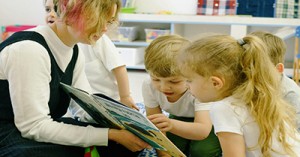
Children don’t learn to read by starting with phonics worksheets—they begin with listening, talking, imagining, and playing. Pre-reading skills emerge organically when environments are rich in language, storytelling, and joyful exploration. These foundational abilities must be nurtured before formal reading instruction begins.

In a world where safeguarding begins with everyday interactions, teaching consent to toddlers and preschoolers isn’t just possible—it’s essential. Long before children understand the word “consent,” they can learn what it feels like to be respected, heard, and safe. These early lessons lay the foundation for lifelong boundaries, empathy, and self-worth.

Simple songs about consent gently introduce children to concepts like body autonomy, boundary-setting, and respectful communication in ways that feel playful, affirming, and easy to remember. By pairing repetitive rhymes with hand motions, call-and-response, and relatable scenarios, these songs help children internalize messages such as “I can say no,” “I ask before I touch,” and “My voice matters.” Whether used in circle time, transition moments, or home routines, they offer educators and families an emotionally safe, joyful way to teach consent from the ground up.
Creating a safe and empowering environment for preschoolers begins with intentional, age-appropriate education around body autonomy, emotional literacy, and help-seeking skills. This article offers a collection of EYLF-aligned, trauma-informed Child Protection activities designed to foster safety, resilience, and voice in young learners.

Snakes are one of nature's most fascinating creatures, often misunderstood yet deeply woven into Australia’s unique biodiversity and Indigenous culture. By exploring native Australian snakes through play and learning, children can develop respect for wildlife, connect to Country, and expand their understanding of animal behaviors, habitats, and cultural significance. The following article provides information on Snake Theme Activity Ideas, Importance Of Learning About Snakes, Goals For a Snake Theme, Linking To The EYLF, Follow Up Themes and more.

In a heartwarming episode of Playschool titled “Island Life", Uncle Charles Passi, a proud Torres Strait Islander, joins the show and introduces viewers to the sit-down dance “Taba Naba", a traditional Torres Strait Islander song that celebrates island life, the sea, and community connection. This is a great opportunity for educators to learn to dance to teach children.
 Open ended questions cannot be responded to with one word answers such as yes or no. These types of questions enables a child to provide… Read More
 During your child’s preschool years, an important milestone begins to emerge. This is the development of pre-writing skills. Pre-writing skills are used to encourage, develop… Read More
 An Acknowledgment of the Country is a way of showing respect for the Traditional Owners and can be given by both non-Indigenous people and Aboriginal… Read More
 Open ended materials enables children to play freely. They are objects that have no rules to follow, use or function. Raw materials that can be… Read More
 Language plays an important role in a child’s development. It enables a child to communicate effectively with their family, learn at school, socialize with friends,… Read More
 Like adults, children have to deal with their own stress in life. Moving house, starting a new school, preparing for a new sibling - these are… Read More
 Playdough is such a versatile material. It provides numerous benefits to children as they manipulate it, it is safe and soothing and provides children with… Read More
 Teaching children about sustainability enables them to appreciate and respect the natural environment. Early childhood services can provide meaningful hand on learning experiences in order… Read More
 Recycling is an important concept that teaches children to care for the environment. It encourages children to be responsible and show a growing appreciating for… Read More
 Incursions provide children with the opportunity to explore meaningful learning experiences in the comfort of their early childhood service. The following provides a directory of… Read More

Incursions provide children with the opportunity to explore meaningful learning experiences in the comfort of...
See more...
The aim of environmental cleaning is to minimise the number of germs to reduce the...
See more...
The following list of questions helps educators critically reflect on their supervision practices, ensuring a balance...
See more...