


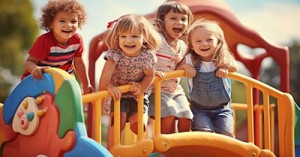
Pedagogy in early childhood isn’t just about teaching—it’s about how we nurture, guide, and co-construct learning with our youngest citizens. It’s the heartbeat of early education, where relationships, play, and emotional safety shape every moment.

A: There’s no fixed number of observations required from educators across all early childhood services in Australia—it depends on your service’s philosophy, policies, and the needs of the children.

Here's a quick cheat sheet for Quality Area 4: Staffing Arrangements under the National Quality Standard (NQS) in Australian early childhood education. This area focuses on ensuring that staffing promotes children's learning and development.

A: You can show individual learning cycles in a simplified way by using visual templates and structured documentation that align with the EYLF. These tools help educators track each child’s progress without overwhelming complexity. Here are a few effective strategies.

Here’s a streamlined set of weekly reflection questions designed for educators to use quickly—whether during team check-ins, solo journaling, or embedded in documentation cycles. They’re emotionally intelligent, trauma-informed, and adaptable across age groups and settings.
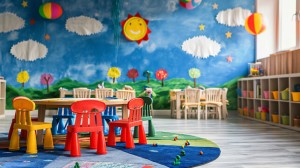
The following is a cheat sheet for Quality Area 3: Physical Environment. This quality area is designed to support educators in creating safe, inclusive, and engaging spaces that nurture well-being and learning. This version emphasizes design principles, sustainability, and trauma-informed spatial choices, with cues for induction, audit prep, and daily reflection.

The following is a cheat sheet for Quality Area 2. Quality Area 2 of the National Quality Standard (NQS) is the heartbeat of safe, responsive, and nurturing early childhood environments. It affirms that every child has the right to feel safe, be healthy, and thrive—physically, emotionally, and developmentally.

Quality Area 3 of the National Quality Standard (NQS) focuses on the physical environment—its design, safety, inclusivity, and how it supports children’s learning, wellbeing, and agency. Here’s a breakdown of practical, workplace-ready examples tailored to your advocacy and leadership lens.

The following is a concise yet powerful cheat sheet for Quality Area 1: Educational Program and Practice, tailored for your advocacy and sector leadership lens. This distills the core elements, documentation strategies, and reflective prompts to support both compliance and authentic pedagogy.

Safe language in documentation is more than just avoiding sensitive disclosures—it’s about writing in a way that protects children’s dignity, fosters trust with families, and upholds the professional integrity of educators. Here’s a guide to help you embed safe, respectful, and pedagogically sound language into your group and individual observations.
 Open ended questions cannot be responded to with one word answers such as yes or no. These types of questions enables a child to provide… Read More
 During your child’s preschool years, an important milestone begins to emerge. This is the development of pre-writing skills. Pre-writing skills are used to encourage, develop… Read More
 An Acknowledgment of the Country is a way of showing respect for the Traditional Owners and can be given by both non-Indigenous people and Aboriginal… Read More
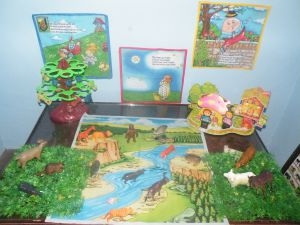 Open ended materials enables children to play freely. They are objects that have no rules to follow, use or function. Raw materials that can be… Read More
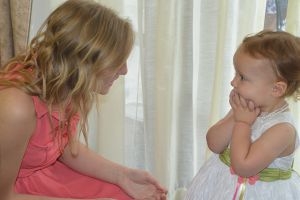 Language plays an important role in a child’s development. It enables a child to communicate effectively with their family, learn at school, socialize with friends,… Read More
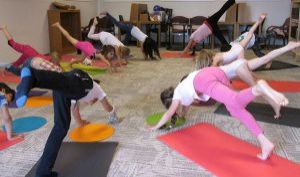 Like adults, children have to deal with their own stress in life. Moving house, starting a new school, preparing for a new sibling - these are… Read More
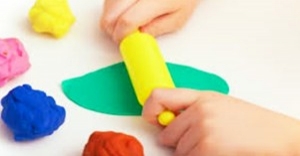 Playdough is such a versatile material. It provides numerous benefits to children as they manipulate it, it is safe and soothing and provides children with… Read More
 Teaching children about sustainability enables them to appreciate and respect the natural environment. Early childhood services can provide meaningful hand on learning experiences in order… Read More
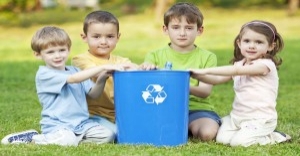 Recycling is an important concept that teaches children to care for the environment. It encourages children to be responsible and show a growing appreciating for… Read More
 Incursions provide children with the opportunity to explore meaningful learning experiences in the comfort of their early childhood service. The following provides a directory of… Read More
Supporting the mental health of toddlers and preschoolers is crucial for their overall development. The...
See more...
Discover how science sparks curiosity in early childhood, hands‑on play, inquiry learning, and EYLF links...
See more...
Higher duties in the Children's Services Award refer to situations where an educator temporarily performs tasks...
See more...