


High-quality early education and care is more than preparation for school—it’s the foundation for a child’s lifelong well-being, confidence, and achievement. During Early Learning Matters Week, educators, families, and communities come together to celebrate the transformative impact of play-based learning in shaping enthusiastic, capable learners.

Open-ended play activities are all about freedom, exploration, and creativity—especially powerful in early childhood settings where babies and toddlers are discovering the world through their senses and movement. Here’s a rich collection of examples tailored for babies (0–18 months), with variations to suit different developmental stages and settings.
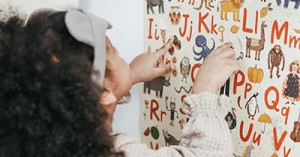
In early childhood education, the decision to defer a child’s school entry by a year is often framed as “staying back.” But educators across Australia are challenging this language, advocating instead for a strengths-based perspective: sending children when they are developmentally ready.

Thanks to the new National Model Code and upcoming regulatory changes under the National Quality Framework (NQF), early childhood services across Australia must now implement robust policies for the taking, use, storage, and destruction of images and videos of children. Here's a sample policy template aligned with the latest updates, effective from 1 September 2025.

A: Employers must give at least 7 days’ notice for changes to rosters, including meeting times. If the meeting is compulsory, it must be paid.
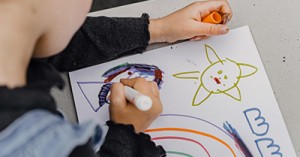
In many early childhood settings, art activities have unintentionally become routine tasks—structured, time-bound, and educator-led. Children are often called one by one to complete pre-set crafts, given step-by-step instructions, and quickly ushered away. This approach can lead to disengagement, low interest, and a missed opportunity to nurture creativity and emotional development.

Here’s a comprehensive Mobile Phone and Smart Watch Policy tailored for early childhood education and care (ECEC) services in Australia, aligned with the latest 2025 legislative reforms and National Quality Framework (NQF) updates.
As services prepare for upcoming assessment and rating, educators and leaders often seek clarity on what assessors typically observe, review, and discuss during visits. This article outlines common areas of focus, documentation requirements, and practical considerations to support services in demonstrating quality practice and compliance.

Early childhood education thrives on diversity. Multicultural teams bring rich perspectives, lived experiences, and linguistic variety that enhance learning environments for children and educators alike.
In this article, we explore how services can support respectful language use, address feelings of exclusion, and uphold the principles of the Early Years Learning Framework (EYLF) and National Quality Standard (NQS)—without compromising identity or connection.
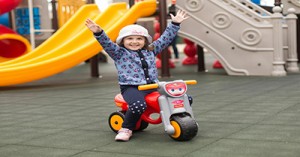
Creating a purposeful outdoor space means more than scattering toys—it’s about crafting an environment that actively supports children’s growth. By weaving the Early Years Learning Framework (EYLF) and the National Quality Standard (NQS) into your outdoor design, you ensure every element invites meaningful exploration, skill-building, and well-being.
 Open ended questions cannot be responded to with one word answers such as yes or no. These types of questions enables a child to provide… Read More
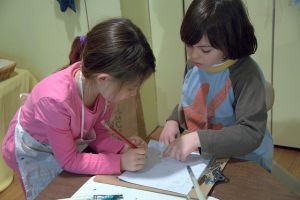 During your child’s preschool years, an important milestone begins to emerge. This is the development of pre-writing skills. Pre-writing skills are used to encourage, develop… Read More
 An Acknowledgment of the Country is a way of showing respect for the Traditional Owners and can be given by both non-Indigenous people and Aboriginal… Read More
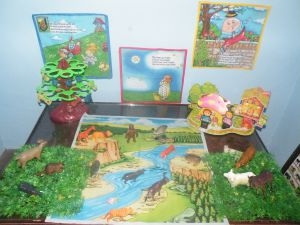 Open ended materials enables children to play freely. They are objects that have no rules to follow, use or function. Raw materials that can be… Read More
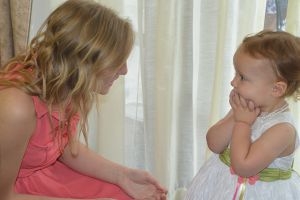 Language plays an important role in a child’s development. It enables a child to communicate effectively with their family, learn at school, socialize with friends,… Read More
 Like adults, children have to deal with their own stress in life. Moving house, starting a new school, preparing for a new sibling - these are… Read More
 Playdough is such a versatile material. It provides numerous benefits to children as they manipulate it, it is safe and soothing and provides children with… Read More
 Teaching children about sustainability enables them to appreciate and respect the natural environment. Early childhood services can provide meaningful hand on learning experiences in order… Read More
 Recycling is an important concept that teaches children to care for the environment. It encourages children to be responsible and show a growing appreciating for… Read More
 Incursions provide children with the opportunity to explore meaningful learning experiences in the comfort of their early childhood service. The following provides a directory of… Read More

The following article provides a list of non-food tactile play ideas that can engage children...
See more...
Children need safe and positive environments to learn and grow. To ensure this, services and...
See more...
Young children often explore their world through touch and close contact, but rough play can...
See more...