


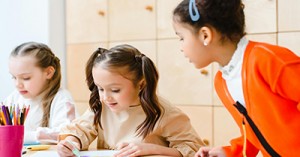
The transition from preschool to kindergarten isn’t just academic—it’s deeply social. As children move from parallel play to collaborative learning, they begin to form friendships, navigate conflict, and express their unique identities. These social and personal skills are the bedrock of emotional wellbeing and school readiness.
The following Biting Policy Example tailored for early childhood education and care (ECEC) services in Australia, drawing on best practice from ACECQA, Child Australia, and service-level procedures.
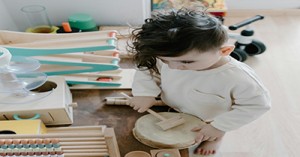
In early childhood education, the quality of a play space isn’t defined by how polished it looks—it’s defined by how deeply it invites children to imagine, explore, and belong. Research consistently shows that the most powerful play environments are those that center children’s agency, emotional safety, and social connection. Here are five foundational features that elevate play from passive activity to transformative experiences.
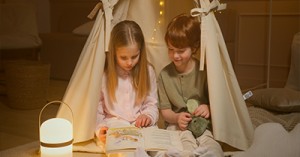
In a busy early learning room, nestled between a soft rug and a basket of sensory tools, something quietly revolutionary was unfolding. It wasn’t a new curriculum or a flashy resource—it was a space. A space designed not for punishment, but for peace. Not for isolation, but for connection. It was the Calm Corner, and it changed everything.

In early childhood education, our relationships with families are foundational but they’re not always easy to navigate. When a child’s behaviour begins to impact the safety or wellbeing of others, educators often find themselves caught between professional responsibility and fear of offending parents. Over time, many have grown hesitant to speak up, even as biting, pushing, and dysregulation become more frequent in toddler rooms.
Below are practical, emotionally intelligent ways to initiate these conversations with families—rooted in respect, partnership, and a shared commitment to every child’s wellbeing.

In early childhood education, our relationships with families are foundational—but they’re not always easy to navigate. When a child’s behaviour begins to impact the safety or wellbeing of others, educators often find themselves caught between professional responsibility and fear of offending parents. Over time, many have grown hesitant to speak up, even as biting, pushing, and dysregulation become more frequent in toddler rooms.
Below are practical, emotionally intelligent ways to initiate these conversations with families—rooted in respect, partnership, and a shared commitment to every child’s wellbeing.

Over the past decade, many educators have observed a troubling trend: biting, pushing, and other aggressive behaviours among toddlers are increasingly normalized as developmental inevitabilities. While it’s true that young children often lack the verbal tools to express frustration or overwhelm, the sector’s growing tolerance for these behaviours—without deeper investigation or family collaboration—raises serious concerns about safety, equity, and emotional wellbeing.
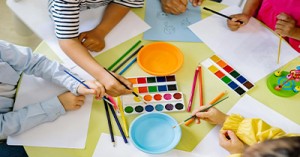
In early childhood settings, educators often face a subtle but powerful choice: should learning focus on the process or the product? While both approaches have their place, understanding the distinction can transform how we nurture creativity, independence, and critical thinking in young children.
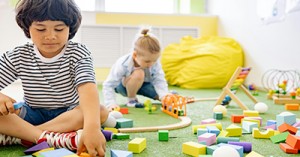
A: It depends on children's engagement and developmental needs. Many educators recommend keeping setups for 2–4 weeks, or even up to 6 weeks, especially if children are still exploring and learning from them. The key is to observe whether the setup continues to spark interest and growth.

As early childhood education centres periodically review their guiding philosophies, many educators are seeking innovative ways to make the process more inclusive, reflective, and engaging for staff, families, and the broader community.
 Open ended questions cannot be responded to with one word answers such as yes or no. These types of questions enables a child to provide… Read More
 During your child’s preschool years, an important milestone begins to emerge. This is the development of pre-writing skills. Pre-writing skills are used to encourage, develop… Read More
 An Acknowledgment of the Country is a way of showing respect for the Traditional Owners and can be given by both non-Indigenous people and Aboriginal… Read More
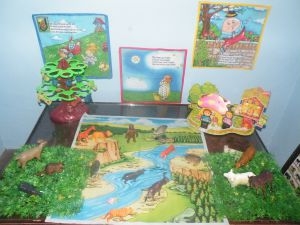 Open ended materials enables children to play freely. They are objects that have no rules to follow, use or function. Raw materials that can be… Read More
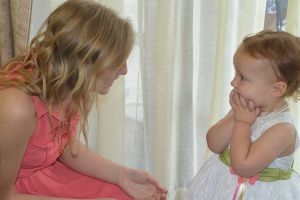 Language plays an important role in a child’s development. It enables a child to communicate effectively with their family, learn at school, socialize with friends,… Read More
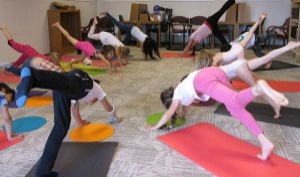 Like adults, children have to deal with their own stress in life. Moving house, starting a new school, preparing for a new sibling - these are… Read More
 Playdough is such a versatile material. It provides numerous benefits to children as they manipulate it, it is safe and soothing and provides children with… Read More
 Teaching children about sustainability enables them to appreciate and respect the natural environment. Early childhood services can provide meaningful hand on learning experiences in order… Read More
 Recycling is an important concept that teaches children to care for the environment. It encourages children to be responsible and show a growing appreciating for… Read More
 Incursions provide children with the opportunity to explore meaningful learning experiences in the comfort of their early childhood service. The following provides a directory of… Read More

It is the duty of adult caregivers to ensure that young children are exposed to...
See more...
When working as a qualified early childhood teacher (with a university degree) within a service...
See more...
Here’s a themed EYLF-aligned guide to 30 preschool science experiments, complete with materials, instructions, science...
See more...