



Educators and families deserve a system that mirrors real-time quality and safety—one that responds instantly to compliance breaches or serious incidents rather than waiting years for the next review. Here’s a blueprint for transforming our current “tick-and-forget” model into a living, breathing accountability framework.

Ensuring families feel informed and engaged is more than a compliance checkbox—it’s the foundation of true collaboration that supports each child’s learning journey. National Quality Standard (NQS) Element 1.3.3 requires services to keep families up-to-date about the educational program and their child’s progress. Simply saying “they had a great day” plus an end-of-year report falls short of this intent. Here’s how to enrich daily communication, meet compliance expectations, and foster home-to-service learning continuity.

Child wellbeing. It’s a phrase we use daily—but how often do we pause to ask, what does it actually mean here, in this room, for this child? Early childhood settings are shaped by diverse pedagogies, cultural frameworks, and personal experiences. Without a shared definition of well-being, services risk operating on fragmented interpretations—leaving educators navigating blurred expectations and inconsistent approaches to safeguarding, planning, and inclusion.
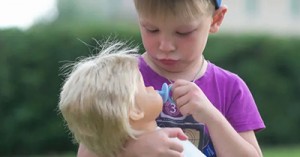
In many early childhood settings, we celebrate children's creativity, imagination, and emotional expression—until gendered assumptions silently step in. A boy cradling a doll may still prompt side glances, teasing, or even misguided redirection. But it's time we call out this outdated thinking and reaffirm our professional responsibility: nurturing all children’s capacity for empathy, care, and meaningful connection.

“Stay safe.”
“Stay clean.”
“Stay quiet.”
“Do it right.”
Individually, these phrases seem benign. But stacked together, they send a clear message: control comes first, curiosity second. And under that pressure, play shrinks.
Let’s be honest. Much of what limits children’s play isn’t about their needs—it’s about ours.
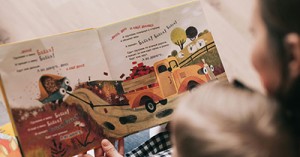
A recent report shared by 7NEWS Australia warns of a troubling trend: fewer Australian parents are reading to their children. While the headline sparks concern about declining literacy and emotional development, it risks overlooking a deeper reality—one that goes far beyond the bedtime book ritual.
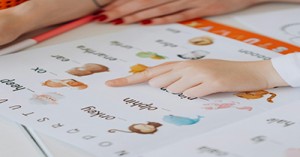
In a world where classroom outcomes are often skewed by postcode, language background, or parental education, one early predictor quietly cuts through the noise: phoneme awareness. As Brady (2020) starkly highlights, this foundational skill outranks intelligence and socioeconomic status when forecasting reading success.

In early childhood education, minimum ratios is one of the most insidious drivers of burnout across the sector. When minimum standards become maximum limits, educators are expected to absorb overwhelming cognitive and emotional loads while maintaining composure, care, and compliance. The result? Chronic stress, professional dissonance, and rising attrition. Ratios don’t just affect supervision—they shape every moment of decision-making, relational engagement, and safeguarding. The following article provides research on the effect of ratios on educators.

In early childhood education and care, ratios are more than a technicality—they are a frontline safeguard. Every child deserves responsive supervision, emotional connection, and developmental support. Yet in Australia, the current staff-to-child ratio standards may meet regulatory requirements, but they fall short of protecting what matters most: children's safety and well-being.

When unraveling whether a candidate has shortcut their Early Childhood Education (ECE) training, structured interviews and targeted questions can expose gaps in real-world competence. Fast-track or “vacation” pathways have raised alarm after thousands of candidates completed diplomas and graduate qualifications in months—sometimes with no genuine workplace experience and questionable oversight.
 Open ended questions cannot be responded to with one word answers such as yes or no. These types of questions enables a child to provide… Read More
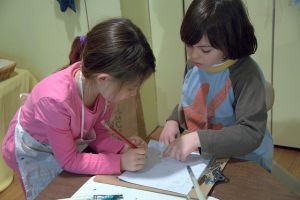 During your child’s preschool years, an important milestone begins to emerge. This is the development of pre-writing skills. Pre-writing skills are used to encourage, develop… Read More
 An Acknowledgment of the Country is a way of showing respect for the Traditional Owners and can be given by both non-Indigenous people and Aboriginal… Read More
 Open ended materials enables children to play freely. They are objects that have no rules to follow, use or function. Raw materials that can be… Read More
 Language plays an important role in a child’s development. It enables a child to communicate effectively with their family, learn at school, socialize with friends,… Read More
 Like adults, children have to deal with their own stress in life. Moving house, starting a new school, preparing for a new sibling - these are… Read More
 Playdough is such a versatile material. It provides numerous benefits to children as they manipulate it, it is safe and soothing and provides children with… Read More
 Teaching children about sustainability enables them to appreciate and respect the natural environment. Early childhood services can provide meaningful hand on learning experiences in order… Read More
 Recycling is an important concept that teaches children to care for the environment. It encourages children to be responsible and show a growing appreciating for… Read More
 Incursions provide children with the opportunity to explore meaningful learning experiences in the comfort of their early childhood service. The following provides a directory of… Read More

Lighting plays a crucial role in early childhood environments, impacting everything from mood and behavior...
See more...
Here’s a thoughtfully curated list of 20 autism-friendly activities that align beautifully with inclusive early...
See more...
For Educators who are currently receiving JobKeeper payments, the Children's Services Award 2010, still applies.
See more...