


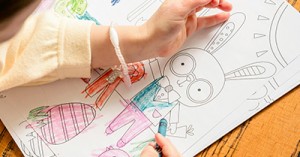
A: While stencils can sometimes support fine motor skills and tracing practice, the EYLF and NQS place a strong emphasis on child‑directed, open‑ended experiences that nurture creativity, agency, and authentic expression. This means the real issue isn’t whether stencils are “wrong,” but how their use aligns with our responsibility to prioritise process art and ensure children’s voices remain at the centre of their learning.

In early childhood settings across the country, you can walk into a room and instantly tell what kind of art culture lives there. Sometimes you see walls lined with identical paper plate animals, each one carefully guided by an adult hand. Other times, you see a riot of colour, texture, and imagination — each piece unmistakably belonging to the child who created it.
The difference between these two environments is more than aesthetic. It speaks to the heart of our pedagogy, our image of the child, and our commitment to fostering creativity, agency, and authentic expression.

In early childhood education, the practice of moving educators to new rooms each year is common. Some services see it as a way to keep things fresh, while others worry it disrupts continuity for children. So, are yearly room changes supporting children’s well-being or unsettling the very relationships they rely on?

Australia’s Early Childhood Education and Care (ECEC) sector is facing a crisis that numbers alone cannot explain. On paper, more than 70,000 students are enrolled in early childhood qualifications across the country. Yet services report a shortfall of 21,000 qualified educators. Families are stuck on waitlists, centres are forced to reduce hours, and educators already in the field are stretched to breaking point.
This paradox—so many in training, yet so few in classrooms—reveals a deeper structural failure.

A: Something as simple as a child asking to braid an educator’s hair—or children braiding each other’s can spark important questions about connection, trust, and professional boundaries. For many, braiding is more than a playful activity; it is a gesture of closeness, a way of forming relationships, and in some cultures, a practice rich with tradition and identity.
At the same time, educators must balance these relational opportunities with health, hygiene, and safety considerations, ensuring that practices in the service align with professional standards and family expectations. This tension—between fostering connection and maintaining boundaries—makes hair braiding a valuable topic for reflection in early learning settings.

Outdoor play is vital for children’s well-being, offering opportunities for physical activity, exploration, and connection with nature. In Australia, however, educators face a unique challenge: how to balance children’s right to outdoor play with the risks of extreme heat and high UV exposure. With summer temperatures often exceeding 35°C, services must make careful, informed decisions about when it is safe to go outside.
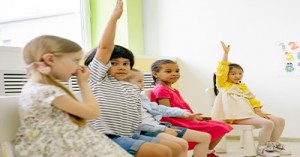
In early childhood education, children are not just learners; they are active participants in shaping their environments. One emerging practice gaining traction among educational leaders is the establishment of a children’s council. This initiative provides children with a structured platform to express their ideas, make decisions, and contribute to the life of the centre.

In early childhood education, the role of the Educational Leader is both visionary and grounded. It’s not just about overseeing curriculum—it’s about cultivating a culture of inquiry, emotional safety, and continuous growth. Each day brings opportunities to mentor, reflect, advocate, and co-create learning environments where children and educators thrive.
This guide outlines the core responsibilities and daily tasks that shape pedagogical leadership. It honours the invisible labour, the quiet coaching moments, and the intentional decisions that uphold quality practice and sector integrity.

At first glance, the idea of asking a baby for consent before a nappy change might sound absurd. After all, babies can’t speak, reason, or give informed permission. But beneath the surface, this question invites us to reflect on something deeper: How do we model respect, autonomy, and emotional safety from the very beginning of life?

In early childhood education, qualifications are often seen as the benchmark of quality. Diplomas, degrees, and certificates line the walls of centres, signaling compliance and professional achievement. Yet research consistently shows that what truly shapes a child’s well-being and learning is not the paper on the wall, but the warmth, trust, and attunement in the relationships they experience every day.
 Open ended questions cannot be responded to with one word answers such as yes or no. These types of questions enables a child to provide… Read More
 During your child’s preschool years, an important milestone begins to emerge. This is the development of pre-writing skills. Pre-writing skills are used to encourage, develop… Read More
 An Acknowledgment of the Country is a way of showing respect for the Traditional Owners and can be given by both non-Indigenous people and Aboriginal… Read More
 Open ended materials enables children to play freely. They are objects that have no rules to follow, use or function. Raw materials that can be… Read More
 Language plays an important role in a child’s development. It enables a child to communicate effectively with their family, learn at school, socialize with friends,… Read More
 Like adults, children have to deal with their own stress in life. Moving house, starting a new school, preparing for a new sibling - these are… Read More
 Playdough is such a versatile material. It provides numerous benefits to children as they manipulate it, it is safe and soothing and provides children with… Read More
 Teaching children about sustainability enables them to appreciate and respect the natural environment. Early childhood services can provide meaningful hand on learning experiences in order… Read More
 Recycling is an important concept that teaches children to care for the environment. It encourages children to be responsible and show a growing appreciating for… Read More
 Incursions provide children with the opportunity to explore meaningful learning experiences in the comfort of their early childhood service. The following provides a directory of… Read More

This cheat sheet offers quick, accessible reference to major theorists and concepts that shape early...
See more...
If your service closes due to COVID-19, it’s important to understand what your obligations are...
See more...
If observations aren’t meant to be long, complicated, and constant, the next logical question is...
See more...