



In the rhythm of early childhood, emotional storms are natural. Toddlers and preschoolers are still learning to navigate big feelings, and their expressions, whether tears, tantrums, or withdrawal, are often calls for connection, not correction. As educators, our role is to be the calm in their chaos, offering warmth, understanding, and safe spaces to feel. The following article explores emotionally intelligent strategies that educators can implement to support children during moments of overwhelm, with examples.

When a child becomes violent in an early childhood setting, de-escalation isn’t just about calming the moment—it’s about protecting safety, preserving dignity, and responding to distress with relational intelligence. Here’s a trauma-informed, regulation-aligned guide to de-escalation strategies for violent behaviour in young children.
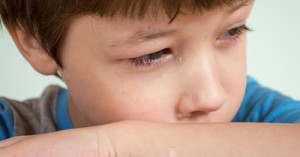
Violence from a child in an early childhood setting can be confronting, destabilising, and emotionally exhausting. For educators committed to nurturing safe, responsive environments, such incidents often trigger a complex mix of concern, confusion, and self-doubt. This article explores how educators can protect themselves, support the child, and uphold their duty of care.
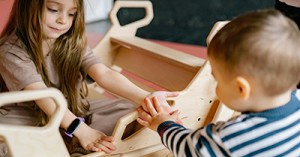
Teaching young children how to use their hands for kindness rather than harm is foundational to building a caring classroom culture. At ages four and five, children are still developing self-regulation and may act out physically when emotions feel overwhelming. As educators, we can guide them toward prosocial alternatives, equip them with emotional vocabulary, and partner with families to reinforce healthy touch at home.

Supporting a toddler through moments of heightened emotion requires patience and thoughtful strategies. Here are some effective de-escalation techniques you can try. The following article provides information on De-escalation Strategies During A Tantrum, De-escalation Strategies During Separation Anxiety, De-escalation Strategies When A Toddler's Crying, De-escalation Strategies When A Toddler Hits. De-escalation When A Toddler Screams, De-escalation Strategies When A Toddler Bites and more.

Critical reflection is a powerful tool for understanding and addressing challenging behaviours in young children. Here are some reflective questions you might consider when analysing a child's behaviour. The following article provides information on: Reflective Question When Analysing A Child's Behaviour, Applying These Reflection Questions In Practice, Example in Practice, Example Of Reflection Questions In Action and more.

Supporting toddlers aged 2–3 years with challenging behaviors requires understanding their developmental stage and using strategies tailored to their needs. Here are some effective approaches:

Social Constructivist Theory in Early Childhood Education is a learning approach grounded in the idea that children actively construct knowledge through their social interactions and cultural experiences. Rather than viewing learning as an individual process of acquiring information, social constructivism emphasizes that children build understanding through communication, collaboration, and shared experiences. The following article provides information on Key Concepts, Applications In Early Childhood, Modern Relevance In Childcare and more.
Behaviourism is a learning theory developed by psychologists B.F. Skinner and John Watson, focusing on how behavior is shaped through reinforcement. It is based on the idea that children learn through stimulus-response interactions, where positive and negative reinforcement influence behaviours. The following article provides information on Key Concepts, Applications In Early Childhood, Modern Relevance In Childcare and more.
 Open ended questions cannot be responded to with one word answers such as yes or no. These types of questions enables a child to provide… Read More
 During your child’s preschool years, an important milestone begins to emerge. This is the development of pre-writing skills. Pre-writing skills are used to encourage, develop… Read More
 An Acknowledgment of the Country is a way of showing respect for the Traditional Owners and can be given by both non-Indigenous people and Aboriginal… Read More
 Open ended materials enables children to play freely. They are objects that have no rules to follow, use or function. Raw materials that can be… Read More
 Language plays an important role in a child’s development. It enables a child to communicate effectively with their family, learn at school, socialize with friends,… Read More
 Like adults, children have to deal with their own stress in life. Moving house, starting a new school, preparing for a new sibling - these are… Read More
 Playdough is such a versatile material. It provides numerous benefits to children as they manipulate it, it is safe and soothing and provides children with… Read More
 Teaching children about sustainability enables them to appreciate and respect the natural environment. Early childhood services can provide meaningful hand on learning experiences in order… Read More
 Recycling is an important concept that teaches children to care for the environment. It encourages children to be responsible and show a growing appreciating for… Read More
 Incursions provide children with the opportunity to explore meaningful learning experiences in the comfort of their early childhood service. The following provides a directory of… Read More

The start of a new year is more than a reset—it’s a chance to align...
See more...
When you’re running OSHC programs, it’s easy to feel like you’re recycling the same handful...
See more...
Early childhood services are among the most demanding professional situations. Being responsible for the care...
See more...