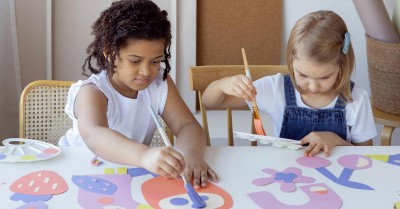
When you’re running OSHC programs, it’s easy to feel like you’re recycling the same handful of activities. Children thrive on variety, and having a big bank of creative options can help you break out of that slump. Below is a list of 50 diverse art and craft ideas, ranging from quick, low-prep projects to collaborative, cultural, and recycled-material activities. They’re designed to spark imagination, foster belonging, and keep sessions fresh and engaging for all ages.
Drawing & Painting
- Blow painting with straws
- Marble rolling painting
- Bubble wrap printing
- Watercolor resist with crayons
- Coffee filter tie-dye
- Nature rubbings (leaves, bark, coins)
- Collaborative mural on butcher’s paper
- Salt painting (glue + salt + watercolor)
- Spin art with salad spinners
- Shadow tracing outside
Paper Crafts
- Origami animals
- Paper weaving mats
- Accordion-fold paper fans
- Paper plate dreamcatchers
- Collage with magazines
- 3D paper sculptures (folded strips)
- Paper chain decorations
- Pop-up cards
- Mosaic art with colored paper scraps
- Paper plate masks
Textile & Thread
- Friendship bracelets
- Yarn wrapping sticks/branches
- Pom-pom creatures
- Weaving on cardboard looms
- Sewing simple felt shapes
- Finger knitting
- Tie-dye bandanas
- Fabric collage with scraps
- God’s eye weaving (sticks + yarn)
- Tassel keychains
Nature & Recycled Materials
- Cardboard box cities
- Tin can wind chimes
- Egg carton animals
- Nature mandalas with leaves/flowers
- Stick puppets
- Recycled robots (boxes, lids, tubes)
- Painted rock pets
- Seed mosaics
- Bottle cap art
- Mini terrariums in jars
Quick & Fun
- Scratch art (crayon + black cover)
- Salt dough ornaments
- Bead mosaics
- Pasta necklaces (painted pasta)
- Balloon stamping with paint
- Tissue paper stained glass (on contact paper)
- Foil embossing art
- Clay pinch pots
- Sticker mosaics
- Story stones (painted symbols for storytelling)
4‑Week OSHC Art & Craft Rotation
Week 1
- Monday (Collaborative): Giant mural on butcher’s paper
- Tuesday (Quick): Scratch art (crayon + black cover)
- Wednesday (Recycled): Egg carton animals
- Thursday (Textile): Friendship bracelets
- Friday (Cultural): Nature mandalas with leaves/flowers
Week 2
- Monday (Collaborative): Puzzle‑piece community artwork
- Tuesday (Quick): Marble rolling painting
- Wednesday (Recycled): Cardboard box cities
- Thursday (Textile): Pom‑pom creatures
- Friday (Cultural): Rangoli/kolam chalk designs
Week 3
- Monday (Collaborative): Story stones for group storytelling
- Tuesday (Quick): Salt dough ornaments
- Wednesday (Recycled): Tin can wind chimes
- Thursday (Textile): Wrapping yarn around sticks/branches
- Friday (Cultural): Tissue paper stained glass (Harmony Week theme)
Week 4
- Monday (Collaborative): Shadow tracing outside (group mural)
- Tuesday (Quick): Balloon stamping with paint
- Wednesday (Recycled): Bottle cap art mosaics
- Thursday (Textile): God’s eye weaving (sticks + yarn)
- Friday (Cultural): Painted rock pets with identity symbols
Tips for using the rotation:
- Keep Mondays for big group projects to set the week’s tone.
- Slot quick crafts on Tuesdays when energy is lower.
- Use recycled/natural crafts mid‑week to balance cost and creativity.
- Thursdays highlight textile/thread skills for fine motor practice.
- Fridays celebrate cultural or identity‑based art to end the week meaningfully.
Further Reading
Benefits Of Art and Craft
Process Art Vs. Product Art
Art and Craft Descriptions
Q: Is Anything Wrong With Using Stencils As Part Of Children's Art?
Critical Reflection Questions on Open-Ended Art Experiences
20 Collaborative Art Projects
50 Process Art Activities
Art Area Photo Ideas
 Open ended questions cannot be responded to with one word answers such as yes or no. These types of questions enables a child to provide
 During your child’s preschool years, an important milestone begins to emerge. This is the development of pre-writing skills. Pre-writing skills are used to encourage, develop
 An Acknowledgment of the Country is a way of showing respect for the Traditional Owners and can be given by both non-Indigenous people and Aboriginal
 Open ended materials enables children to play freely. They are objects that have no rules to follow, use or function. Raw materials that can be
 Language plays an important role in a child’s development. It enables a child to communicate effectively with their family, learn at school, socialize with friends,
 Like adults, children have to deal with their own stress in life. Moving house, starting a new school, preparing for a new sibling - these are
 Playdough is such a versatile material. It provides numerous benefits to children as they manipulate it, it is safe and soothing and provides children with
 Teaching children about sustainability enables them to appreciate and respect the natural environment. Early childhood services can provide meaningful hand on learning experiences in order
 Recycling is an important concept that teaches children to care for the environment. It encourages children to be responsible and show a growing appreciating for
 Incursions provide children with the opportunity to explore meaningful learning experiences in the comfort of their early childhood service. The following provides a directory of