Explore creative photo ideas for teaching emotions in early childhood. Practical strategies, challenges, and wellbeing through play.
Emotional wellbeing is not a one‑off event but a daily practice. Embedding feelings into play helps children recognise, express, and regulate emotions in safe, supportive environments. Through creative photo ideas, educators can integrate wellbeing into everyday routines, aligning with EYLF Outcome 1 (Children have a strong sense of identity) and QA5 (Relationships with children).
Natural Materials Emotion Faces
Children use leaves, pinecones, and natural items to create expressive faces.
Strategies for Educators:
- Encourage children to design “emotion faces” during outdoor play.
- Use these as prompts for group reflection: “What makes us feel calm?”
- Connect to EYLF Outcome 2 (Children are connected with and contribute to their world) through nature‑based play.
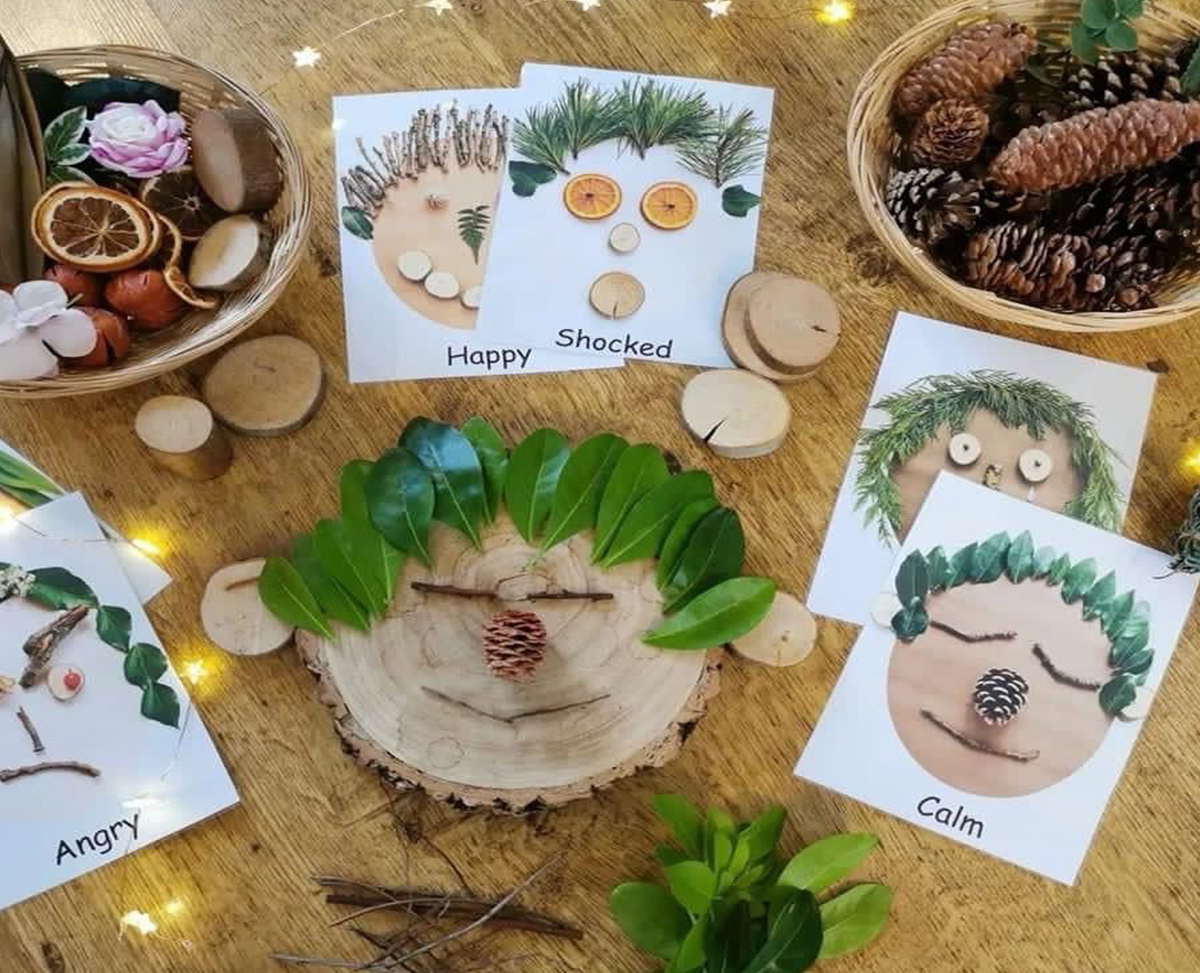
Image Reference: Amy Smethurst, Pinterest
Stone and Yarn Emotion Craft
Painted stones and yarn allow children to explore facial features and emotional cues.
Strategies for Educators:
- Provide blank outlines for children to complete with stones or drawings.
- Pair with books like The Colour Monster to deepen emotional literacy.
- Ask reflective questions: “How does this face feel? When do you feel like this?”

Image Reference: Clare Saxon, Pinterest
Emotion Eggs and Cards
Colourful eggs paired with cards make emotions playful and accessible.
Strategies for Educators:
- Use in circle time: children choose an egg to match their mood.
- Incorporate into transitions — selecting an egg before moving to a new activity.
- Normalise a wide range of feelings to support self‑regulation.

Image Reference: A Little Pinch of Perfect, Pinterest
Feelings Blocks and Cards
Blocks and laminated cards provide visual cues for emotional vocabulary.
Strategies for Educators:
- Display “feelings boards” for daily check‑ins.
- Encourage peer empathy by noticing how others might feel.
- Link to QA5 by promoting respectful relationships and responsive interactions.

Image Reference: Twinkl Family, Pinterest
Emotion Balloons
Balloon faces make emotions visible and fun.
Strategies for Educators:
- Use balloons in movement games: “Show me the happy balloon dance!”
- Role‑play scenarios with balloon characters.
- Support emotional release through physical play.

Image Reference: Patricia Neamtu, Pinterest
Painted Emotion Stones
Simple stones with expressive faces invite children to share feelings.
Strategies for Educators:
- Place stones in a “feelings basket” for group time.
- Use them in storytelling: “The sad stone met the happy stone…”
- Encourage children to paint their own stones for personalisation.

Image Reference: Courtney Lemberger, Pinterest
Sand Tray Feelings Reflection
Sand trays with emotion stones and mirrors create sensory spaces for reflection.
Strategies for Educators:
- Invite children to draw faces in the sand.
- Use mirrors to help children recognise their own expressions.
- Pair with mindfulness and breathing exercises.
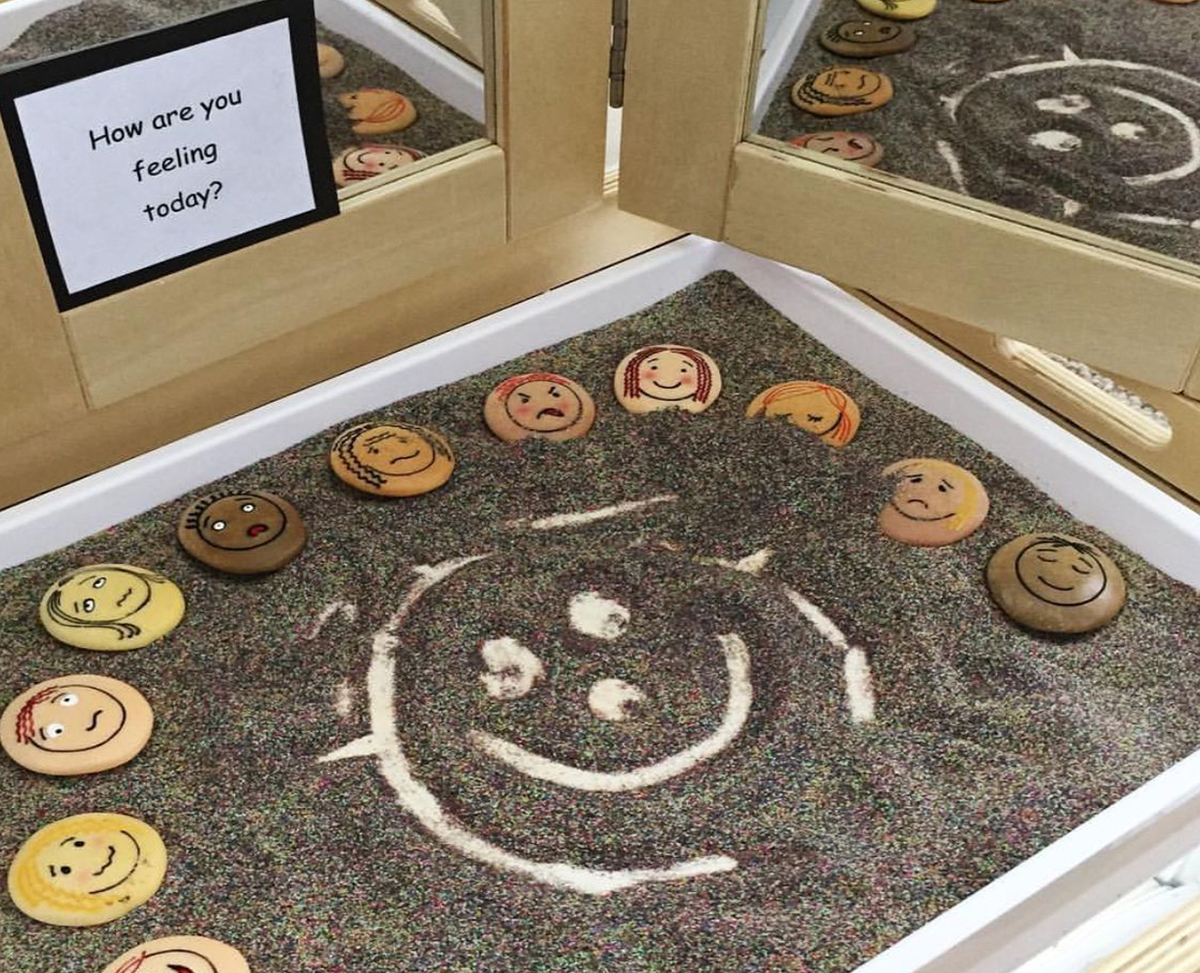
Image Reference: Rosangela Volpe, Pinterest
My Feelings Craft
Personalised crafts help children document and express emotions.
Strategies for Educators:
- Create “My Feelings” boards with rotating emotion pieces.
- Pair emotion words with visual cues to support literacy.
- Use crafts in portfolios to track emotional development.

Image Reference: Mama's World, Pinterest
By embedding feelings through play, educators make wellbeing a natural part of daily routines. These photo ideas show how everyday materials can spark emotional awareness, empathy, and resilience. When children see, touch, and create emotions in playful ways, they learn that feelings are normal, manageable, and worth sharing.
 Open ended questions cannot be responded to with one word answers such as yes or no. These types of questions enables a child to provide
 During your child’s preschool years, an important milestone begins to emerge. This is the development of pre-writing skills. Pre-writing skills are used to encourage, develop
 An Acknowledgment of the Country is a way of showing respect for the Traditional Owners and can be given by both non-Indigenous people and Aboriginal
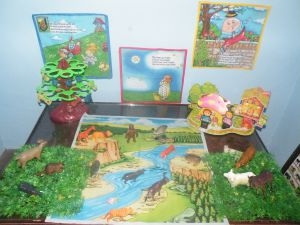 Open ended materials enables children to play freely. They are objects that have no rules to follow, use or function. Raw materials that can be
 Language plays an important role in a child’s development. It enables a child to communicate effectively with their family, learn at school, socialize with friends,
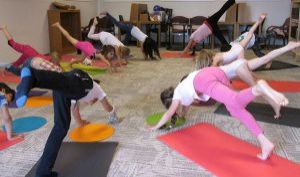 Like adults, children have to deal with their own stress in life. Moving house, starting a new school, preparing for a new sibling - these are
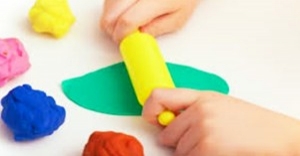 Playdough is such a versatile material. It provides numerous benefits to children as they manipulate it, it is safe and soothing and provides children with
 Teaching children about sustainability enables them to appreciate and respect the natural environment. Early childhood services can provide meaningful hand on learning experiences in order
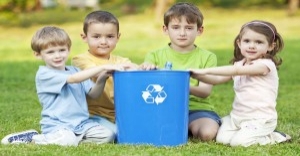 Recycling is an important concept that teaches children to care for the environment. It encourages children to be responsible and show a growing appreciating for
 Incursions provide children with the opportunity to explore meaningful learning experiences in the comfort of their early childhood service. The following provides a directory of