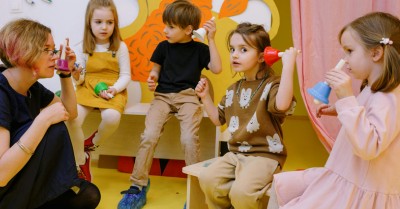
Group games are a wonderful way to build social skills, cooperation, and confidence in preschoolers. They encourage children to listen, take turns, and celebrate each other’s successes. Here are 30 tried‑and‑true favourites you can introduce to your kindy group.
Classic Movement Games
- What’s the Time, Mr Wolf? – A timeless chasing game that builds counting and listening skills.
- Duck, Duck, Goose – Perfect for turn‑taking and quick reactions.
- Musical Statues – Dance until the music stops, then freeze! Great for self‑control.
- Ring‑a‑Ring o’ Roses – A circle game with singing and movement.
- Red Light, Green Light – Teaches listening and following instructions.
Circle & Cooperation Games
- Pass the Ball – Children sit in a circle and pass a ball while music plays; stop when the music ends.
- Fruit Salad – Like musical chairs but with fruit names; encourages memory and quick thinking.
- Parachute Play – Lift, shake, and bounce balls on a parachute together.
- Follow the Leader – One child leads movements, others copy.
- Hot Potato – Pass an object quickly around the circle before the music stops.
Outdoor Energy Games
- Stuck in the Mud – A tag game where caught players freeze until freed.
- Shadow Tag – Instead of tagging bodies, children step on each other’s shadows.
- Treasure Hunt – Hide small items outdoors and let children search together.
- Animal Races – Hop like frogs, waddle like ducks, crawl like crabs.
- Relay Races – Simple baton passing or obstacle runs in teams.
Imaginative & Dramatic Games
- Sleeping Lions – Children lie still while others try to make them move without touching.
- Statue Maker – One child poses others into funny statues.
- Simon Says – Classic listening game with imaginative commands.
- Magic Carpet Ride – Children sit on a mat and pretend to fly, taking turns steering.
- Pretend Journey – Act out going to the zoo, beach, or space with group movements.
Guessing & Call‑and‑Response Games
- Who Stole the Cookie? – A rhythmic chant game where children guess who “stole” the cookie.
- Doggy, Doggy, Where’s Your Bone? – One child hides their eyes while others sneak the “bone.”
- Ponchanello Little Fellow – A playful circle game with call‑and‑response singing.
- Button, Button, Who’s Got the Button? – Children pass a hidden button and guess who has it.
- Hide the Thimble – A small object is hidden in plain sight; children take turns spotting it.
- Who’s Missing? – One child leaves the circle, and the group guesses who’s gone.
- Guess the Leader – One child secretly leads movements while a guesser tries to spot them.
- Farmer in the Dell – A singing circle game with roles chosen by the group.
- Kitty Wants a Corner – A circle game where one child in the middle tries to swap places with someone outside.
- Who Called My Name? – Children sit with eyes closed, one calls another’s name, and they must guess who it was.
Tips for Educators
- Rotate games: Keep novelty alive by introducing one or two new games each week.
- Adapt rules: Simplify or extend depending on group size and energy levels.
- Encourage independence: Once children know the rules, let them lead games outside.
- Celebrate participation: Focus on fun, not winning — preschoolers thrive on shared joy.
These 30 games not only entertain but also nurture essential skills like listening, coordination, imagination, and teamwork. They’re easy to set up, require minimal equipment, and can be played indoors or outdoors depending on your space.
Further Reading
20 Cultural Games For Preschoolers From Around The World
30 Indoor Group Games For Toddlers
Group Time With Children In Childcare
Who Stole The Cookie
Rhyming Charades
Find The Bell




 Open ended questions cannot be responded to with one word answers such as yes or no. These types of questions enables a child to provide
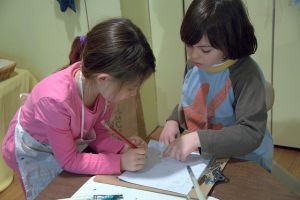 During your child’s preschool years, an important milestone begins to emerge. This is the development of pre-writing skills. Pre-writing skills are used to encourage, develop
 An Acknowledgment of the Country is a way of showing respect for the Traditional Owners and can be given by both non-Indigenous people and Aboriginal
 Open ended materials enables children to play freely. They are objects that have no rules to follow, use or function. Raw materials that can be
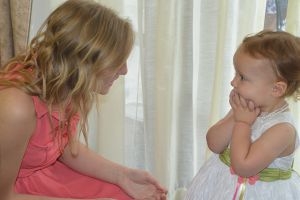 Language plays an important role in a child’s development. It enables a child to communicate effectively with their family, learn at school, socialize with friends,
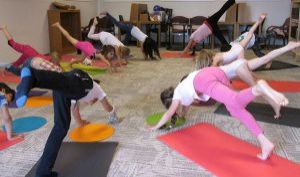 Like adults, children have to deal with their own stress in life. Moving house, starting a new school, preparing for a new sibling - these are
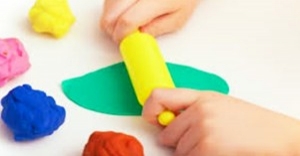 Playdough is such a versatile material. It provides numerous benefits to children as they manipulate it, it is safe and soothing and provides children with
 Teaching children about sustainability enables them to appreciate and respect the natural environment. Early childhood services can provide meaningful hand on learning experiences in order
 Recycling is an important concept that teaches children to care for the environment. It encourages children to be responsible and show a growing appreciating for
 Incursions provide children with the opportunity to explore meaningful learning experiences in the comfort of their early childhood service. The following provides a directory of