


Howard Gardner’s Multiple Intelligences is explained simply for educators with examples and EYLF links.
Erikson Psychosocial Development stages: trust, independence, confidence, identity explained simply.

Piaget's cognitive development stages: senses, play, logic, and abstract thinking explained simply.
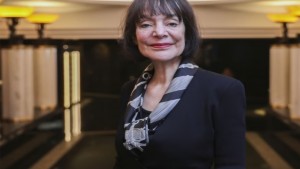
Carol Dweck (born October 17, 1946) is an American psychologist and professor at Stanford University, best known for her pioneering research on mindsets in learning and achievement. Her work on the growth mindset has transformed education worldwide, showing that children’s beliefs about intelligence and ability profoundly shape their motivation, resilience, and success.
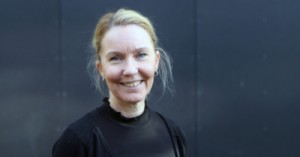
Ellen Beate Hansen Sandseter is a Norwegian researcher and professor at Queen Maud University College of Early Childhood Education. She is internationally recognized for her work on risky play in early childhood, highlighting how safe risk-taking supports children’s confidence, resilience, and wellbeing. Sandseter challenges overprotective practices in schools and families, arguing that shielding children from risk can hinder their development.
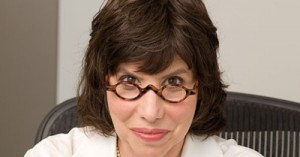
Alison Gopnik (born June 16, 1955) is a leading developmental psychologist and philosopher at the University of California, Berkeley. She is best known for her research on how children learn through exploration, play, and causal reasoning. Gopnik’s work emphasizes that children are active learners who construct and test ideas, much like scientists.

A: No, you don’t have to include theorists in every piece of documentation, but referencing them can deepen your practice, especially when aligned with EYLF V2.0 and the National Quality Standard.

Early childhood education is a dynamic and deeply relational field. Educators are constantly navigating children’s diverse needs, family expectations, and systemic requirements. To sustain quality practice, reflection is essential. Reflection allows educators to pause, analyze experiences, and adapt their approaches to better support children’s learning and well-being.
One powerful framework for reflection is Gibbs Reflective Cycle (1988). Widely used in education, healthcare, and professional development, it provides a structured way to think critically about experiences and plan for improvement. In early childhood, Gibbs Cycle helps educators move beyond surface-level observations to deeper insights about pedagogy, relationships, and environments.

Early childhood education thrives on curiosity, exploration, and authentic engagement. David A. Kolb’s Experiential Learning Theory offers a powerful framework for understanding how young children learn through doing, reflecting, thinking, and trying again. Rather than viewing learning as a linear process, Kolb positions it as a continuous cycle—one that mirrors the natural way children interact with the world.
This cheat sheet offers quick, accessible reference to major theorists and concepts that shape early education practice. It includes Theories, Concepts, and Documentation Prompts, Quick Tips for Embedding Theory in Documentation, Prompts for Reflective Language, List Of Theorist Language and more.
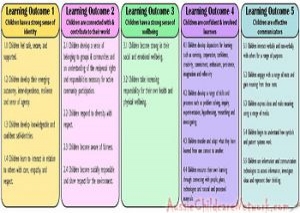 Here is the list of the EYLF Learning Outcomes that you can use as a guide or reference for your documentation and planning. The EYLF… Read More
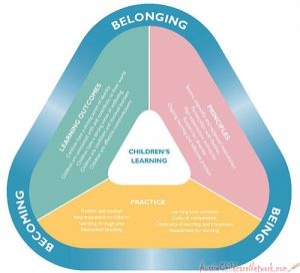 The EYLF is a guide which consists of Principles, Practices and 5 main Learning Outcomes along with each of their sub outcomes, based on identity,… Read More
 This is a guide on How to Write a Learning Story. It provides information on What Is A Learning Story, Writing A Learning Story, Sample… Read More
 One of the most important types of documentation methods that educators needs to be familiar with are “observations”. Observations are crucial for all early childhood… Read More
 To support children achieve learning outcomes from the EYLF Framework, the following list gives educators examples of how to promote children's learning in each individual… Read More
 Reflective practice is learning from everyday situations and issues and concerns that arise which form part of our daily routine while working in an early… Read More
 When observing children, it's important that we use a range of different observation methods from running records, learning stories to photographs and work samples. Using… Read More
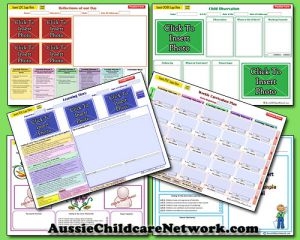 Within Australia, Programming and Planning is reflected and supported by the Early Years Learning Framework. Educators within early childhood settings, use the EYLF to guide… Read More
 This is a guide for educators on what to observe under each sub learning outcome from the EYLF Framework, when a child is engaged in… Read More
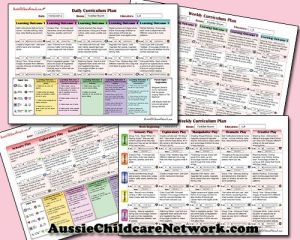 The Early Years Learning Framework describes the curriculum as “all the interactions, experiences, activities, routines and events, planned and unplanned, that occur in an environment… Read More
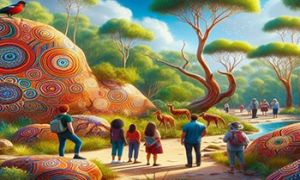
Including Aboriginal and Torres Strait Islander (ATSI) perspectives in the learning environment is essential for...
See more...
A nice way to say Thank You to Educators for all their hard work and...
See more...
Working barefoot is beneficial for educators in early childhood settings. It is comfortable and relaxing...
See more...